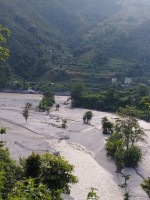
Kathmandu - Growing concerns have been raised over the increasing vulnerability of Nepal’s Himalayan and hilly regions to climate change, with experts and stakeholders emphasizing the urgent need for stronger adaptation measures, science-based planning, and improved coordination between research and policymaking.
During the Climate Change Forum 2083, organised by the Nepal Academy of Science and Technology (NAST), participants highlighted that communities across Nepal are increasingly witnessing the impacts of erratic rainfall, glacier retreat, landslides, and declining agricultural productivity. Climate knowledge and research initiatives supported through NAST’s climate platforms have also focused on strengthening evidence-based adaptation and knowledge-sharing across the country.
Stakeholders noted that climate impacts are no longer limited to high mountain areas but are becoming increasingly visible across hilly districts, affecting local livelihoods, infrastructure, food systems, and agricultural sustainability. Discussions underscored the need to integrate climate considerations into local development planning and public budgeting while strengthening the link between scientific evidence and policy decisions.
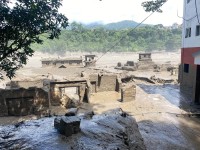
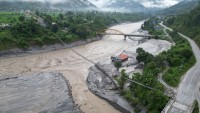
Despite contributing minimally to global greenhouse gas emissions, Nepal continues to face disproportionate climate risks. Emerging concerns include accelerated glacier melt, changing rainfall patterns, increased disaster events, and pressure on agricultural production systems. Experts stressed that adaptation programmes must expand beyond awareness campaigns toward practical interventions in vulnerable and remote regions.
Recommendations discussed include scaling up climate-smart agriculture, promoting drip irrigation and rainwater harvesting systems, strengthening community seed banks, expanding weather-based advisory services, and increasing local-level scientific research. Participants also emphasized the importance of improving access to climate information and strengthening institutional capacity to support long-term resilience building.
For Nepal, stakeholders concluded that responding to climate change will require coordinated action across government agencies, research institutions, local communities, and development partners to ensure that adaptation efforts translate into measurable outcomes on the ground.
#ClimateChange #Nepal #HimalayanRegion #ClimateAdaptation #NAST #EnvironmentalJournalism #SustainableDevelopment #ClimateAction #EcosphereNews #Environment #ResilientNepal