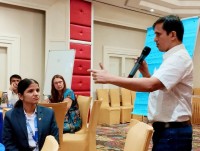
Kathmandu - Policymakers, financial institutions, researchers, and entrepreneurs gathered to critically examine the financial constraints faced by women-led enterprises (WLEs) in Nepal at an event titled ‘Unpacking and Bridging the Financial Barriers to Empower Women-Led Enterprises in Nepal’. The program was jointly organized by Climate Policy Initiative (CPI) - India, Southasia Institute of Advanced Studies (SIAS), and ForestAction Nepal (FAN), with support from the International Development Research Centre (IDRC).
The event brought together diverse stakeholders from banking and microfinance institutions, private sector enterprises, academic and research organizations, and women entrepreneurs-highlighting the growing recognition that women’s economic participation is central to Nepal’s inclusive and climate-resilient development.
The program opened with remarks from Dr. Ishita Sachdeva (IDRC), who emphasized the importance of evidence-based approaches to address gendered barriers in accessing climate and enterprise finance. This was followed by a presentation from CPI on its latest research brief, “Unlocking Climate Finance for Women-Led Enterprises in Nepal: Ground-level Insights”, which drew attention to structural gaps between policy intent and financial access on the ground.
A panel discussion, moderated by Dr. Mani Ram Banjade, Managing Director of Nirvana International College and Senior Research Fellow at SIAS/FAN, explored systemic challenges and possible pathways to improve financial inclusion for WLEs, particularly in climate-sensitive sectors such as agriculture and forestry.
Panelists highlighted that existing policies often fail to recognize women as economic actors. Dr. Meeta Sainju Pradhan (SIAS) noted that many frameworks still approach women through a welfare lens, rather than as entrepreneurs with agency. She stressed the need for context-specific, gender-responsive reforms that go beyond token inclusion.
From the enterprise perspective, Ms. Anuja Rajbhandari (Ekadesma/FWEAN) pointed to persistent challenges including proxy entrepreneurship, lack of collateral, limited market bargaining power, and low awareness of available financial instruments. These factors, she noted, continue to restrict women-led enterprises from scaling up.
Private sector insights underscored structural limitations within value chains. Mr. Sushil Gyawali (Himalayan Naturals) observed that many women-led enterprises remain confined to production-level activities, without access to value-chain integration, branding, or enterprise development support-limiting profitability and sustainability.
Financial institutions acknowledged risk perceptions as a key constraint. Mr. Binaya Ratna Shakya (Muktinath Bikas Bank) explained that informality often leads banks to categorize WLEs as high-risk. However, he emphasized that solutions such as collateral-free lending, digital finance tools, blended finance models, and risk-sharing mechanisms could significantly expand access to finance.
The role of microfinance institutions was also highlighted. Mr. Sandip Lamichhane (Chhimek Laghubitta) noted that MFIs play a critical role in building credit histories, improving financial literacy, and preparing women-led enterprises to transition into formal banking systems.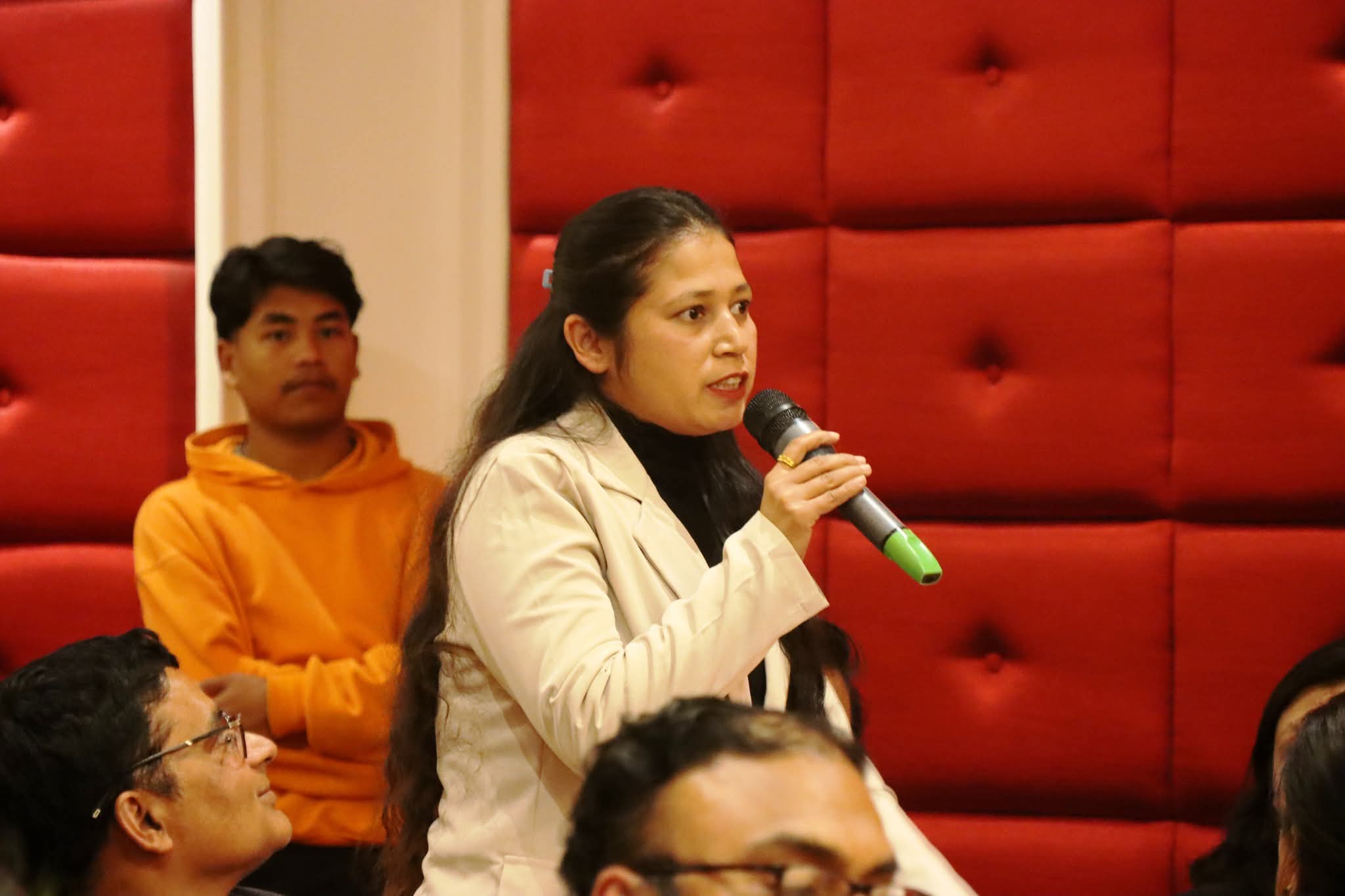
The discussion concluded with a shared recognition that empowering women-led enterprises is not merely a social intervention, but a strategic investment in sustainable, inclusive, and climate-resilient economic growth. Participants emphasized that meaningful impact will require coordinated action across finance, policy, markets, and social norms.
The event reinforced the need for holistic, long-term solutions to unlock climate and enterprise finance for women-positioning women-led enterprises as key drivers of Nepal’s economic and environmental future.