KATHMANDU, September 8, 2026 - The catastrophic flash flood that swept through Nepal’s Bhotekoshi-Trishuli river system on August 26 has evolved from a national disaster into a major international debate over climate justice, disaster finance and the responsibility of countries most responsible for greenhouse-gas emissions.
More than 1,300 people have been confirmed dead and more than 5,500 remain missing across Nepal and Tibet, according to the latest international reporting. The disaster destroyed settlements, roads, bridges, hydropower infrastructure and other critical assets, while leaving thousands of families displaced.
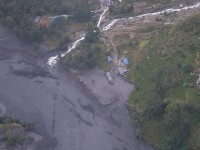
The flood followed the collapse of a high-altitude glacier and associated landslide, producing an extraordinary surge of water, mud, rocks and debris through the Himalayan river system. Nepal’s Foreign Minister Shisir Khanal has described the event as a “Himalayan tsunami” and warned that it should not be treated as an isolated disaster.
Nepal’s climate-justice argument
Foreign Minister Khanal has highlighted a fundamental climate-justice imbalance: Nepal contributes less than 0.1% of global greenhouse-gas emissions, yet its mountains and communities are experiencing increasingly severe climate-related risks. He has argued that countries and economies that have historically benefited from much higher emissions should accept shared responsibility for helping vulnerable countries recover and prepare.
At one stage, Khanal specifically referred to major emitters including India, China and the United States and spoke of “legal and moral liability”. However, Nepal subsequently clarified that it was not demanding bilateral compensation from those countries. On September 3, Khanal told Chinese officials that Nepal would seek climate-related compensation through the international framework of the UNFCCC and Paris Agreement rather than targeting any particular country.
On September 8, however, Khanal told The Guardian that Nepal had requested US$20 million from the UN’s Fund for Responding to Loss and Damage. He acknowledged that this amount would be nowhere near the total reconstruction requirement, which could exceed US$5 billion.
What has the international community actually provided?
The international response has so far been overwhelmingly focused on humanitarian relief, search and rescue, emergency finance and technical assistance-not legal reparations or compensation for climate damage.
China: China provided Nepal with US$2 million in emergency government assistance, while the Chinese Red Cross contributed another US$200,000. China has also supplied relief materials, tunnel-rescue specialists and disaster imagery, hydrological and meteorological information.
India: India has supplied substantial humanitarian and technical assistance, including relief materials, tunnel-rescue specialists, forensic personnel and equipment. By the end of August, India had airlifted 68.5 tonnes of relief material and was preparing equipment for a 230-foot modular steel bridge and additional Bailey bridges.
United States: Washington initially announced US$500,000 through Catholic Relief Services for emergency shelter, relief supplies and water, sanitation and hygiene support, alongside a disaster-response adviser.
United Kingdom: Britain announced a £5 million humanitarian package for Nepal and deployed a Rapid Deployment Team to strengthen the response and assist British nationals affected by the disaster.
Australia: Australia announced an initial A$5 million assistance package and subsequently expanded its response. Australian specialists, including drone operators and disaster-victim identification personnel, have been deployed to support Nepal’s search and rescue efforts.
South Korea: Seoul pledged US$1 million in humanitarian assistance through international organisations and deployed a rapid-response team.
World Bank: The World Bank indicated that up to NPR 25 billion could be mobilised through existing mechanisms for emergency assistance. This should be understood as potential emergency financing rather than a confirmed grant or climate compensation payment.
United Nations and Red Cross: The UN and humanitarian partners launched a US$49.6 million four-month emergency appeal to assist more than 84,000 people. The IFRC separately released nearly CHF 1 million in immediate emergency funding and launched a CHF 25 million emergency appeal for a 24-month response.
The crucial question: Is this compensation?
Not yet.
Most assistance announced so far is humanitarian relief, emergency financing or technical support. It is not a legally established payment by high-emitting countries for Nepal’s climate-related losses.
That distinction matters.
Nepal’s disaster recovery could cost several billion dollars, while emergency grants and relief supplies represent only a fraction of the economic losses. More than 20,000 homes may need reconstruction, while damaged highways, bridges, hydropower projects and settlements will require enormous investment.
What should happen next?
The August 26 catastrophe should become a turning point for Himalayan cooperation.
First, the Loss and Damage Fund must become operational for countries such as Nepal. Nepal should pursue rapid, grant-based climate finance rather than accumulating additional debt for destruction it had little role in creating.
Second, Nepal, China, India and other Himalayan countries need a permanent transboundary early-warning system. Real-time satellite, glacier, river, rainfall and hydrological information should be automatically exchanged across borders. Nepal has specifically renewed calls for stronger data-sharing arrangements with China.
Third, Himalayan infrastructure must be redesigned for a warmer and more unstable climate. Roads, bridges, hydropower plants, settlements and border infrastructure should no longer be constructed solely according to historical flood records.
Fourth, Nepal needs comprehensive mapping of dangerous glaciers, unstable slopes and glacial lakes, supported by Nepalese, Chinese, Indian and international scientists.
Finally, the world must move beyond charity. Humanitarian assistance saves lives today, but climate finance, risk reduction, technology transfer and predictable loss-and-damage funding are essential for protecting Nepal tomorrow.
The Bhote Koshi disaster is therefore not only a tragedy for Nepal. It is a warning to the entire Hindu Kush Himalaya and to the world: those who contributed least to climate change can face some of its most devastating consequences. The question is no longer simply who will send relief after the next disaster-it is who will invest now to prevent the next catastrophe and who will fairly finance the losses that can no longer be avoided.
#EcosphereNews #NepalFlood #BhoteKoshi #Trishuli #ClimateJustice #LossAndDamage #ClimateChange #Himalayas #GlacierCollapse #ClimateFinance #Nepal #Tibet #India #China #UnitedStates #UK #Australia #DisasterRiskReduction #EarlyWarningSystems #HimalayanCrisis #ClimateAction #EnvironmentalJustice