Kathmandu, September 22, 2026 - Nepal has taken a significant institutional step to strengthen its climate diplomacy by establishing an Environment Diplomacy Section within the Ministry of Foreign Affairs (MoFA) for the first time.
The new section has been created under the ministry’s United Nations and Specialized Agencies Division, with a mandate to coordinate Nepal’s international climate and environmental diplomacy and strengthen cooperation with relevant national agencies. Foreign Minister Shisir Khanal has stressed that climate diplomacy should no longer be limited to participation in annual international conferences, but should become a long-term institutional priority.
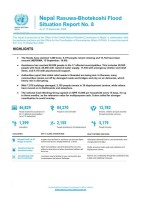
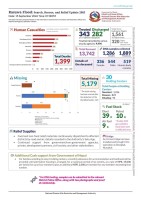
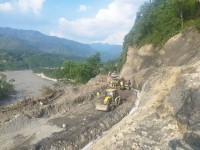
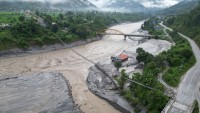
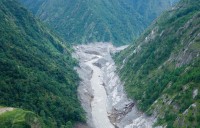
The move comes as Nepal faces mounting climate and disaster risks, particularly following the catastrophic August 26 Bhote Koshi-Trishuli disaster along the Nepal-China border. The disaster has caused more than 1,400 deaths and thousands of people remain missing, according to recent government-linked reporting. Scientific analysis has also indicated that climate change likely contributed to destabilizing the glacier and terrain involved in the disaster, although climate change was not the sole cause.
Nepal is consequently seeking to place climate justice, loss and damage, adaptation finance and Himalayan vulnerability more firmly at the centre of its international engagement. The government has requested US$20 million from the UN’s Fund for Responding to Loss and Damage, highlighting the difficulties vulnerable developing countries face in accessing finance after climate-related disasters.
The new diplomatic mechanism is also expected to improve coordination between foreign policy and domestic climate institutions. For Nepal, climate diplomacy increasingly intersects with relations with India and China, particularly on transboundary rivers, early-warning systems, glacier and mountain monitoring, disaster-risk reduction and regional resilience.
Finance remains one of Nepal’s greatest challenges. The country's National Adaptation Plan 2021-2050 estimates total adaptation needs at about US$47.4 billion, with approximately US$45.9 billion expected to require external support. The plan estimates medium-term requirements of about US$2.1 billion annually.
This financing gap is particularly significant because Nepal's domestic resources are limited compared with the scale of its adaptation requirements. International climate funds-including the Green Climate Fund, Adaptation Fund and Loss and Damage Fund-are therefore central to Nepal's strategy, alongside stronger national capacity to prepare projects and access available financing.
Nepal's diplomatic agenda now moves into a crucial international phase. Prime Minister Balendra Shah is leading Nepal's delegation to the 81st UN General Assembly, where he is scheduled to address the General Debate on September 24. Foreign Minister Khanal is participating in high-level meetings and bilateral engagements in New York. Nepal has indicated that climate change, Himalayan vulnerability and the losses associated with recent disasters will be important elements of its international advocacy.
For a country whose contribution to global greenhouse-gas emissions is very small but whose communities are highly exposed to climate and mountain hazards, the institutionalization of climate diplomacy represents an important shift in how Nepal seeks to translate vulnerability into international policy engagement.
The challenge now will be to turn diplomatic advocacy into accessible finance, stronger regional cooperation, effective early-warning systems, resilient infrastructure and tangible support for communities facing climate-related loss and damage.
Ecosphere News | Environment • Climate • Development