Kathmandu - September 1, 2026 | Ecosphere News
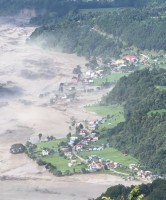
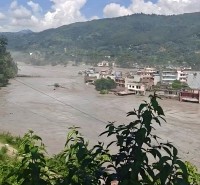
The catastrophic high-altitude ice-rock avalanche and subsequent debris-laden flood that tore through Nepal’s Bhotekoshi-Trishuli river corridor on August 26 has caused unprecedented destruction to roads, bridges, hydropower facilities and communities across Rasuwa, Nuwakot and downstream districts, exposing the extreme vulnerability of critical infrastructure in the Himalayan region.
Preliminary scientific assessments indicate that a major collapse of ice and rock high in the Himalayas triggered a cascading disaster upstream of the Nepal-China border. The resulting surge travelled through the Bhotekoshi and Trishuli river systems with extraordinary force, carrying water, massive boulders, sediment and debris downstream.
Satellite imagery and expert analysis reported that a substantial mass of glacier ice and underlying rock collapsed from an elevation of approximately 5,200 metres, generating an ice-rock avalanche and debris flow. The disaster caused water levels in the river system to rise dramatically within minutes, leaving little time for downstream communities and infrastructure operators to respond.
Roads and Bridges Swept Away
The disaster severely damaged strategic transport infrastructure linking northern Nepal with the rest of the country and with the Nepal-China border.
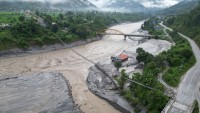
Sections of the Pasang Lhamu Highway and numerous access roads were swept away, buried under enormous volumes of silt or rendered unusable by landslides and river erosion. Early reports indicate that around 40 kilometres of roads and at least 19 bridges were destroyed or severely damaged during the catastrophe.
The destruction of bridges and road corridors has isolated communities, disrupted trade and tourism, and significantly complicated rescue and humanitarian operations.
The loss of major crossings, including key transboundary and local connectors in the affected corridor, has demonstrated the vulnerability of infrastructure built too close to rapidly changing Himalayan rivers.
Hydropower Sector Suffers Massive Blow
Nepal’s hydropower infrastructure has emerged as one of the hardest-hit sectors.
The Nepal Electricity Authority and multiple reports have confirmed severe damage to major power generation and transmission facilities, including the Rasuwagadhi, Chilime and Trishuli 3A hydropower projects, as well as the Trishuli 3B Hub 220 kV substation. The Trishuli and Devighat hydropower facilities and associated transmission and distribution infrastructure were also affected.
A wider assessment of the Bhotekoshi-Trishuli corridor indicates that numerous operational and under-construction hydropower projects have suffered damage across Rasuwa and Nuwakot. These include facilities such as Rasuwagadhi, Chilime, Langtang Khola, Upper Trishuli projects, Trishuli and Devighat, while solar infrastructure and electricity transmission systems have also been affected.
The destruction has not only disrupted electricity generation but also created an enormous humanitarian emergency, with rescue operations continuing at several hydropower sites where workers were trapped or reported missing inside tunnels and project areas.
Markets, Water Systems and Riverbank Communities Buried
Beyond highways and energy infrastructure, the debris surge has devastated local markets, settlements and essential public services.
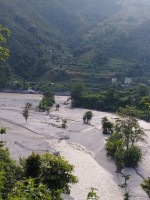
Communities along the Bhotekoshi and Trishuli corridors reported extensive destruction of homes, commercial areas, roads, bridges and public infrastructure. Drinking-water systems and other riverbank facilities have been heavily damaged or buried beneath sediment in several locations.
The World Health Organization has confirmed that communities across Rasuwa, Nuwakot, Dhading and other downstream districts have been affected, with the Government of Nepal declaring multiple municipalities disaster crisis-affected areas as assessments continue.
Reconstruction Must Not Repeat Old Mistakes
As Nepal begins to consider recovery and reconstruction, engineers, planners and policymakers face a fundamental question: Should critical infrastructure simply be rebuilt where it previously stood, or should reconstruction be designed for the new climate and geological realities of the Himalayas?
Experts increasingly argue that rebuilding in the same vulnerable river corridors without major design changes could recreate the conditions for another catastrophe.
1. Setback Lines and Climate-Smart Land Use
Permanent national highways, settlements and critical facilities should be relocated away from extreme flood corridors wherever technically and economically possible.
New infrastructure planning must incorporate scientifically determined extreme flood levels, debris-flow paths and geological hazard zones, rather than relying solely on historical river boundaries.
Strategic roads and essential settlements should be placed higher on stable valley slopes and outside areas vulnerable to catastrophic river widening.
2. Stronger and More Resilient Bridges
Destroyed bridges should not simply be replaced with similar structures.
Future crossings need longer spans, stronger foundations and designs capable of withstanding high-velocity water, massive boulders and extreme debris loads. In the immediate recovery phase, modular and rapidly deployable Bailey bridges could provide temporary connectivity while permanent climate-resilient structures are designed and constructed.
3. Climate-Resilient Hydropower Infrastructure
Nepal's hydropower sector must urgently reassess infrastructure located in high-risk Himalayan river corridors.
Future projects should consider strengthened intake protection, sediment-deflection structures, hardened switchyards and improved tunnel portals. Automated heavy-duty sluice systems and watertight emergency bulkheads could also help reduce damage and provide additional protection for workers during sudden floods.
The latest disaster has demonstrated that hydropower safety must extend beyond conventional flood calculations and incorporate extreme cascading hazards such as ice-rock avalanches, temporary river dam failures and debris surges.
4. Transboundary Early Warning Systems
Perhaps the most urgent lesson from the disaster is the need for a comprehensive Nepal-China transboundary early warning system.
Real-time monitoring networks using satellite observations, high-altitude sensors, river gauges and automated communication systems could help detect glacier collapses, ice avalanches, sudden river blockages and outburst floods upstream.
The August 26 flood reportedly entered Nepal from the Tibetan side before travelling through the Bhotekoshi and Trishuli systems, highlighting the importance of rapid cross-border information sharing. Nepal’s Flood Forecasting Division received information about the incoming surge after it had already developed, underlining the need for earlier detection and automatic warning mechanisms.
A New Reality for Himalayan Infrastructure
The Bhotekoshi-Trishuli disaster is more than a single flood event. It is a warning about the growing risks facing infrastructure in the rapidly changing Himalayas.
Roads, bridges, hydropower projects and settlements designed according to past conditions may no longer be sufficient for the scale of hazards emerging from unstable glaciers, warming temperatures, extreme rainfall and cascading mountain disasters.
Nepal's reconstruction effort must therefore become an opportunity to build differently.
Rebuilding stronger is not enough. Nepal must rebuild smarter, relocate where necessary, monitor hazards upstream and design infrastructure for extreme events that were once considered unimaginable.
The true measure of recovery will not be how quickly damaged infrastructure is reconstructed-but whether Nepal ensures that the next Himalayan disaster does not destroy the same infrastructure all over again.
#EcosphereNews #NepalFlood #BhotekoshiFlood #TrishuliFlood #RasuwaDisaster #ClimateChange #ClimateResilience #HimalayanDisaster #GlacierCollapse #Hydropower #InfrastructureResilience #DisasterRiskReduction #EarlyWarningSystems #ClimateJustice #BuildBackBetter #Nepal