Ecosphere News | 28 October 2026
The world is facing mounting climate-related risks, from record greenhouse gas concentrations and accelerating ice loss to deadly heatwaves and growing threats to coastal economies. Recent developments reported by international scientific institutions, the United Nations, governments and climate researchers underscore the urgent need to strengthen climate resilience, reduce emissions and protect vulnerable communities.
The latest developments also highlight the growing importance of climate adaptation, disaster preparedness and international cooperation as the impacts of global warming become increasingly difficult to ignore.
1. EU unveils climate resilience framework amid growing insurance protection gap
The European Commission has unveiled a new climate resilience framework aimed at strengthening Europe's ability to prepare for and respond to climate-related disasters.
Announced on 27 October, the proposed framework seeks to establish a more coordinated approach to assessing climate risks and protecting people, businesses, infrastructure and essential public services. The initiative follows a summer marked by extreme heat, wildfires and drought across parts of Europe.
The Commission has also outlined plans for a European heatwave plan, a climate insurance alliance and a European water initiative.
However, concerns remain over the growing climate insurance protection gap-the difference between economic losses caused by disasters and the losses covered by insurance. Campaigners argue that the proposed measures must translate into meaningful protection for households and businesses facing increasingly expensive or inaccessible insurance coverage.
The initiative reflects a broader policy challenge: governments must not only reduce emissions but also prepare societies for climate impacts that can no longer be entirely avoided.
Source: European Commission; reporting on the climate insurance protection gap.
2. WMO warns record carbon dioxide levels will affect the planet for centuries
The World Meteorological Organization (WMO) has warned that record concentrations of greenhouse gases are committing the planet to prolonged global warming, with the effects of carbon dioxide extending across decades and centuries.
According to the WMO's Greenhouse Gas Bulletin released on 27 October, the globally averaged atmospheric concentration of carbon dioxide reached 426.8 parts per million (ppm) in 2025, equivalent to approximately 153% of its pre-industrial level.
Atmospheric methane and nitrous oxide concentrations also reached record highs.
Carbon dioxide is particularly concerning because it remains in the climate system for a long time. Its accumulation intensifies warming, contributes to ocean acidification and increases the risks associated with extreme weather, rising sea levels and ecosystem disruption.
The WMO has stressed that the continued rise in greenhouse gas concentrations reflects the need for urgent emissions reductions. The findings are particularly significant as countries prepare for the UN climate conference, COP31, scheduled for November 2026 in Antalya, Türkiye.
Source: World Meteorological Organization (WMO), Greenhouse Gas Bulletin, 27 October 2026.
3. Slovenia loses its iconic Triglav Glacier after an exceptionally hot summer
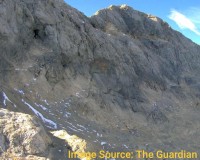
Slovenia has lost the remaining ice of its historic Triglav Glacier, located beneath Mount Triglav, the country's highest peak and a powerful symbol of national identity.
The glacier's disappearance follows decades of retreat, intensified by exceptionally high summer temperatures and unusually low winter snowfall. Researchers had warned in September that the remaining ice was on the verge of disappearing.
The loss represents more than a change in the Alpine landscape. Glaciers provide important scientific records of past climate conditions and contribute to mountain hydrology. Their disappearance illustrates how rising temperatures and declining snow cover are reshaping high-altitude environments.
The nearby Skuta Glacier, another remnant of Slovenia's Alpine ice, is also shrinking and has fragmented into smaller ice patches.
The retreat of these glaciers reflects a wider pattern across the Alps, where temperatures are rising substantially faster than the global average. Scientists warn that continued warming could accelerate the disappearance of small glaciers throughout the region.
Source: Government of Slovenia; Associated Press; international climate reporting.
4. Arctic winter sea ice loss could be substantially worse than previous projections
New research from the University of Cambridge suggests that future Arctic winter sea ice coverage could be approximately one million square kilometres smaller than previously projected.
Published in October 2026, the research draws on evidence from ocean sediments dating back around 6,000 years, when Arctic conditions were warmer than in more recent historical periods. Researchers compared these ancient climate records with modern climate-model simulations to improve the reliability of future projections.
The findings suggest that some climate models may overestimate the amount of winter sea ice likely to remain as global temperatures rise.
Arctic sea ice plays a crucial role in regulating the exchange of heat and moisture between the ocean and atmosphere. Changes in its extent can influence regional climate systems and have implications for weather patterns well beyond the Arctic.
The study highlights the importance of combining historical climate evidence with modern modelling to improve projections and reduce uncertainty about future environmental change.
Source: University of Cambridge; research published in Nature Geoscience, October 2026.
5. New international poll finds strong support for methane reduction in Morocco
A new international survey has found that 84% of Moroccan respondents support action to reduce methane emissions, reflecting broad public backing for measures to tackle a powerful greenhouse gas.
The survey was commissioned by the Global Methane Hub in collaboration with the Yale Program on Climate Change Communication. Conducted across 18 countries, it found that 85% of respondents overall supported methane-reduction measures.
Methane has contributed approximately 30% of global warming since pre-industrial times. Over a 20-year period, it traps more than 80 times as much heat as an equivalent amount of carbon dioxide, although it remains in the atmosphere for a much shorter time.
Reducing methane emissions can therefore deliver significant near-term climate benefits. Key opportunities include preventing leaks from oil and gas operations, improving waste management, capturing landfill gas and adopting agricultural practices that reduce emissions.
In Morocco, public concern over drought, water quality and extreme heat adds urgency to the debate. The survey found that respondents supported methane reductions across the energy, waste and agricultural sectors.
The findings suggest that public support for climate action extends beyond carbon dioxide and includes practical measures targeting other major sources of warming.
Source: Global Methane Hub and Yale Program on Climate Change Communication, October 2026.
6. ADB warns rising coastal risks threaten millions across Asia and the Pacific
The Asian Development Bank's Asia-Pacific Climate Report 2026: Coastal Risks on the Rise has highlighted the growing economic and human consequences of climate change across the region's coastal areas.
The report assesses climate risks across 30 ADB developing member countries with coastlines and identifies the scale of the population and economic activity exposed to coastal hazards.
Key figures from the report include:
More than 400 million people live within 10 kilometres of the coast.
Approximately US$7 trillion in annual economic output is generated across these coastal areas.
Around one in ten people in the countries covered live in coastal zones.
The report estimates that annual coastal flood damage, currently around US$27 billion, could rise to approximately US$172-199 billion by 2050 without adequate adaptation. Under higher-emissions scenarios, losses could increase further by the end of the century.
The ADB argues that investment in coastal protection, climate-resilient infrastructure, ecosystem conservation and better land-use planning could substantially reduce future losses. Its analysis indicates that annual coastal protection investments of US$9-19 billion could avert US$178-360 billion in annual flood damage.
For Asia and the Pacific, the findings underline the need to integrate climate adaptation into economic planning, urban development and infrastructure investment.
Source: Asian Development Bank, Asia-Pacific Climate Report 2026, October 2026.
7. Europe's summer heat linked to an estimated 50,000 deaths
An analysis by researchers associated with Imperial College London and the London School of Hygiene & Tropical Medicine estimates that summer heat in 2026 caused approximately 50,391 excess deaths across 854 European urban areas.
The study estimates that around 32,619 of those deaths-nearly two-thirds-were attributable to human-induced climate change.
The estimated toll is substantially higher than the figures calculated for the severe European summers of 2022 and 2003. Researchers identified repeated heatwaves during June, July and August as major contributors, with particularly intense conditions between 17 June and 1 July.
Older adults were among the most affected groups, although the estimated mortality burden also extended to younger people.
The researchers emphasise that these figures are model-based estimates, not a direct count of death certificates recording heat as the cause. The analysis covered 854 urban areas representing approximately 40% of the population across the countries studied, meaning the findings do not capture the entire European population.
The results nevertheless underline the serious public health consequences of extreme heat and the importance of early-warning systems, accessible cooling, heat-resilient housing, urban green spaces and better protection for vulnerable populations.
Source: London School of Hygiene & Tropical Medicine; Imperial College London; Nature Health research reporting, October 2026.
8. Experts warn US cuts to NOAA could weaken preparedness for extreme weather
Concerns have emerged that staffing reductions and funding cuts affecting the United States' National Oceanic and Atmospheric Administration (NOAA) could weaken the country's capacity to monitor climate conditions and respond to extreme weather.
Reporting published on 27 October has highlighted warnings from experts that reduced scientific capacity could leave communities more exposed as a potentially powerful El Niño develops.
El Niño is a natural climate phenomenon involving warmer-than-average sea surface temperatures in the central and eastern tropical Pacific. It can influence rainfall, temperatures, droughts and storm patterns in different parts of the world, although its impacts vary by region and season.
NOAA plays an important role in weather forecasting, climate monitoring, satellite observations and disaster preparedness. Any sustained reduction in its scientific and operational capacity could have implications beyond the United States, given the international importance of its data and forecasting services.
Experts warn that weakened monitoring and preparedness could increase risks to communities facing heat, flooding, drought and other climate-related hazards. The precise consequences will depend on the extent of the cuts, the ability of remaining teams to maintain services and the evolution of El Niño conditions.
The debate highlights a central challenge for governments worldwide: reliable scientific institutions and early-warning systems are essential to reducing disaster losses in a warming world.
Source: The Guardian, reporting published 27 October 2026; NOAA's El Niño monitoring and forecasts.
Global perspective: The need to turn climate warnings into action
Taken together, these developments reveal the interconnected nature of the climate crisis. Record greenhouse gas concentrations are locking in long-term warming, while extreme heat is already taking a substantial human toll. Glacier loss and declining Arctic sea ice signal profound changes in the cryosphere, and rising coastal risks threaten communities, infrastructure and economic development.
At the same time, the EU's resilience initiative, the ADB's adaptation recommendations and public support for methane reduction point to opportunities for meaningful action.
For countries such as Nepal, these international developments carry important lessons. Mountain ecosystems, glacial lakes, river systems, agriculture, tourism and climate-sensitive livelihoods are all exposed to climate-related risks. Strengthening early-warning systems, investing in resilient infrastructure, protecting ecosystems and securing adequate adaptation and loss-and-damage finance are essential priorities.
The global response must combine rapid reductions in greenhouse gas emissions with practical investments in resilience, public health, disaster preparedness and international cooperation. Climate action is no longer simply a question of protecting the environment; it is fundamental to safeguarding lives, livelihoods and sustainable development.
Ecosphere News will continue to report on the science, policies and international developments shaping the global environmental agenda.
#EcosphereNews #ClimateChange #ClimateCrisis #ClimateAction #GlobalWarming #ClimateResilience #EnvironmentalNews #Sustainability #ClimateAdaptation #GreenhouseGasEmissions #CarbonDioxide #MethaneEmissions #ExtremeHeat #ArcticSeaIce #GlacierLoss #CoastalResilience #DisasterRiskReduction #ClimateScience #RenewableEnergy #Biodiversity #SustainableDevelopment #ClimateJustice #AsiaPacific #Nepal #COP31