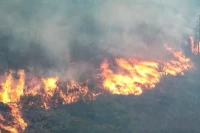
Birendranagar, Surkhet - A visible forest fire burning across the eastern-northern forest area from Chheda in Birendranagar-14 has sparked serious concerns over environmental degradation, water security, and the effectiveness of disaster response mechanisms in Karnali Province.
The fire, seen blazing along the hillside during the evening hours, appears to be spreading across a significant section of forest. Locals report that the affected forest region plays a crucial ecological role, particularly as a recharge zone for underground water sources that sustain the Birendranagar Valley-home to an estimated 600,000 residents.
Environmental observers warn that continued forest fires in such sensitive zones could have long-term consequences. The destruction of vegetation not only leads to loss of biodiversity but also reduces the soil’s capacity to retain water. This, in turn, threatens groundwater replenishment, increasing the risk of water scarcity in the valley in the coming years.
In addition to ecological damage, forest fires contribute to air pollution, release stored carbon into the atmosphere, and heighten the risk of landslides, especially during the monsoon season. Experts emphasize that repeated incidents like this could accelerate environmental vulnerability in Karnali, a region already facing development and climate challenges.
The incident has also raised public questions about preparedness and accountability. Residents have expressed frustration over the apparent lack of immediate response from responsible authorities. While government agencies often mobilize during major disasters, locals question their absence in preventive and early-response actions in cases like forest fires.
The cause of the fire has not yet been officially confirmed. However, in Nepal, many forest fires are linked to human activities such as deliberate burning, negligence, or unmanaged agricultural practices, alongside natural factors like prolonged dry conditions.
Authorities are being urged to take swift action to control the fire, investigate its origin, and strengthen community-based forest management and early warning systems. Environmental advocates also stress the need for public awareness and stricter monitoring to prevent such incidents.
As climate risks intensify, incidents like the Birendranagar forest fire highlight the urgent need for coordinated efforts between local communities, government bodies, and environmental stakeholders to protect critical natural resources.
#EcosphereNews #ForestFire #Birendranagar #KarnaliProvince #ClimateCrisis #WaterSecurity #DisasterManagement #NepalEnvironment #WildfireAlert #SustainableFuture