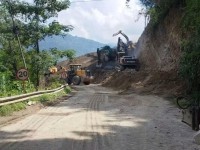
Kathmandu, Nepal - Despite clear legal frameworks mandating environmental safeguards, development projects in Nepal continue to face prolonged delays, largely due to complex and multi-layered bureaucratic procedures. While Environmental Impact Assessment (EIA) and Initial Environmental Examination (IEE) are essential tools designed to balance development with environmental protection, their implementation has increasingly become a bottleneck rather than a facilitator.
Under Nepal’s Environment Protection Act, 2076 and Environment Protection Rules, 2077, projects of specified scale must undergo IEE or EIA to assess impacts on forests, water resources, biodiversity, soil, and air quality. These provisions aim to ensure that development proceeds responsibly. However, stakeholders argue that in practice, the process has become excessively time-consuming, with unclear timelines and weak inter-agency coordination.
Delays Beyond Approval
Contrary to common perception, approval of an EIA does not mark the end of procedural hurdles. Instead, it signals the beginning of another lengthy administrative journey-particularly in projects involving forest land use and tree felling permissions.
A typical approval process for tree felling in national pride projects involves multiple institutions and layers of decision-making. From the project office to the parent department, then to the ministry, and further to the Ministry of Forests and Environment and its subordinate bodies, files must pass through numerous officials, often repeating similar review stages. In total, more than 20 layers of verification and signatures may be required before field-level verification even begins.
The process further extends with site inspections, coordination with Division Forest Offices, and consultations with Community Forest User Groups. These steps, although important for participatory governance, often lack efficiency and standard timelines, resulting in significant project delays.
Additional Layers and Compliance Burden
Even after field verification, the approval chain continues upward-eventually reaching the Council of Ministers. Following cabinet approval, projects must fulfill compensatory requirements, such as providing equivalent forest land or depositing funds into the Forest Development Fund. Only then can implementation begin, which itself involves technical tasks like tree marking, felling, and timber management under strict supervision.
This multi-tiered process not only prolongs project timelines but also increases administrative costs and uncertainty.
Human Impact: Pressure on Technical Staff
Beyond procedural inefficiencies, the system is also placing considerable psychological strain on engineers and technical personnel. Many report feeling overwhelmed by the need to navigate bureaucratic channels, often facing repeated scrutiny and pressure without corresponding flexibility in deadlines.
One engineer involved in a national project described the experience as “professionally humiliating,” citing constant follow-ups, administrative hurdles, and public misconceptions about project delays. Despite systemic delays, project teams are still expected to meet original deadlines, leading to stress, frustration, and declining morale.
Lessons from International Practices
Comparative analysis shows that several countries have adopted more efficient and transparent systems. For example:
In India, forest clearance is divided into two stages, with many states implementing single-window systems that aim for initial approvals within 60-90 days.
Singapore has a fully integrated digital approval system, completing most pre-construction clearances within 14-30 days.
Australia and the United Kingdom rely on clear timelines and accountability, with approvals typically completed within weeks.
Bhutan emphasizes a streamlined, trust-based governance model under its “high value, low impact” policy.
New Zealand integrates environmental and land-use approvals under a single legal framework, ensuring decisions within 20-60 working days.
These examples highlight that efficiency does not require compromising environmental standards but depends on clarity, coordination, and accountability.
Pathways for Reform
Experts and stakeholders suggest several reforms to address these challenges in Nepal:
Establishing a single-window digital approval system to streamline processes
Setting legally binding timelines for each stage of approval
Introducing real-time electronic tracking systems for transparency
Developing standardized templates for common mitigation measures
Strengthening inter-agency coordination mechanisms
Implementing accountability frameworks to address delays
Delegating more authority to provincial and local levels
Simplifying procedures involving community forest user groups
Conclusion
The issue facing Nepal’s development sector is not solely rooted in environmental regulations but in how those regulations are implemented. EIA approval, rather than being a final checkpoint, often marks the beginning of a prolonged and uncertain administrative process.
Unless Nepal undertakes systemic reforms to simplify procedures, enforce timelines, and improve institutional coordination, development projects will continue to face delays-remaining confined to paperwork rather than progressing on the ground.
#EcosphereNews #NepalDevelopment #EIA #IEE #EnvironmentalGovernance #SustainableDevelopment #Bureaucracy #InfrastructureNepal #PolicyReform #ForestManagement #DevelopmentChallenges #GoodGovernance #NepalPolicy #EnvironmentProtection #PublicAdministration