An international training initiative titled Urban Resilience Intensive Training 2026 (URIT) has been announced, aiming to strengthen the capacity of policymakers, researchers, and practitioners working toward resilient and sustainable urban futures.
The program will be conducted in two phases. The first phase consists of online sessions scheduled for 29-30 June 2026, with three-hour daily engagements designed to introduce key concepts and frameworks. The second phase will take place in person in Copenhagen from 7-15 July 2026, providing participants with immersive, hands-on training and real-world exposure.
URIT 2026 is expected to focus on several critical areas shaping the future of cities. These include strengthening multi-level governance and policy coordination, promoting nature-based solutions and ecosystem services, enhancing participatory planning and stakeholder engagement, and exploring innovative financing mechanisms and technological tools for urban resilience. The program will also delve into urban metabolism and circular economy approaches, reflecting growing global attention toward resource efficiency and sustainable urban systems.
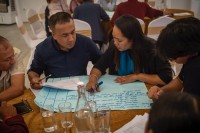
The training is open to a diverse group of applicants, including urban planners, policymakers, designers, researchers, academics, NGO professionals, community practitioners, and advanced students specializing in urban resilience and related fields. By bringing together participants from different backgrounds, the program aims to foster cross-sectoral collaboration and knowledge exchange.
As cities worldwide face increasing challenges from climate change, rapid urbanization, and environmental degradation, initiatives like URIT 2026 are seen as timely efforts to build practical skills and global networks. Such programs are particularly relevant for countries in the Global South, where urban systems are under significant pressure and require innovative, inclusive, and sustainable solutions.
Experts emphasize that strengthening urban resilience is not only about infrastructure development but also about inclusive governance, ecological restoration, and community-driven approaches. Programs like URIT contribute to bridging the gap between theory, policy, and on-the-ground implementation.
#UrbanResilience #SustainableCities #ClimateAction #GlobalSouth #URIT2026 #GreenTransition #UrbanPlanning #ResilientCities #NatureBasedSolutions #CircularEconomy