Kanchanpur, Sudurpashchim Province - A striking geological formation of variegated mudstone in Kanchanpur district has drawn attention for its scientific and aesthetic significance, reflecting the rich sedimentary history of Nepal’s Chure (Siwalik) region.
Captured in a recent photograph by Arati Shrestha, the exposed mudstone structures display dramatic vertical ridges and varied coloration, shaped over time by natural erosion processes. These formations are part of the broader Siwalik Group-young sedimentary deposits that dominate the southern foothills of the Himalayas.
Geologists explain that variegated mudstone, often interbedded with sandstone and siltstone, is a defining feature of the Lower Siwalik formations. These rocks were formed millions of years ago through river and floodplain deposits, preserving evidence of ancient environmental conditions.
The distinct coloration-ranging from grey and brown to reddish tones-results from mineral composition and oxidation processes over geological time. Such formations are highly susceptible to weathering, leading to the sharp, pillar-like and rugged structures visible today.
In western Nepal, similar natural mud and clay formations are also associated with culturally significant landscapes such as Linga Dham, where erosion has shaped unique terrain that attracts both pilgrims and tourists. The geological processes behind these formations highlight the dynamic interaction between climate, topography, and sediment composition.
Experts emphasize that these fragile landforms are increasingly vulnerable to environmental pressures, including deforestation, unplanned infrastructure development, and extreme rainfall events. The Chure region, already known for its ecological sensitivity, requires careful management to prevent erosion, landslides, and habitat degradation.
The Kanchanpur mudstone exposure not only offers scientific value but also presents opportunities for geo-tourism and environmental education. Promoting awareness of such natural heritage sites can contribute to conservation efforts while supporting sustainable local economies.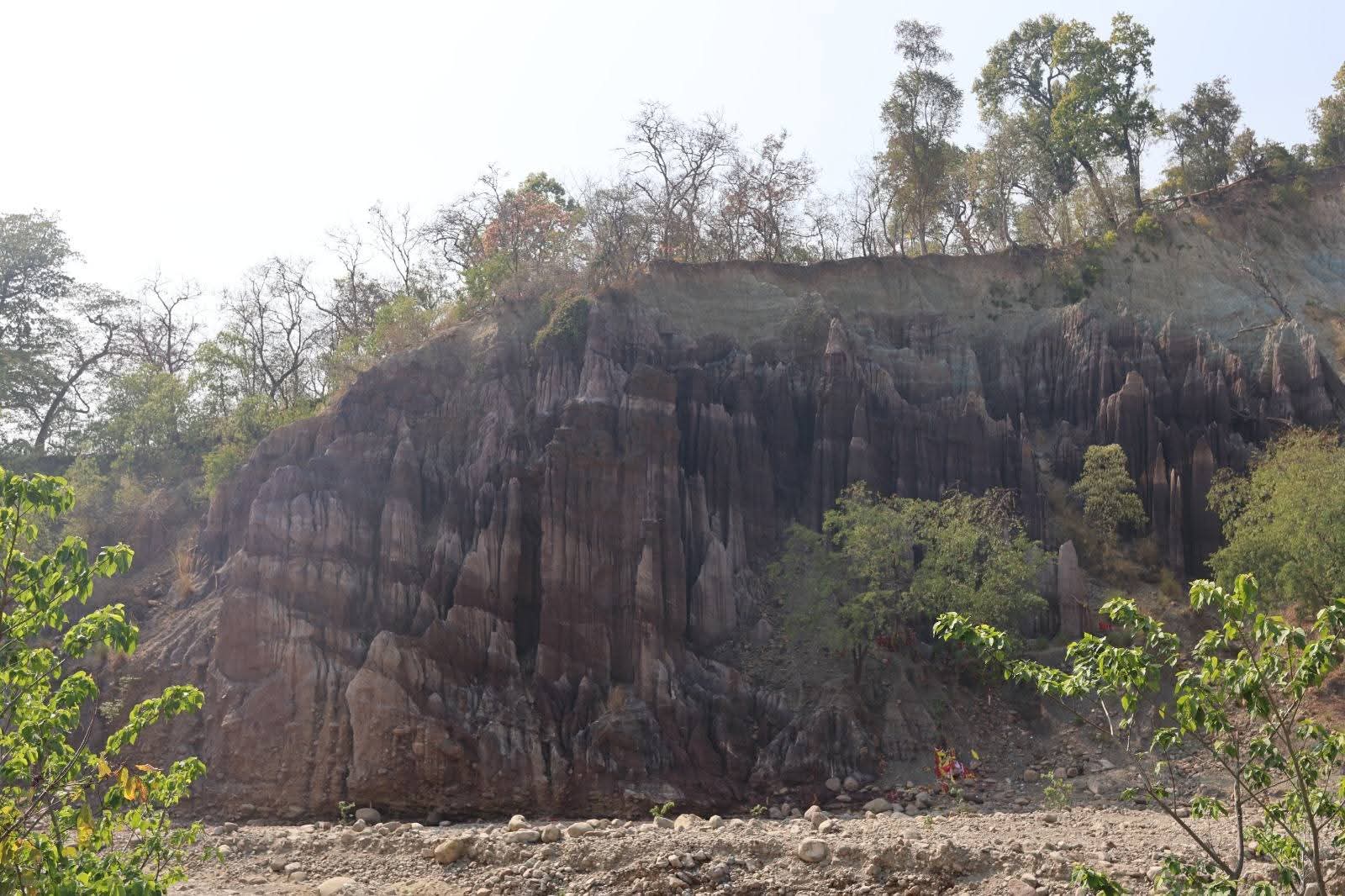
As Nepal continues to balance development with environmental protection, preserving these geological landmarks will be essential for maintaining both biodiversity and the country’s natural identity.
#EcosphereNews #Kanchanpur #ChureRegion #Siwalik #GeologyNepal #Mudstone #GeoHeritage #EnvironmentalConservation #ClimateImpact