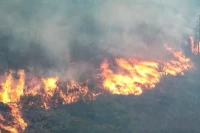
Kathmandu, March 25, 2026 - Europe is facing a growing wildfire crisis, with a new report warning that the continent is “dangerously unprepared” to handle increasingly severe and widespread fires driven by climate change, institutional gaps, and delayed response capacity.
The report, commissioned by aviation and emergency services company Avincis and compiled by Lead by Thought, highlights a concerning trend: wildfire seasons across Europe are no longer limited to the traditional summer months. Instead, fires are starting earlier in the year and extending well beyond September, placing prolonged pressure on emergency response systems.
According to the findings, more than 1.03 million hectares of land burned across the European Union in 2025, marking one of the most destructive wildfire years on record. Countries such as Spain, Portugal, Italy, Greece, and France were among the hardest hit. Alarmingly, wildfires are also expanding northward, increasingly affecting regions like Sweden, Finland, and Denmark-areas historically less prone to such disasters.
Experts attribute this escalation largely to rising temperatures, prolonged droughts, and shifting climate patterns, which are making forests more susceptible to ignition and rapid fire spread. At the same time, rural depopulation across parts of Europe has reduced traditional land management practices, allowing flammable vegetation to accumulate.
The report also underscores serious capacity challenges. Europe faces shortages of trained firefighting personnel and specialized pilots, compounded by complex certification processes that slow workforce development. In addition, critical firefighting equipment remains insufficient. Although the European Commission has committed approximately €600 million to procure new firefighting aircraft, deliveries are not expected until between 2027 and 2030-raising concerns about near-term readiness.
Another emerging issue is the global strain on firefighting resources. As wildfire seasons increasingly overlap across continents, countries are finding it harder to share aerial firefighting fleets and technical expertise during peak emergencies.
The situation reflects a broader pattern: Europe, often described as the fastest-warming continent, is experiencing climate impacts at a pace that outstrips current adaptation efforts. While policy discussions are underway to strengthen cross-border coordination and establish a shared wildfire response mechanism, experts warn that implementation must accelerate to match the scale of the threat.
The report calls for urgent action, including improved forest management, streamlined training systems, increased investment in early warning technologies, and stronger regional cooperation.
As wildfires continue to intensify, the findings serve as a stark reminder that climate-driven disasters are no longer future risks but present realities, demanding immediate and coordinated responses across Europe.
#EcosphereNews #Wildfires #ClimateCrisis #Europe #ClimateChange #DisasterPreparedness #ForestFires #EnvironmentalNews #GlobalWarming #Sustainability #Resilience #BreakingNews