Dhading, Nepal: Despite being located only about 15 kilometers from Kathmandu, residents of Banjhoghar village in Sikrekhola, Ward No. 9 of Dhunibeshi Municipality continue to face serious challenges due to the absence of proper road connectivity and limited access to basic services.
Banjhoghar is a small settlement consisting of just 11 households, all belonging to the Tamang community. The village lies in a forested mid-hill area, making daily life difficult for residents who depend largely on subsistence agriculture and seasonal labor.
Local youth Subash Tamang says agricultural production in the village is only enough to sustain families for about three months of the year. “For the remaining months, most villagers must look for seasonal work outside the community,” he explained, adding that youth unemployment remains a major concern.
The settlement’s isolation has worsened economic hardships. According to local resident Ujwarsingh Tamang, the village is located less than one kilometer from the historic Tribhuvan Rajpath via Kanakot. However, the lack of a connecting road has prevented villagers from accessing markets, healthcare, and other essential services efficiently.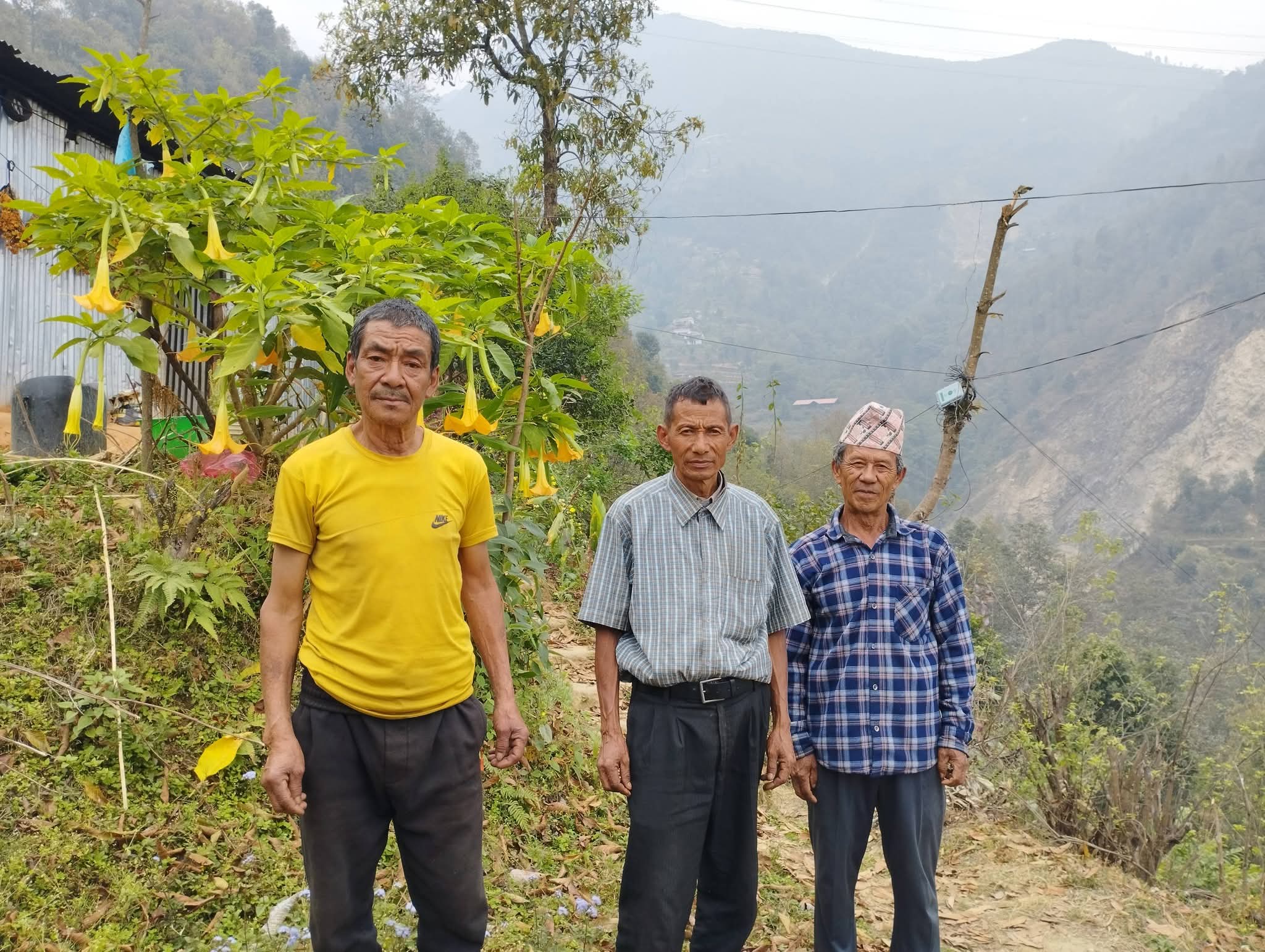
Human-wildlife conflict is another challenge. Because the settlement is surrounded by forest, monkeys frequently damage crops, further threatening the already limited agricultural production of the community.
Social and economic vulnerability is also visible at the household level. Maila Tamang, a resident of the village, does not own land and has built a small temporary shelter on rented land, paying an annual fee to the landowner. For many families, the lack of land ownership and limited livelihood opportunities have made it difficult to improve their living conditions.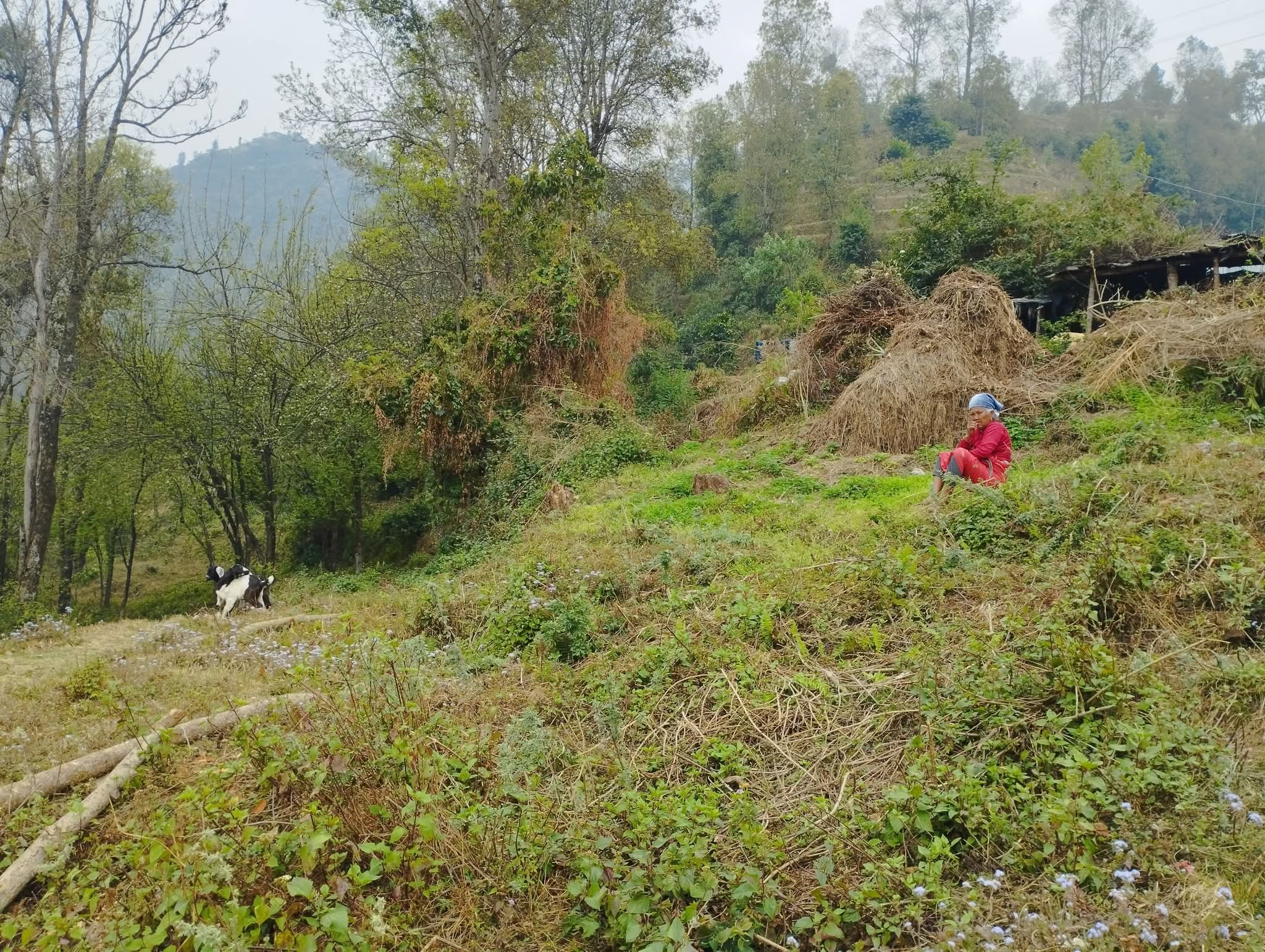
Women in the community also report limited access to livelihood support programs and economic empowerment initiatives. Residents say that government programs aimed at improving rural livelihoods rarely reach their village.
Local people believe that constructing a short access road linking the settlement to the nearby highway could significantly improve their situation by enabling easier transportation, better access to schools and health facilities, and improved livelihood opportunities.
Although Banjhoghar lies close to the capital region, its situation reflects the persistent development gap that many rural and indigenous communities in Nepal continue to face. Experts note that without inclusive development efforts by local authorities, issues such as poverty, unemployment, and inequality may deepen further.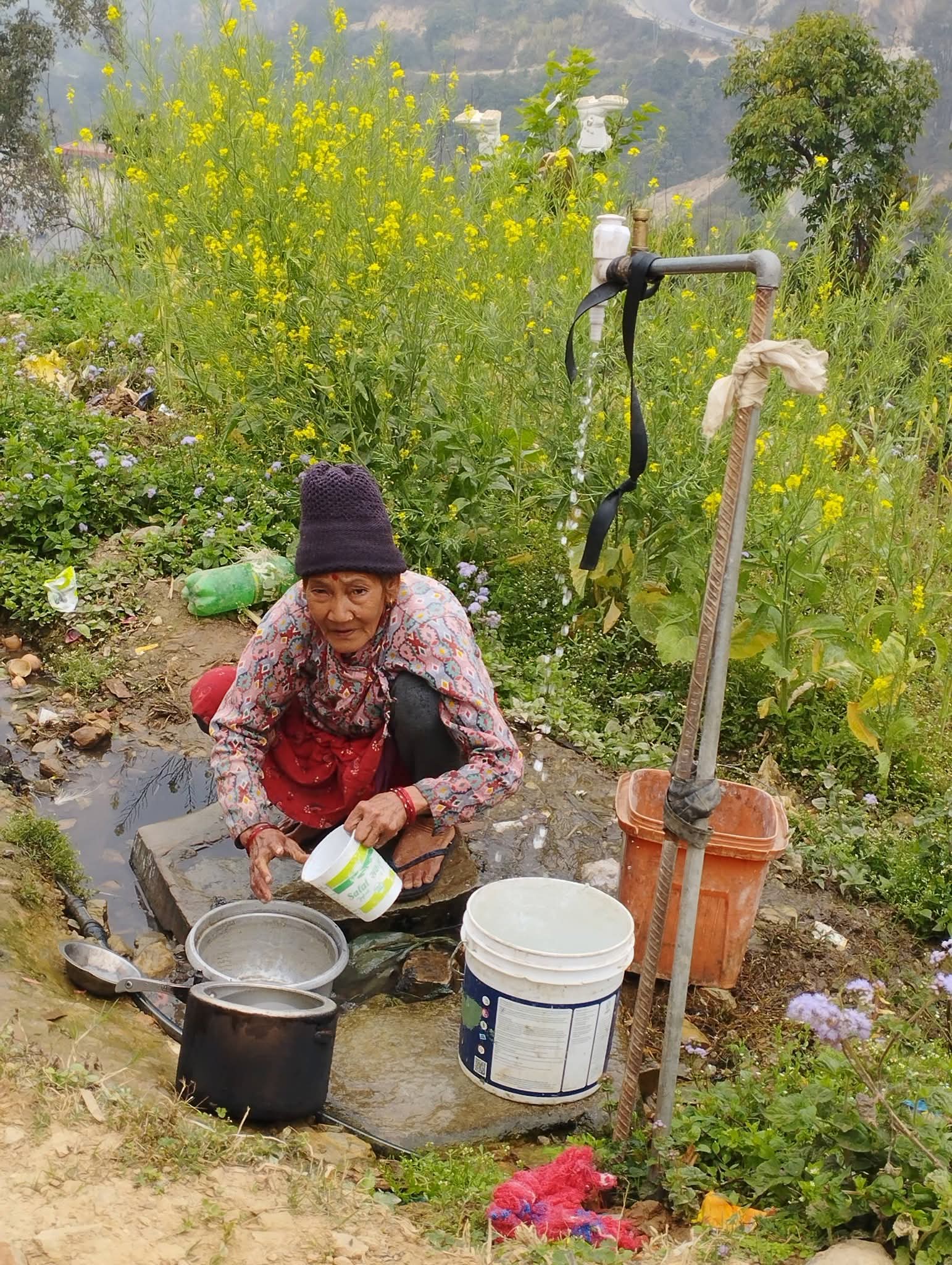
Community members are urging local authorities to prioritize road access and provide targeted livelihood and social support programs so that the village can be integrated into mainstream development.
#EcosphereNews #RuralDevelopment #Nepal #IndigenousCommunities #TamangCommunity #InfrastructureGap #DhunibeshiMunicipality #KathmanduValley #SustainableDevelopment #PovertyReduction #InclusiveDevelopment