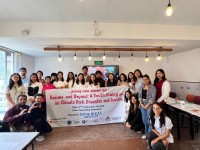
Kathmandu - Environmental restoration does not always begin with sweeping global agreements or billion-dollar climate pledges. Often, it starts with small, deliberate actions - planting trees, reducing plastic waste, supporting pollinators, and protecting local water sources. While such steps may appear modest, scientific evidence confirms that collective behavior at the community level significantly shapes planetary outcomes.
Environmental science clearly demonstrates the interconnected nature of Earth’s systems. Forests act as carbon sinks, regulate rainfall patterns, and stabilize soil. Oceans absorb a large share of global heat and carbon dioxide emissions, buffering the impacts of climate change. Pollinators, including bees and butterflies, are essential for sustaining food systems, with a significant portion of global crops depending directly on their activity. Protecting any one of these elements strengthens the broader ecological network.
In Nepal, where biodiversity ranges from tropical plains to alpine ecosystems, the importance of stewardship is particularly visible. Community forestry programs have shown how local participation can restore degraded land while supporting livelihoods. Similarly, youth-led clean-up campaigns and urban tree-planting initiatives in cities like Kathmandu signal growing environmental awareness among citizens.
Experts emphasize that environmental protection is not only a policy issue but also a behavioral one. Research in environmental psychology indicates that when individuals shift from a mindset of consumption to one of stewardship, long-term sustainable practices become more consistent. This transition from extraction to participation helps embed sustainability into daily life.
Beyond science, cultural and spiritual traditions in Nepal and across the world have long regarded nature as sacred. Many teachings emphasize that caring for the Earth is inseparable from caring for oneself. Modern public health research increasingly supports this view, showing that access to green spaces improves mental well-being, reduces stress, and enhances community resilience.
Environmental advocates note that symbolic acts - such as tree hugging or community clean-ups - are not merely gestures. When repeated and scaled, they influence public consciousness and inspire wider systemic change. Awareness becomes meaningful when translated into practice.
As climate change intensifies and biodiversity loss accelerates globally, the message is clear: restoration requires both structural reforms and everyday responsibility. Genuine transformation begins when intention aligns with action -when individuals, communities, and institutions collectively recognize their role within the Earth’s living systems.
For Nepal and the global community alike, the path forward lies in strengthening this sense of interdependence. Small actions, when multiplied across millions of people, can generate powerful currents of restoration - grounded not only in hope, but in measurable impact.