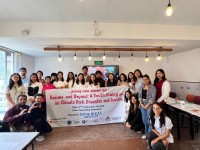
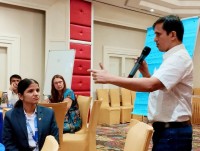
Kathmandu, 27 January 2026 - Nepal has taken another step toward advancing its clean energy and climate commitments with the start of the National Forum on “Clean Energy in Action: Decarbonizing Nepal’s Economy”, held today at The Soaltee Hotel, Kathmandu. The one-day forum is being organized by the Alternative Energy Promotion Centre (AEPC) to mark the International Clean Energy Day 2026, observed globally on 26 January.
The International Clean Energy Day was declared by the United Nations General Assembly in 2023, underscoring the critical role of clean energy in achieving the Sustainable Development Goals, particularly climate action, sustainable economic growth, and universal access to energy. The observance highlights the urgency of accelerating the global transition away from fossil fuels toward renewable energy, energy efficiency, and low-carbon technologies.
As Nepal’s lead government institution for renewable energy and energy efficiency, AEPC has positioned the forum as a continuation of last year’s international-level summit on “Energy Transition for a Resilient and Low Carbon Economy 2025.” Unlike previous dialogues that focused largely on commitments and vision, this year’s national forum emphasizes practical pathways and implementation, reflecting Nepal’s growing focus on action-oriented decarbonization.
The forum serves as a high-level policy dialogue and knowledge-sharing platform, bringing together policymakers, development partners, investors, financial institutions, private sector representatives, civil society organizations, professionals, experts, and academia. Discussions are centered on accelerating clean energy development and scaling decarbonization initiatives across Nepal’s energy sector.
The program includes an opening session followed by three technical sessions addressing:
Clean energy-led decarbonization pathways, including e-mobility,
Opportunities in energy efficiency and the role of carbon markets, and
Financing mechanisms for clean energy and electric mobility, with a focus on blended finance.
Through expert presentations and panel discussions, participants are expected to identify policy gaps, investment opportunities, and coordination challenges related to decarbonizing Nepal’s economy. Particular attention is being given to aligning clean energy actions with Nepal’s Nationally Determined Contributions (NDC 3.0), the Long-Term Low Emissions Development Strategy, and related national policies.
According to organizers, the forum aims to contribute to informed decision-making and stronger multi-stakeholder partnerships, which are seen as essential for mobilizing climate finance and scaling up clean energy and energy efficiency investments in the country.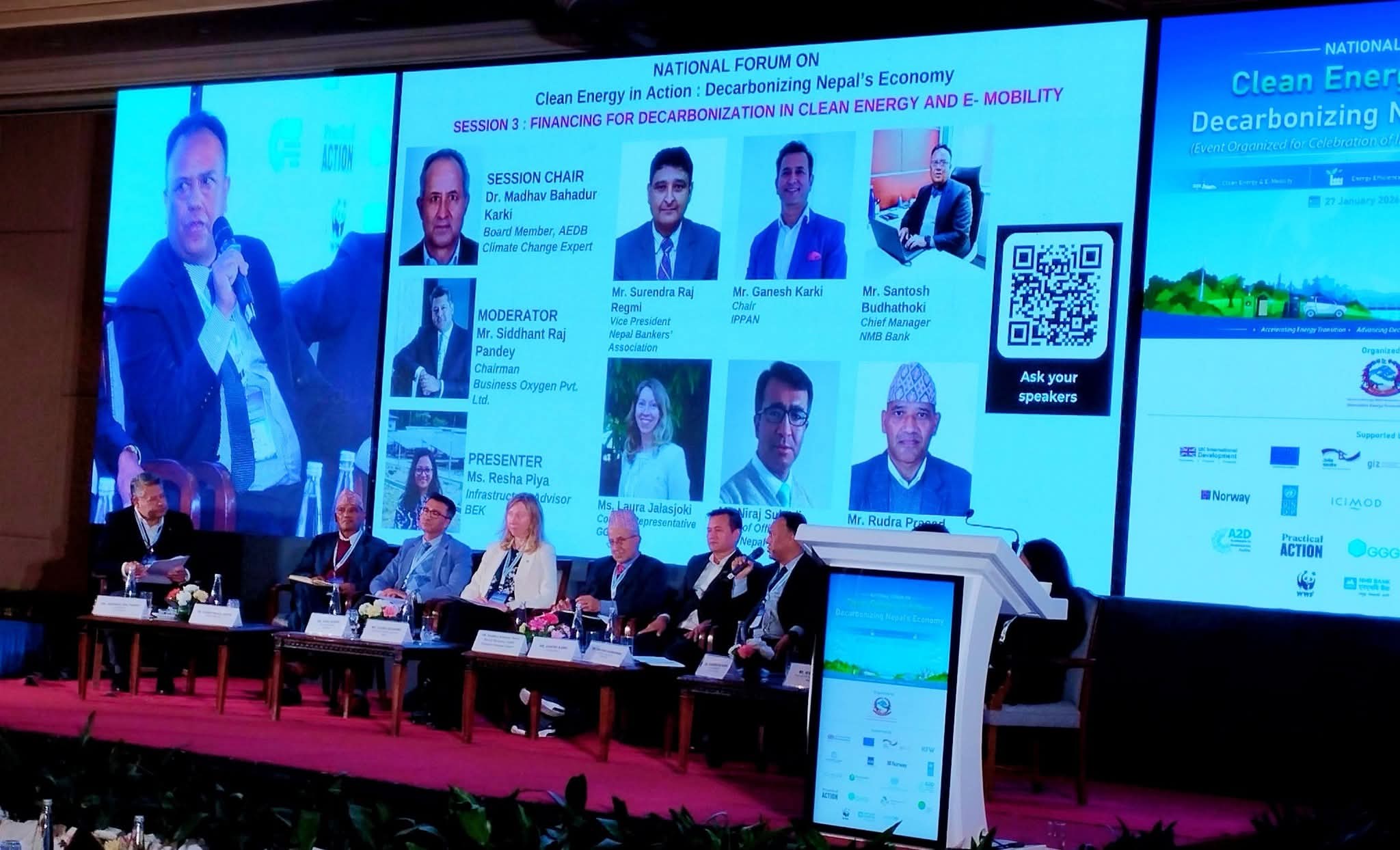
As Nepal faces rising energy demand alongside increasing climate risks, the outcomes of the forum are expected to play an important role in shaping realistic, financeable, and inclusive pathways toward a low-carbon and resilient economy.