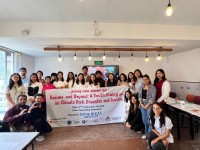
Kathmandu, January 20, 2026 - Key stakeholders from government, the private sector, development partners, academia, and civil society gathered in Kathmandu today to discuss pathways for accelerating Nepal’s energy transition, strengthening energy security, and unlocking clean energy investment opportunities.
The Stakeholders’ Workshop on “Advancing Nepal’s Energy Transition: Clean Energy Pathways and Investment Opportunities”, organised with support from the European Union under its Global Gateway strategy, was held at Hotel Yak & Yeti in Kathmandu. The event forms part of an EU-funded scoping study being implemented by COWATER International, aimed at informing future EU engagement in Nepal’s energy sector.
Addressing Nepal’s Energy Potential and Structural Challenges
Despite Nepal’s vast estimated hydropower potential of 83,000 MW, the country continues to rely on imported fossil fuels and electricity, particularly during the dry season. While electricity generation capacity has increased significantly-from around 1,180 MW in 2019 to approximately 3,400 MW in 2025, with hydropower supplying over 95 percent of the national grid-seasonal variability and climate-related risks remain major concerns.
Speakers highlighted that regional electricity trade, diversification into renewables such as solar and biomass, improved energy efficiency, and productive use of electricity are critical to enhancing system reliability and supporting long-term economic growth. Nepal’s relatively low per capita electricity consumption, estimated at around 400 kWh, also signals strong potential for demand growth driven by urbanisation, industrialisation, and electrification.
High-Level Participation and Policy Dialogue
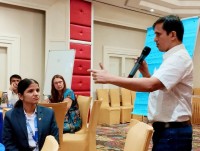
The workshop opened with remarks from H.E. Véronique Lorenzo, Ambassador of the European Union to Nepal, followed by key interventions from Hitrendra Dev Shakya, Managing Director of the Nepal Electricity Authority (NEA); Dr. Ram Prasad Dhital, Chairperson of the Electricity Regulatory Commission (ERC); and Chiranjibee Chataut, Secretary at the Ministry of Energy, Water Resources and Irrigation.
Presentations by the study team outlined preliminary findings of the interim report, setting the stage for in-depth discussions on policy, investment barriers, and enabling frameworks.
Focus on Investment, Bankable Projects, and Regional Trade
Participants later divided into working groups to deliberate on three priority themes:
Strengthening the enabling environment to attract and retain domestic and foreign clean energy investors;
Transforming clean energy pathways into bankable projects, with emphasis on priority technologies, project pipelines, and support needs; and
Advancing cross-border electricity trade (CBET) to enhance economic growth, seasonal balancing, and regional energy security.
The discussions drew on participants’ practical experience, with the aim of identifying concrete actions and investment priorities aligned with Nepal’s national energy strategies, including the Energy Development Roadmap 2081.
EU Reaffirms Long-Term Partnership
The European Union reiterated that energy remains a priority sector under the Global Gateway, with ongoing support for renewable energy, energy efficiency, productive electricity use, regional connectivity, and private sector participation. Emphasis was placed on building institutional capacity, promoting innovation, and supporting climate-resilient and inclusive energy systems.
The workshop concluded with closing remarks from Nawa Raj Dhakal, Executive Director of the Alternative Energy Promotion Centre (AEPC), and Jose Luis Vinuesa-Santamaria, Head of Cooperation at the EU Delegation to Nepal.
Organisers noted that insights gathered during the workshop will directly inform the final analysis and recommendations of the scoping study, helping shape future clean energy investments and policy support in Nepal.