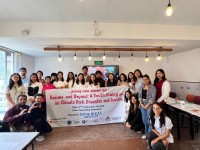
Kathmandu, Nepal - September 26, 2026: The Third Asia-Pacific Regional Conference of Indigenous Women and Girls with Disabilities has successfully concluded in Nepal, bringing together Indigenous women and girls with disabilities, advocates, organizations, development partners and representatives from across the Asia-Pacific region to strengthen solidarity, exchange experiences and build a stronger regional movement.
Held under the theme “Rooted in Resistance, Rising in Solidarity and Strengthening Movement,” the regional convening brought together around 80 representatives from 15 countries and all seven provinces of Nepal.
The conference was jointly organized by the Asia Pacific Indigenous Women and Girls with Disabilities Network (APIWDN) and the National Indigenous Disabled Women Association Nepal (NIDWAN).
The opening program was held on September 24, 2026 (8 Ashoj 2083), under the chief guestship of Hon. Geeta Chaudhary, Minister for Forests and Environment.
The opening brought together distinguished representatives, including Hon. Ram Bahadur Thapa of the National Indigenous Commission; Hon. Suresh Ale Magar, Member of the National Assembly; His Excellency Mr. Jaco du Toit, Acting In-Charge of the United Nations; Nima Lama Hyolmo, former Member of the Bagmati Province Assembly and former Minister for Health and President of the Nepal Federation of Indigenous Nationalities (NEFIN), among others.
The event also included Jagat Baram, Executive Council Member of the Asia Indigenous Peoples Pact (AIPP); Shobha Sunuwar, President of the National Indigenous Women Federation (NIWF); Dr. Lina Gurung, Associate Professor at Kathmandu University; representatives of GIZ Nepal and United Nations agencies; donor and partner organizations; civil society organizations; and other stakeholders.
The opening session was chaired by Dr. Pratima Gurung, President of NIDWAN, and moderated by Shruti Kumal, General Secretary of NIDWAN.
Connecting, reflecting and building together
The first day of the regional convening focused on creating connections across borders, sharing cultures and experiences, and reflecting on the journey of Indigenous Peoples, Indigenous women and Indigenous persons with disabilities' rights movements.
Participants explored the journey and work of the Asia Pacific Indigenous Women and Girls with Disabilities Network and reflected on achievements, participation and progress in strengthening the regional movement.
The discussions provided an opportunity for participants from different countries and communities to share experiences and develop a common understanding of the challenges and opportunities facing Indigenous women and girls with disabilities.
Cross-country learning and shared priorities
The second day placed greater emphasis on cross-country learning and reflection on the realities, challenges and priorities of Indigenous persons with disabilities across the Asia-Pacific region.
Participants shared experiences, progress, urgent priorities and commitments from their respective countries. Discussions identified a number of recurring concerns, including lack of recognition and legal identity, limited access to basic services, inaccessible infrastructure, unemployment, limited participation in decision-making, data gaps and barriers to meaningful inclusion.
The discussions also emphasized the importance of strengthening connections among movements across countries and building the infrastructure needed to sustain regional advocacy and collective action.
Participants further explored ways to map regional movements, build alliances and advance the principle of “Nothing About Us Without Us” through shared knowledge, solidarity and collective action.
Bridging barriers and strengthening the regional movement
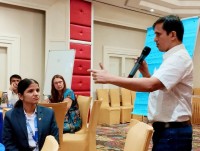
A major panel discussion focused on “Bridging the Barriers - Building the Regional Movement of Indigenous Women and Girls with Disabilities in Asia-Pacific.”
The panel brought together diverse perspectives on the realities, barriers and opportunities experienced by Indigenous women and girls with disabilities across the region.
Participants highlighted the need to recognize and address the intersectional identities and lived experiences of Indigenous women and girls with disabilities and to strengthen access to resources, funding, information, representation and decision-making spaces.
The discussion also called attention to the importance of intersectional, accessible and community-led research that values Indigenous knowledge, oral histories, culture and lived experiences.
Speakers and participants emphasized breaking silos between movements and strengthening solidarity, intergenerational leadership, collective action and regional networks.
The discussions also explored the importance of building meaningful alliances with governments, funders, movements and organizations while maintaining accountability and ensuring the meaningful representation of Indigenous women and girls with disabilities.
Mapping existing movements and networks, convening across borders, advocating collectively and sustaining the movement were identified as important elements for continued regional action.
At the heart of the discussions was the principle “Nothing About Us Without Us,” with participants emphasizing self-determination, shared leadership, accessibility and intersectionality as important foundations for movement building.
Strengthening solidarity beyond borders
Across the conference, participants shared experiences from their respective countries and communities while identifying common challenges and opportunities for collective action.
The convening provided a space for Indigenous women and girls with disabilities to connect across borders, reflect on their movement's progress, learn from one another and strengthen regional networks.
The discussions also reinforced the importance of ensuring that Indigenous women and girls with disabilities are not only included in conversations concerning their rights and development, but are able to meaningfully participate in decision-making and movement building.
With the successful conclusion of the regional convening, participants reaffirmed the importance of continued collaboration, solidarity, accessibility, intersectionality and collective action across the Asia-Pacific region.
The conference's central message - “Rooted in Resistance, Rising in Solidarity and Strengthening Movement” - reflected the collective emphasis on connecting lived experiences, strengthening Indigenous women's leadership and building a more inclusive regional movement.
For Indigenous women and girls with disabilities across the Asia-Pacific, the gathering served as a platform for sharing experiences, strengthening relationships and carrying forward a collective commitment to the principle that nothing about them should be decided without their meaningful participation.
#AsiaPacificConvening2026 #IndigenousWomenWithDisabilities #IndigenousGirlsWithDisabilities #DisabilityInclusion #Intersectionality #NothingAboutUsWithoutUs #MovementBuilding #IndigenousRights #DisabilityRights #IndigenousWomen #RegionalSolidarity #AsiaPacific #NIDWAN