Kathmandu - As Nepal observes the death anniversary of former King Mahendra Bir Bikram Shah Dev, public remembrance continues even though the country has been a federal democratic republic for nearly two decades. The day once again raises an important national question: why does King Mahendra still occupy a space in public memory in a post-monarchy Nepal?
Historians and political analysts say the answer lies in the structural foundations of modern Nepal, many of which were laid during King Mahendra’s reign (1955-1972), a period when the country was economically fragile, geographically isolated, and navigating complex regional geopolitics.
Foundations of Modern State Infrastructure
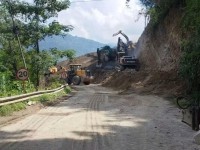
One of King Mahendra’s most visible contributions was the expansion of national infrastructure. The construction of the East-West Highway, later named the Mahendra Highway, connected Nepal from Mechi to Mahakali and for the first time enabled year-round movement across the country. Road networks linking the hills, Terai, and Kathmandu Valley were also expanded, reducing isolation and supporting internal trade.
During this period, Nepal witnessed the establishment and strengthening of key state institutions, including Nepal Rastra Bank, Rastriya Banijya Bank, public corporations, and higher education expansion under Tribhuvan University. These institutions continue to play a central role in the country’s governance and economy.
National Unity and Sovereignty
King Mahendra is often credited with consolidating Nepal’s national identity and sovereignty at a time when the country faced strong external pressures. His foreign policy followed a non-aligned approach, maintaining diplomatic balance between India, China, and global powers. Nepal’s active participation in the Non-Aligned Movement enhanced its international standing as an independent state.
The policy of cultural and linguistic unification promoted during his reign aimed to strengthen national cohesion. However, scholars note that this approach also marginalised ethnic, linguistic, and regional diversity, a reality that later fueled demands for inclusion and federalism.
The Panchayat Legacy and Democratic Debate
King Mahendra’s legacy remains deeply contested due to the introduction of the party-less Panchayat system in 1960 after dissolving the elected parliament. While the system provided political stability and centralized decision-making, it restricted political freedoms and delayed the institutional growth of multiparty democracy.
Political analysts argue that Nepal’s current republican system emerged partly as a response to the limitations of centralized governance practiced during the Panchayat era.
Public Memory in a Changing Nepal
Despite political transformation, many Nepalis-particularly from older generations-remember King Mahendra as a decisive leader who prioritised national unity and visible development. In contrast, younger generations and rights advocates critically assess his rule through the lens of democratic inclusion and pluralism.
Experts emphasize that remembrance does not necessarily signal support for monarchy, but rather reflects an effort to understand historical leadership and its long-term consequences.
A Complex Historical Figure
King Mahendra’s death anniversary highlights the complexity of Nepal’s political journey. His contributions to infrastructure, state institutions, and foreign policy remain part of Nepal’s present-day reality, while the political restrictions of his era serve as reminders of the importance of democratic governance.
As Nepal continues to navigate federalism, inclusion, and development, revisiting such historical legacies offers valuable lessons-both in achievements and shortcomings-toward shaping a more inclusive and resilient future.