Top Navigation
  • Home
  • About Us
    • Our Story
    • Our Team
    • Mission and Vision
  • Donate
    • Why Donate
    • Payment Methods
Main Navigation
  • News
  • National
  • Environment
    • Climate
    • Conservation
    • Biodiversity
    • Natural Disasters
    • Pollution
    • Energy
    • Ecology
  • Opinion
  • Business
  • Technology
  • Profiles
  • Travels
  • World
  • More
    • Events
    • Lifestyle
    • Multimedia
    • Research
    • Publications
  • Home
  • About Us
    • Our Story
    • Our Team
    • Mission and Vision
  • Donate
    • Why Donate
    • Payment Methods
UNV UNV
  • News
  • National
  • Environment
    • Climate
    • Conservation
    • Biodiversity
    • Natural Disasters
    • Pollution
    • Energy
    • Ecology
  • Opinion
  • Business
  • Technology
  • Profiles
  • Travels
  • World
  • More
    • Events
    • Lifestyle
    • Multimedia
    • Research
    • Publications
Search Here
Research
  • Home
  • Research
  • Towards Clean Air in Nepal: A Multisectoral Challenge Demanding Coordinated Action
Towards Clean Air in Nepal: A Multisectoral Challenge Demanding Coordinated Action
Ganesh Khatiwada
Ganesh Khatiwada 2026-01-22 12:52:32

Kathmandu - Achieving clean air in Nepal will require coordinated and sustained action across multiple sectors, according to a newly released report titled “Towards Clean Air in Nepal: Benefits, Pollution Sources, and Solutions.” The report highlights that air pollution in Nepal is not driven by a single cause but is the result of interconnected factors spanning transport, industry, households, forests, and regional dynamics.
The analysis identifies five key sectors that must be addressed simultaneously to improve air quality nationwide.
Vehicular emissions remain one of the most visible contributors, particularly in urban centers like Kathmandu Valley. Rapid growth in vehicle numbers, reliance on older and poorly maintained vehicles, traffic congestion, and limited public transport options have significantly increased pollution levels.
Industrial emissions are another major concern. Brick kilns, cement factories, and other industries often operate with outdated technologies and weak emission controls, releasing large quantities of particulate matter and harmful gases into the atmosphere.
At the household level, traditional cooking practices continue to affect air quality, especially in rural and peri-urban areas. The widespread use of firewood, agricultural residues, and other solid fuels for cooking exposes families—particularly women and children—to hazardous indoor air pollution while also contributing to outdoor pollution.
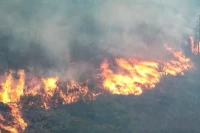
Forest fires, both natural and human-induced, have emerged as a growing seasonal threat. Prolonged dry periods linked to climate change have increased the frequency and intensity of fires, releasing massive amounts of smoke and fine particles that degrade air quality across large regions.
In addition, the report stresses the impact of transboundary air pollution. Polluted air does not respect national borders, and emissions from neighboring regions significantly influence Nepal’s air quality, especially during winter months when atmospheric conditions trap pollutants.
The report emphasizes that improving air quality is not only an environmental priority but also a public health and economic necessity. Cleaner air can reduce respiratory and cardiovascular diseases, lower healthcare costs, improve productivity, and enhance overall quality of life.
To address the challenge, the study calls for integrated, multisectoral solutions, including cleaner transport systems, stricter industrial standards, promotion of clean cooking technologies, better forest management, and strengthened regional cooperation on air pollution control.
The report has been developed with support from international development partners and aims to provide policymakers, researchers, and civil society with a clear roadmap toward cleaner air in Nepal.
As Nepal continues its development journey, the findings underline a crucial message: clean air is achievable, but only through collective action that cuts across sectors, institutions, and national boundaries.



Published Date 2026-01-22 12:52:32
Comments
Online Test Prep Online Test Prep
More Research
Nepal Shows Measured Progress in Food Security, but Child Malnutrition Remains Deep Concern: Insights from GHI 2025 Launch
Nepal Shows Measured Progress in Food Security, but Child Malnutrition Remains Deep Concern: Insights from GHI 2025 Launch 2025-12-11 05:30:15
Corruption Remains a Major Barrier to Achieving the Sustainable Development Goals
Corruption Remains a Major Barrier to Achieving the Sustainable Development Goals 2025-12-09 17:12:00
SANDEE Announces Call for Research Concept Notes for 2026 Grant Cycle
SANDEE Announces Call for Research Concept Notes for 2026 Grant Cycle 2025-11-25 21:01:47
Brazil Positions Itself as the World’s First “Nature Superpower” Amid Global Push for Resilience
Brazil Positions Itself as the World’s First “Nature Superpower” Amid Global Push for Resilience 2025-11-18 17:05:00
From Waste to Wealth: Human Biochar Offers Hope for Global Fertiliser Crisis
From Waste to Wealth: Human Biochar Offers Hope for Global Fertiliser Crisis 2025-08-12 07:09:00
Systemic Governance Failures Deepen Risks of Compound Disasters: UNDRR Highlights Urgent Need for Integrated Risk Governance
Systemic Governance Failures Deepen Risks of Compound Disasters: UNDRR Highlights Urgent Need for Integrated Risk Governance 2025-07-22 07:43:00
Most Loved
  • Week
  • Month
Sumnima Hydropower Company Ltd Successfully Concludes 10th Annual General Meeting
Varnamala Preschool Marks Saraswoti Puja and Letter Beginning Day, Reinforcing Its Commitment to Early Childhood Development
Balephi Hydropower Limited Concludes 14th Annual General Meeting
Global Chemical Pollution Crisis Threatens Human Health and Ecosystems, Experts Warn
Ashika Tamang Launches Grassroots Political Campaign in Dhading, Emphasizes Service Over Politics
International Business Conference Highlights Investment and Trade Opportunities in Greece
Sumnima Hydropower Company Ltd Successfully Concludes 10th Annual General Meeting
NNMGA Successfully Concludes 20th Annual National Mountain Guide Day 2025
Amadablam Mini Hydro Concludes Third AGM, Reinforcing Clean Energy Commitment in the Everest Region
Api Power Company Limited Concludes 22nd AGM, Announces Dividends, Rights Issue, and Strategic Expansion
Contact Us

News Desk

Ecosphere News
Chakupat, Lalitpur, Nepal
Phone : +977-01-5400646
Email: [email protected] www.ecospherenews.com

Sales & Marketing

Email: [email protected]
Cell Phone: 9820631466 / 9767470774
Media Details
Publisher Ecosphere News and Travels Pvt. Ltd.
DOIB Registration No. 4699-2081/2082
Editor Ganesh Khatiwada
Follow us on Twiitter https://twitter.com/EcosphereNews?ref_src=twsrc%5Etfw
Like us on Facebook
Ecosphere News Environmental & Developmental Issues
© 2026 Ecosphere News Environmental & Developmental Issues. All Rights Reserved. Site by: SoftNEP

SoftNEP News Alert

अख्तियार स्वतन्त्र निकाय भएकाले वाइडबडि छानबिनमा अहिलेसम्‍म कुनै किसिमको राजनीतिक दबाब आएको छैन।स्वतन्त्र ढंगले काम गरिरहेका छौ।
सदस्यता लिनुहोस्