Kathmandu, Nepal - November 19, 2026
The Hydropower Sustainability Alliance (HSA) has officially launched the digital version of HydroSelect in Kathmandu, introducing an online platform designed to help governments, hydropower developers and financial institutions assess environmental, social and governance (ESG) risks and compare hydropower project options at an early stage of planning.
Developed by HSA with support from FMO, the Dutch entrepreneurial development bank, the digital platform will be available free of charge to users worldwide for an initial six-month period, allowing stakeholders to explore its features and assess its potential benefits for more sustainable hydropower development.
Originally introduced in July 2025, HydroSelect provides a structured approach to comparing potential hydropower projects before substantial financial and technical resources are committed. Starting with an identified energy need, users can evaluate different project alternatives against 12 environmental, social and governance (ESG) risk categories.
The newly launched digital version retains this core methodology while making the assessment process more accessible, interactive and comprehensive. It also incorporates artificial intelligence (AI) integration and global mapping features that enable users to identify environmentally and culturally sensitive areas, including protected areas, Key Biodiversity Areas, Ramsar sites and UNESCO World Heritage Sites.
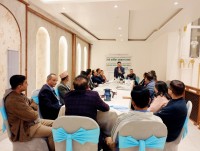
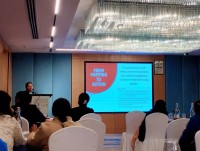
The official launch took place at Hotel Himalaya in Kathmandu following a successful pilot programme involving Nepali institutions. Jeebachh Mandal, Director General of the Department of Electricity Development, Nepal, attended as the chief guest and delivered the keynote address.
Speaking at the event, Govind Ghimire, Chief Executive Officer of NMB Bank, the first institution to formally use HydroSelect, highlighted the platform's potential to strengthen early-stage ESG assessments and improve hydropower investment decisions.
He noted that the tool could help assess environmental and social risks using locally available data, support better project planning, strengthen stakeholder engagement and promote more informed investment decisions. He also expressed confidence that its adoption would increase as awareness of ESG risks and sustainability practices grows in Nepal.
Alain Kilajian, Deputy Executive Director of HSA, emphasised the importance of identifying sustainability challenges before hydropower projects advance into later stages of development. He explained that decisions concerning project location and the underlying energy needs are particularly important because opportunities to address these issues become increasingly limited as projects progress.
According to Kilajian, the digital HydroSelect platform, supported by AI integration, enables practitioners to assess projects globally, compare alternative options and identify more sustainable pathways. He added that the six-month free-access initiative aims to remove financial barriers and encourage stakeholders worldwide to experience the platform.
Similarly, Raunak Thapa, Senior Operations Manager at Invest for Impact Nepal, stressed that decisions made during the early stages of hydropower development can determine the environmental and social risks that developers and financial institutions must manage over the long term.
He described HydroSelect as a practical tool for facilitating early discussions about environmental and social risks while project alternatives are still being considered.
The launch programme also featured a technical workshop in which participants worked in groups to assess a fictional hydropower project, identify potential risks and discuss appropriate management approaches. A panel discussion further explored how early-stage ESG screening can influence project planning, investment decisions and the long-term sustainability of hydropower development.
The introduction of digital HydroSelect comes at a significant time for Nepal, where hydropower is a major pillar of the country's energy development strategy and economic ambitions. As investment in hydropower infrastructure continues, integrating environmental protection, social responsibility and good governance into project planning is essential to ensuring that energy development does not come at the expense of ecosystems, local communities and biodiversity.
By encouraging the comparison of project alternatives before major commitments are made, tools such as HydroSelect could contribute to more responsible infrastructure planning, better risk management and stronger sustainability standards in the hydropower sector.
Following the initial six-month free-access period, HSA plans to transition the platform towards a subscription-based model.
For Nepal and other hydropower-producing countries, the digitalisation of early-stage sustainability assessment represents an opportunity to make energy development more informed, environmentally responsible and socially inclusive.
#Hydropower #HydroSelect #HydropowerSustainability #SustainableEnergy #RenewableEnergy #ESG #EnvironmentalSustainability #BiodiversityConservation #ResponsibleInvestment #ClimateAction #GreenFinance #SustainableInfrastructure #Nepal #EcosphereNews
Published Date 2026-11-20 08:03:00