Kathmandu, November 25, 2026 -
Africa's economic development and environmental sustainability are deeply interconnected. While economic growth, industrialisation, population expansion and natural resource extraction create opportunities for employment and poverty reduction, they also place increasing pressure on forests, water resources, biodiversity and land ecosystems. At the same time, environmental degradation and climate-related disasters threaten livelihoods, food security and long-term development across the continent.
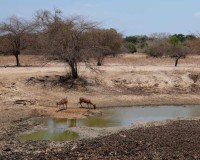
Climate change remains one of Africa's most significant development challenges. Increasing temperatures, prolonged droughts, extreme heatwaves and devastating floods are disrupting agricultural production, damaging infrastructure and forcing communities to leave their homes. Projections indicate that up to 118 million people in Africa could be exposed to extreme poverty due to climate hazards by 2030, underscoring the disproportionate risks facing vulnerable populations.
Deforestation, desertification and land degradation are further intensifying environmental challenges. The expansion of agricultural land, growing settlements and dependence on traditional biomass fuels, particularly firewood and charcoal, contribute significantly to forest loss and ecosystem degradation. An estimated 90 per cent of the population in some African contexts relies on traditional biomass for cooking and heating. Meanwhile, desertification and land degradation threaten agricultural productivity, biodiversity and the livelihoods of rural communities.
Water insecurity and inadequate sanitation also remain major obstacles to sustainable development. Approximately 400 million people lack access to safe drinking water, while around 700 million lack adequate sanitation services. Addressing these challenges requires substantial investment, with an estimated annual financing gap of US$45 billion to US$54 billion. Improved water governance, resilient infrastructure and equitable access to essential services are therefore critical to achieving sustainable development.
Rapid urbanisation presents another complex challenge. Although growing cities can stimulate economic opportunities, employment and innovation, poorly planned urban expansion contributes to informal settlements, habitat fragmentation, pollution and increasing pressure on public infrastructure, land resources and essential services.
Balancing economic growth with environmental protection
Africa's natural resources offer considerable economic opportunities, particularly through mining and the extraction of minerals essential for the global energy transition, including lithium, cobalt and rare earth elements. However, poorly regulated extraction activities can result in water contamination, biodiversity loss, ecosystem destruction and the displacement of local communities.
Similarly, the expansion of renewable energy infrastructure, including solar, wind, hydropower and green hydrogen projects, is essential for accelerating the transition towards cleaner energy systems. Nevertheless, these developments require careful land and water management, respect for customary land rights and fair benefit-sharing arrangements to ensure that local communities are not excluded from the benefits of the green transition.
Financing remains another significant barrier. Many African countries face high debt burdens, limited domestic revenue mobilisation and substantial investment requirements for climate adaptation, environmental protection and sustainable infrastructure. The continued imbalance between investments that contribute to environmental degradation and those supporting nature-based solutions further complicates the continent's development ambitions.
Building a sustainable and climate-resilient future
Experts and development stakeholders increasingly recognise the importance of integrating environmental protection into economic planning and poverty reduction strategies. Climate-resilient agriculture, agroecological practices, drought-resistant crop varieties, effective early-warning systems and agricultural insurance can strengthen the resilience of smallholder farmers and rural communities.
Strengthening nature and adaptation finance, improving environmental governance, promoting natural capital accounting and expanding investment in ecosystem restoration are equally important. These approaches can help countries protect biodiversity, restore degraded landscapes and build resilience against climate-related risks.
Africa's sustainable development will ultimately depend on its ability to balance economic transformation with environmental responsibility, social inclusion and climate justice. Governments, development partners, private-sector institutions, civil society and local communities must work together to ensure that natural resources contribute to long-term prosperity without compromising ecological integrity.
The continent's development future should not be measured solely by economic growth, but also by the health of its ecosystems, the resilience of its communities and the equitable distribution of opportunities and resources.
Sustainable development in Africa requires a fundamental shift towards an economy that values both people and nature, ensuring that economic progress today does not undermine the well-being of future generations.
#Africa #SustainableDevelopment #ClimateChange #EnvironmentalSustainability #ClimateResilience #ClimateJustice #NatureBasedSolutions #Biodiversity #RenewableEnergy #WaterSecurity #FoodSecurity #GreenEconomy #SustainableAgriculture #ClimateFinance #EcosystemRestoration #AfricaDevelopment #EcosphereNews