LA PAZ, November 3, 2026 - Bolivia has declared a nationwide state of emergency in response to the growing environmental, humanitarian and economic threats associated with an intensifying El Niño phenomenon, as severe drought, agricultural losses and the risk of flooding place communities and livelihoods under increasing pressure.
President Rodrigo Paz signed Supreme Decree No. 5759 on October 31, 2026, formally declaring a National Emergency to strengthen the country's preparedness and response to climate-related disasters. The measure is intended to accelerate the mobilization of financial and human resources, deploy emergency response teams and improve coordination among national and regional authorities, the armed forces, police and local governments.
The emergency declaration comes as Bolivia faces increasingly contrasting weather conditions, with some regions experiencing severe water shortages while others face the threat of intense rainfall, flash floods, landslides and overflowing rivers as the rainy season approaches.
More than 114,000 Families Affected by Drought
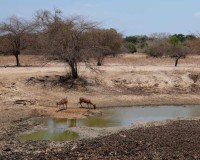
According to figures released by Bolivia's Ministry of Defence, the drought situation has affected 114,048 families across 63 municipalities and 1,486 communities between June 1 and October 29, 2026.
Of these, 78,217 families have been classified as affected, while another 35,831 have suffered direct losses to their livelihoods and productive activities.
The agricultural and livestock sectors have also experienced substantial damage. Government figures indicate that approximately 167,511 hectares of agricultural land have been affected, including 60,106 hectares reported as lost. More than 75,000 head of livestock have also been lost due to the prolonged dry conditions.
The situation has placed additional pressure on rural communities that depend heavily on agriculture and livestock farming for food security and household income.
Departments including Oruro, La Paz, Chuquisaca, Cochabamba, Santa Cruz and Potosí are among the regions reporting significant drought-related impacts.
Simultaneous Threat of Floods and Other Climate Hazards
While drought continues to affect large parts of Bolivia, authorities are also preparing for potentially destructive rainfall and other extreme weather events.
The emergency declaration covers a broader range of climate-related hazards, including floods, river overflows, flash floods, landslides, frost, hailstorms and forest fires.
This combination of drought and flood risks highlights the complexity of managing climate-related disasters, particularly in countries with diverse geographical conditions and communities whose livelihoods depend heavily on natural resources.
The government has called for coordinated action involving public institutions, regional administrations, security agencies and international cooperation partners to strengthen preparedness, protect vulnerable populations and reduce potential economic and environmental losses.
El Niño Expected to Intensify Through the End of 2026
The World Meteorological Organization (WMO) has warned that the current El Niño event is firmly established and expected to intensify further, potentially becoming one of the strongest events recorded since 1950.
In its September 3, 2026 update, the WMO reported a nearly 100 per cent likelihood that El Niño would persist through February 2027. Subsequent reporting in October indicated that the phenomenon could reach its peak around December 2026.
El Niño is a naturally occurring climate phenomenon associated with unusually warm sea-surface temperatures in the central and eastern equatorial Pacific Ocean. It influences atmospheric circulation and changes rainfall and temperature patterns across different parts of the world.
Its effects are not uniform. Some regions experience prolonged drought and extreme heat, while others face unusually heavy rainfall, flooding and associated disasters.
The anticipated strength of the current event has raised concerns about its potential consequences for food production, water availability, public health, ecosystems and economic stability across vulnerable regions.
A Growing Global Climate Resilience Challenge
Bolivia's emergency declaration underscores the increasing importance of climate preparedness, effective early-warning systems and disaster-resilient development.
For developing countries, particularly those with large rural populations and economies dependent on climate-sensitive sectors, extreme weather events can have far-reaching consequences for livelihoods, food security, infrastructure and poverty reduction.
The situation also reinforces the need for stronger international cooperation, accessible climate finance, investment in water management, sustainable agricultural practices and effective disaster-risk reduction strategies.
As the world prepares for the potential impacts of a very strong El Niño through early 2027, Bolivia's experience serves as another reminder that climate-related hazards can affect different regions simultaneously, demanding coordinated responses at national, regional and international levels.
For countries across the world, strengthening climate resilience is no longer simply a long-term development objective; it is an immediate priority for protecting people, livelihoods, ecosystems and economies.
#Bolivia #ElNino #SuperElNino #ClimateChange #ClimateCrisis #ExtremeWeather #Drought #FloodRisk #ClimateResilience #DisasterRiskReduction #FoodSecurity #WaterSecurity #Agriculture #EnvironmentalProtection #ClimateAdaptation #EarlyWarningSystems #WMO #UnitedNations #GlobalClimateAction #SustainableDevelopment #EcosphereNews