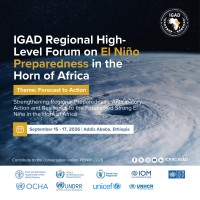
Kathmandu, October 8, 2026 - The strengthening El Niño is forecast to reach exceptional intensity during the final months of 2026, with the World Meteorological Organization (WMO) projecting record-high sea-surface temperature anomalies in the central and eastern tropical Pacific and significant shifts in global temperature and rainfall patterns.
According to the WMO’s latest Global Seasonal Climate Update for October-November-December (OND) 2026, released on October 8, El Niño is expected to intensify further before reaching its forecast peak around December.
The seasonal average sea-surface temperature anomaly in the Niño 3.4 region is projected to reach approximately +3.7°C during October-December, with the warming trend peaking around December. If realized, this would be the highest Niño 3.4 seasonal anomaly since observations began, exceeding the previous record of approximately +2.6°C recorded during November 2015-January 2016.
The WMO says the forecast models show relatively narrow agreement, indicating high confidence in the continued strengthening of the event. The organization has also said El Niño is expected to persist into early 2027, potentially making it one of the strongest events observed since at least 1950.
Widespread Above-Average Temperatures
The seasonal outlook indicates an overwhelming likelihood of above-average temperatures across much of the globe during October-December.
The forecast does not mean that every location will experience warmer-than-average temperatures every day. Rather, it represents a strong seasonal signal that increases the likelihood of heat extremes and associated impacts on people, ecosystems, agriculture, water resources, infrastructure and economies.
WMO Secretary-General Celeste Saulo has emphasized that El Niño does not create additional heat from nowhere. Instead, it changes the circulation of the atmosphere and allows heat already stored in the ocean to be released more strongly into the atmosphere.
Speaking during the Global Heat Forum in Bangkok, Saulo said a strong El Niño can contribute to exceptionally hot years, particularly because the ocean from which the phenomenon draws heat is already at exceptionally high temperatures.
Major Shifts in Rainfall Patterns
The WMO forecast also points to large and coherent changes in precipitation patterns associated with the strengthening El Niño.
Above-normal rainfall is forecast in:
The central and eastern equatorial Pacific;
The Greater Horn of Africa;
Parts of Central Asia;
Coastal East Asia;
Northern parts of the Arabian Peninsula;
Parts of North America; and
Southeastern South America.
Meanwhile, drier-than-normal conditions are forecast across broad areas, including the western Pacific, the equatorial Atlantic, parts of the South Pacific extending toward southern South America, the Indian subcontinent, southern Central America, parts of the Caribbean and northwestern South America.
Such shifts could increase the risks of drought, flooding, water stress, agricultural disruption and other climate-related impacts, depending on local conditions and preparedness.
A Warning Window for Early Action
The WMO stresses that seasonal forecasts provide an important opportunity for governments, communities and vulnerable sectors to prepare before climate-related hazards intensify.
The latest outlook comes as the world is already experiencing unusually high temperatures and increasingly disruptive weather events. WMO has urged countries and cities to strengthen early warning systems, heat-health action plans and climate services so that forecasts can translate into early and effective action.
For climate-vulnerable countries such as Nepal, the evolving El Niño conditions underline the importance of closely monitoring temperature, precipitation, water availability, agriculture, forest-fire risk, disaster preparedness and mountain hazards.
The WMO’s latest assessment is therefore not simply a forecast of warmer oceans. It is a warning that a very strong El Niño could reshape weather risks across regions during the closing months of 2026 and into 2027-making preparedness, early action and climate resilience increasingly critical.
Source: World Meteorological Organization (WMO), Global Seasonal Climate Update, October 8, 2026.
#ElNino #ClimateChange #GlobalWarming #ExtremeWeather #ClimateRisk #Heatwave #Drought #FloodRisk #ClimateResilience #EarlyWarnings #ClimateAction #OceanWarming #WMO #Weather #ClimateScience #EnvironmentalNews #EcosphereNews