By Ecosphere News
Africa is facing a deepening land degradation crisis, with an estimated 65% of the continent’s productive land affected by degradation, threatening food security, livelihoods, biodiversity and economic development for hundreds of millions of people. The African Development Bank has reported that land degradation is impacting around 400 million people across the continent.
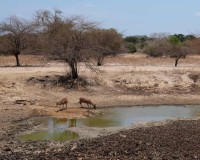
The crisis is being driven by a combination of climate change, deforestation, overgrazing and unsustainable agricultural practices. Rising temperatures and changing rainfall patterns are intensifying drought in vulnerable regions, while the loss of vegetation leaves soils increasingly exposed to erosion and declining fertility.
In the Sahel, East Africa and other dryland regions, pressure from livestock, agriculture and growing populations can further weaken already fragile ecosystems. As productive land deteriorates, farmers and pastoral communities face declining yields, water stress and growing economic insecurity.
The consequences extend far beyond the soil. Land degradation can reduce agricultural productivity, undermine water resources, accelerate biodiversity loss and increase pressure on rural communities. It can also contribute to poverty, migration and competition over increasingly scarce natural resources.
Yet Africa’s land crisis is not irreversible.
The Great Green Wall Initiative, launched by the African Union in 2007, has evolved from the original idea of planting a belt of trees into a broader continental effort to restore degraded landscapes, strengthen climate resilience and improve livelihoods. Its current framework promotes integrated land restoration, sustainable agriculture, pastoralism, forestry and water conservation.
The economic case for action is also compelling. A UNEP-supported assessment found that, in the 42 African countries examined, the benefits of tackling soil-erosion-related nutrient depletion could substantially outweigh the costs of inaction.
Africa therefore needs more than tree planting. Healthy soils, restored forests, protected watersheds, climate-smart farming, sustainable grazing and strong community participation must become central to development planning.
Restoring Africa’s land is ultimately an investment in food security, water security, biodiversity, climate resilience and human dignity.
The message is clear: degraded land can be restored—but delaying action will make the environmental and economic costs far greater.
#EcosphereNews #Africa #LandDegradation #Desertification #ClimateChange #ClimateCrisis #FoodSecurity #WaterSecurity #LandRestoration #GreatGreenWall #Biodiversity #SustainableAgriculture #EcosystemRestoration #Drought #AfricaClimate #EnvironmentalProtection #ClimateResilience #SustainableDevelopment #NatureRestoration #GreenJobs