Global environmental developments highlight the urgent need for stronger climate action, disaster resilience, ecosystem protection and international cooperation.
Global and regional environmental developments are drawing renewed attention to the interconnected challenges of climate change, extreme weather, biodiversity loss and environmental justice. From growing pressure surrounding the next major scientific assessment of climate change to flood recovery in Nepal’s Himalayas, conservation initiatives in the Everest region and orangutan rescue efforts in Indonesia, recent developments underscore the importance of translating scientific evidence into meaningful action.
Climate Policy and Global Warming
Pressure mounts over the upcoming IPCC climate report
The Intergovernmental Panel on Climate Change (IPCC), the United Nations body responsible for assessing the scientific evidence on climate change, is facing pressure from some countries over the timing of its upcoming Seventh Assessment Report (AR7). The report is expected to provide critical scientific evidence for international climate negotiations and policymaking.
Concerns about delaying the assessment have raised questions about the role of scientific evidence in global climate decisions, particularly as countries face mounting pressure to reduce greenhouse gas emissions, strengthen adaptation and address climate-related losses and damages.
Timely publication of the assessment is important to ensure that governments, communities and decision-makers can use the latest scientific findings to guide climate action.
Atmospheric carbon dioxide remains a major concern
Monitoring data cited in recent environmental updates put atmospheric carbon dioxide (CO₂) at approximately 425.3 parts per million (ppm) in early October. The precise figure should be interpreted in the context of the monitoring station, measurement period and whether it represents a daily reading or a global average.
Carbon dioxide is the principal long-lived greenhouse gas released through human activities, particularly fossil fuel combustion, cement production and land-use change. Its continued accumulation in the atmosphere contributes to global warming, ocean acidification and changes in weather patterns.
The rising concentration reinforces the need to accelerate the transition to cleaner energy, protect forests, reduce emissions and improve the sustainability of production and consumption.
Global temperatures face continued upward pressure
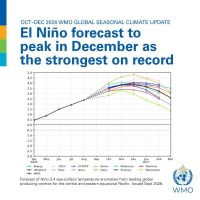
Climate projections indicate that global temperatures are likely to remain near record levels over the coming years. The Arctic is warming substantially faster than the global average, contributing to sea-ice loss, changes in ecosystems and wider disruption to the climate system.
The period from 2026 to 2030 is also a critical window for assessing the likelihood of temporarily exceeding the 1.5°C warming threshold above pre-industrial levels. A temporary exceedance in an individual year or short period is not the same as a long-term breach of the Paris Agreement’s temperature goal, which is assessed over longer timescales.
Nevertheless, every additional increment of warming increases risks to people, ecosystems, food security and water resources, making rapid and sustained emissions reductions increasingly important.
Asia and the Himalayan Region
Nepal’s flood recovery highlights the urgency of climate justice
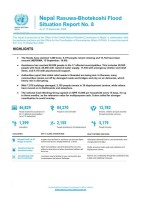
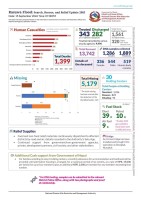
Nepal continues to face the consequences of devastating floods and related disasters affecting vulnerable Himalayan communities, infrastructure, livelihoods and ecosystems. Flooding associated with intense rainfall and mountain hazards demonstrates the challenges of managing risks in a region where steep terrain, fragile geology and rapidly changing climatic conditions can combine to produce destructive events.
Nepal has sought US$20 million from the United Nations Loss and Damage Fund, according to the information provided for this report. The request highlights the need for accessible international financial support to help vulnerable countries respond to climate-related harm that cannot be fully prevented through mitigation and adaptation alone.
Although Nepal contributes only a very small share of global greenhouse gas emissions, it faces substantial climate and disaster risks. Its experience underscores a central principle of climate justice: international climate finance should reflect vulnerability, capacity to respond and the unequal distribution of responsibility for global emissions.
For affected communities, recovery requires more than emergency relief. Rebuilding safer infrastructure, restoring livelihoods, strengthening early-warning systems, protecting watersheds and improving disaster preparedness are essential to reducing future risks.
International support should be predictable, accessible and responsive to the needs of affected communities, with grants playing a vital role in preventing climate disasters from deepening debt and poverty.
Everest 1° Initiative targets pollution in the Himalayan environment
In the Everest region, the Sagarmatha Pollution Control Committee (SPCC) has partnered with electric vehicle brand Cimex BYD under the Everest 1° Initiative to address growing waste and environmental pressure.
The initiative draws attention to the need for more sustainable practices in one of the world's most internationally recognised mountain landscapes. Tourism, trekking, mountaineering and associated infrastructure provide important economic opportunities, but they also place pressure on fragile mountain ecosystems.
Reducing pollution requires coordinated action, including responsible waste collection and transport, improved recycling systems, environmentally conscious tourism and greater participation from businesses, visitors and local communities.
Electric mobility can contribute to lower transport-related emissions where suitable infrastructure and clean electricity are available. However, wider environmental progress in the Everest region will also depend on effective waste management, ecosystem protection and long-term collaboration among local authorities, conservation organisations and the tourism sector.
India’s Ken River project faces opposition over ecological and social impacts
In India, tribal residents and farmers have reportedly protested against the proposed Ken–Betwa river-linking project, raising concerns about displacement, environmental damage and impacts on river-dependent communities.
The project is intended to transfer water from the Ken River basin to the Betwa River basin to address water-supply and irrigation needs in parts of central India. However, large-scale river-linking schemes can generate complex environmental and social consequences, including changes to river flows, impacts on forests and wildlife habitats, and the relocation of communities.
The reported protests highlight the importance of transparent consultation, credible environmental assessments and meaningful participation by Indigenous peoples, farmers and other affected residents.
Water infrastructure planning must balance development objectives with river health, biodiversity conservation, local livelihoods and the rights of communities whose lives depend on these ecosystems.
Eight orangutans relocated after forest fires in Borneo
In Indonesia, authorities and conservationists have reportedly relocated eight endangered orangutans to safer habitats following wildfires that damaged parts of their forest homes in Borneo.
The rescue effort highlights the growing challenges faced by wildlife in landscapes affected by fire, habitat fragmentation and human activities. Bornean orangutans depend on forest ecosystems for food, shelter and movement, making the protection and restoration of connected habitats essential to their long-term survival.
Wildfires can force animals into unfamiliar areas, increase encounters with people and disrupt already threatened populations. Effective conservation therefore requires not only emergency rescue operations but also habitat restoration, forest-fire prevention, stronger protection of remaining forests and action against illegal land clearing.
Safeguarding orangutans is part of a wider effort to preserve tropical biodiversity and maintain the ecological functions of forests that store carbon, regulate water cycles and support local communities.
Biodiversity and Ocean Ecosystems
Living Planet Index highlights widespread wildlife decline
Global biodiversity assessments associated with the Living Planet Index have reported an average decline of approximately 73% in monitored vertebrate wildlife population sizes between 1970 and 2020.
This figure requires an important distinction: it represents the average change in the size of monitored populations, not a finding that 73% of all individual wild animals or species have disappeared.
Even with that distinction, the trend signals severe pressure on wildlife. Habitat destruction and degradation, overexploitation, pollution, invasive species and climate change are among the major drivers of biodiversity decline.
The findings reinforce the need to conserve and restore ecosystems, expand effective protected areas, promote sustainable land and water management, and strengthen international commitments to halt and reverse biodiversity loss.
For countries such as Nepal, where forests, rivers, wetlands and mountain ecosystems support both biodiversity and human livelihoods, nature conservation is closely connected to climate resilience, food security and sustainable development.
California’s kelp forests receive targeted conservation attention
Marine scientists in California are pursuing targeted interventions to protect threatened kelp forests, which provide important habitat for marine wildlife, support fisheries and contribute to coastal ecosystem health.
The reported 24-armed intervention strategy points to the increasingly specialised approaches being explored to address the pressures facing these underwater forests. The precise technical details and outcomes of the intervention require further confirmation.
Kelp forests are vulnerable to marine heatwaves, ecological imbalances and changes in ocean conditions. Their decline can affect biodiversity, fisheries and the communities that depend on coastal resources. Protecting them requires continued monitoring, scientific research and interventions tailored to local ecological conditions.
Kelvin wave pulse raises concerns about temporary coastal sea-level changes
A large Kelvin wave pulse has also been reported as approaching the Southern California coastline, with the potential to temporarily raise local sea levels by around half a foot, or approximately 15 centimetres.
Kelvin waves are large-scale ocean disturbances influenced by Earth's rotation and coastal geography. Depending on local conditions, they can contribute to short-term sea-level fluctuations and interact with tides, swell and existing coastal hazards.
Such temporary changes are distinct from long-term sea-level rise driven primarily by ocean warming and the loss of land-based ice. However, short-term sea-level anomalies can increase coastal flooding risks when they coincide with high tides, large waves or storms.
The development highlights the value of ocean monitoring, coastal forecasting and preparedness, particularly for communities already exposed to erosion and rising seas.
A Shared Need for Stronger Environmental Action
These developments demonstrate that environmental challenges are deeply interconnected. Rising greenhouse gas concentrations intensify climate risks, extreme weather threatens vulnerable communities, and biodiversity loss weakens the ecosystems that support human well-being.
From Nepal's demand for fair climate finance to conservation initiatives in the Himalayas, river-management disputes in India, orangutan rescue efforts in Indonesia and kelp restoration in California, the message is consistent: environmental protection requires science-based policymaking, inclusive governance, sustained investment and international cooperation.
Governments must accelerate emissions reductions while supporting adaptation and disaster recovery. Businesses must strengthen environmental responsibility, and communities must be meaningfully involved in decisions affecting their lands, water and livelihoods.
Protecting the planet is not solely a conservation objective; it is fundamental to climate resilience, social justice, economic security and the well-being of present and future generations.
Editorial note: Figures and project details in this roundup are based on the information supplied for drafting. Before publication, Ecosphere News should independently verify the latest IPCC scheduling developments, the CO₂ measurement and its averaging period, Nepal’s Loss and Damage Fund request, the Everest 1° partnership details, the Ken–Betwa protest report, the orangutan relocation, the California kelp intervention and the Kelvin wave estimate against primary or reputable sources.
#EcosphereNews #ClimateChange #ClimateJustice #IPCC #GlobalWarming #CarbonEmissions #HimalayanEnvironment #NepalFloods #LossAndDamage #Everest #SustainableTourism #Biodiversity #LivingPlanetIndex #WildlifeConservation #OrangutanConservation #RiverConservation #OceanConservation #KelpForests #SeaLevelRise #EnvironmentalProtection #SustainableDevelopment