Top Navigation
  • Home
  • About Us
    • Our Story
    • Our Team
    • Mission and Vision
  • Donate
    • Why Donate
    • Payment Methods
Main Navigation
  • News
    • Local
    • National
    • International
  • Development
  • Environment
    • Weather
    • Climate
    • Conservation
    • Biodiversity
    • Natural Disasters
    • Pollution & Waste
    • Energy
    • Ecology
  • Opinion
    • Expert Views
    • Editorials
    • Guest Articles
    • Youth Voices
  • Business
  • Technology
  • Profiles
  • Travels
  • Initiatives
    • Climate Education
    • Policies & Agreements
    • Resources
  • More
    • Events
    • Lifestyle
    • Multimedia
    • Research/Reports
    • Publications
  • Home
  • About Us
    • Our Story
    • Our Team
    • Mission and Vision
  • Donate
    • Why Donate
    • Payment Methods
Sustainable Development Goals Sustainable Development Goals
  • News
    • Local
    • National
    • International
  • Development
  • Environment
    • Weather
    • Climate
    • Conservation
    • Biodiversity
    • Natural Disasters
    • Pollution & Waste
    • Energy
    • Ecology
  • Opinion
    • Expert Views
    • Editorials
    • Guest Articles
    • Youth Voices
  • Business
  • Technology
  • Profiles
  • Travels
  • Initiatives
    • Climate Education
    • Policies & Agreements
    • Resources
  • More
    • Events
    • Lifestyle
    • Multimedia
    • Research/Reports
    • Publications
Search Here
International
  • Home
  • International
  • Extreme Heat Making Pregnancy a ‘New Fault Line’ in the Global Climate Crisis
Extreme Heat Making Pregnancy a ‘New Fault Line’ in the Global Climate Crisis
Ecosphere News World Affairs
Ecosphere News World Affairs 2026-10-06 06:28:00

October 6, 2026 | Ecosphere News
FIJI - Extreme heat is emerging as a growing threat to pregnancy, childbirth and newborn health, with the impacts increasingly exposing inequalities in access to healthcare, safe housing, water, electricity and cooling.
Speaking in Fiji on Monday, ahead of the COP31 climate conference in Antalya, United Nations Framework Convention on Climate Change (UNFCCC) Executive Secretary Simon Stiell described pregnancy and childbirth as a “new fault line in the global climate crisis” and urged governments to make maternal and newborn health an integral part of national climate and adaptation plans.
Addressing an event organised by the global charitable foundation Wellcome, Stiell said the real test of climate action goes beyond temperature targets, finance and international commitments.
It is, he said, “whether we protect life at its most fragile.”
Rising temperatures, rising risks
Stiell highlighted growing evidence that extreme heat during pregnancy is associated with premature birth, stillbirth, low birth weight and maternal health complications.
New survey findings released by Wellcome on Monday reinforce concerns among health professionals. The survey, conducted among maternal health professionals across five countries and five continents, found that 73 percent of respondents had seen heat-related cases or complications increase over the past five years.
Meanwhile, 81 percent said they were concerned or very concerned that extreme heat would increasingly threaten maternal, foetal and newborn health without stronger action.
Almost all respondents said they had cared for a pregnant woman or baby whose health they believed had been affected by extreme heat.
“Rising temperatures mean rising danger in pregnancy,” Stiell said, stressing that behind the statistics are real human experiences-from pregnant women struggling to reach healthcare facilities in dangerous heat to health workers operating in unsafe temperatures and newborns requiring specialised medical care.
Climate risks are not shared equally
The effects of extreme heat are particularly severe for people already facing social and economic vulnerabilities.
Outdoor workers, families living in poorly regulated housing, women travelling long distances to reach health facilities, and communities dependent on clinics without reliable water, electricity or cooling systems cannot be adequately protected simply by being advised to “stay cool,” Stiell warned.
“‘Staying cool’ is simply not an option when there is no cool place to go,” he said.
He warned that climate change could further deepen existing inequalities in maternal healthcare, where the safety of pregnancy and childbirth is already influenced by geography, income and access to essential services.
For small island states and other vulnerable countries that have contributed little to the climate crisis but face some of its most severe consequences, Stiell said the findings also highlight the need for climate finance and adaptation support at scale.
He called for the tripling of adaptation finance agreed at COP30 in Belém to be delivered and for the international financial system to help mobilise $1.3 trillion annually for developing countries.
Three priorities for climate-resilient maternal health
Stiell outlined three key priorities for governments and health systems:
Integrate pregnancy and newborn care into climate adaptation, heat and health planning.
Turn scientific evidence into practical protection through clinical guidance, health-worker training, heat alerts and safer healthcare facilities.
Strengthen data and monitoring to identify where risks are increasing and determine which interventions are most effective.
“What is not named in a plan is too often not funded, not measured and not protected,” Stiell said, warning that harm that is not properly documented can easily be overlooked.
He welcomed the decision by the COP31 Presidency of Türkiye and Australia’s President of Negotiations to make health a key priority, building on efforts initiated under Brazil’s COP presidency.
A growing climate-health challenge
The warning carries particular significance for developing countries, where extreme heat is converging with gaps in healthcare infrastructure, inadequate housing, poverty and limited access to cooling.
For countries such as Nepal, where climate-related hazards are already placing pressure on health systems and vulnerable communities, the message underscores the importance of integrating maternal and newborn health into national climate adaptation, disaster-risk reduction and heat-action planning.
Climate change is not only changing ecosystems and economies-it is increasingly affecting some of the most critical moments in human life.
“A changing climate must never be accepted as a reason pregnancy and birth become less safe,” Stiell said.
“A newborn’s healthy start must never depend on a family’s ability to escape the heat.”
#ClimateChange #ExtremeHeat #ClimateHealth #MaternalHealth #NewbornHealth #Pregnancy #HeatStress #ClimateAdaptation #HealthEquity #ClimateJustice #ClimateAction #COP31 #UNFCCC #GlobalHealth #WomenAndGirls #Nepal #EcosphereNews




Published Date 2026-10-06 06:28:00
Comments
More International
International Coffee Day 2026: Celebrating the People Behind Every Cup
International Coffee Day 2026: Celebrating the People Behind Every Cup 2026-10-01 23:01:00
16th Canadian Urban Forest Conference to Bring Urban Forestry Community Together in Québec City
16th Canadian Urban Forest Conference to Bring Urban Forestry Community Together in Québec City 2026-09-30 08:40:00
Thailand Declares Two-Day Civil Service Holiday as Severe Flooding Disrupts Bangkok Region
Thailand Declares Two-Day Civil Service Holiday as Severe Flooding Disrupts Bangkok Region 2026-09-28 14:31:37
Nepal Puts Climate Justice at the Heart of Its Global Appeal for Loss and Damage
Nepal Puts Climate Justice at the Heart of Its Global Appeal for Loss and Damage 2026-09-25 03:49:00
UNGA 81 Opens High-Level General Debate as World Leaders Confront a Fragmenting World
UNGA 81 Opens High-Level General Debate as World Leaders Confront a Fragmenting World 2026-09-22 11:21:16
Switzerland’s Sustainable Development Model: Balancing Prosperity, People and Planet
Switzerland’s Sustainable Development Model: Balancing Prosperity, People and Planet 2026-09-17 19:44:00
Most Loved
  • Week
  • Month
World’s Oceans Absorb Record 23 Zettajoules of Heat as Warming, Sea-Level Rise and Acidification Accelerate
Stakeholders Call for Gender-Responsive and Inclusive Waste Management in Nepal
Nepal Infrastructures Investment Fund Concludes 2nd Extra-ordinary Special General Meeting in Kathmandu
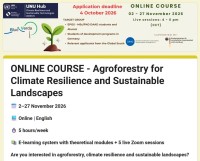
Agroforestry for Climate Resilience and Sustainable Landscapes 2026: Applications Open for Online Course
Floods and Landslides Disrupt All Three Major Nepal–China Trade Routes, Creating Serious Challenges for Overland Trade
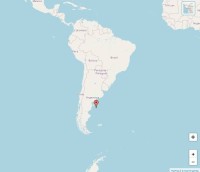
Argentina’s ‘Vanishing Sea’ Was a Rare Extreme Low Tide, Not a Global Catastrophe
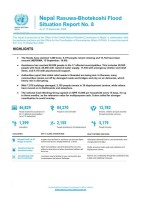
Rasuwa-Bhotekoshi Flood: UN Reports 1,399 Deaths and More Than 5,100 People Still Missing
Australia’s Fossil-Fuel Exports, Global Warming and Nepal’s Himalayan Disaster: Who Bears the Cost?
Strong El Niño Raises Flood Risk Across Greater Horn of Africa as Region Moves Toward Early Action
Nepal’s National Conservation Forum 2026 to Focus on Scaling Climate Finance for Biodiversity
Contact Us

News Desk

Ecosphere News
Chakupat, Lalitpur, Nepal
Phone : +977-01-5400646
Email: [email protected] www.ecospherenews.com

Sales & Marketing

Email: [email protected]
Cell Phone: 9820631466 / 9767470774
Media Details
Publisher Ecosphere News and Travels Pvt. Ltd.
DOIB Registration No. 4699-2081/2082
Editor Ganesh Khatiwada
Follow us on Twiitter

Nature’s Healing Touch: Summer River Swim Brings Peace and Joy https://t.co/J2GfWcNdj0

— Ecosphere News (@EcosphereNews) March 20, 2026
Like us on Facebook
© 2026 Ecosphere News Environmental & Developmental Issues. All Rights Reserved. Site by: SoftNEP

SoftNEP News Alert

अख्तियार स्वतन्त्र निकाय भएकाले वाइडबडि छानबिनमा अहिलेसम्‍म कुनै किसिमको राजनीतिक दबाब आएको छैन।स्वतन्त्र ढंगले काम गरिरहेका छौ।
सदस्यता लिनुहोस्