Kathmandu / Global Desk
The global environmental narrative is entering a more complex and sobering phase, as new scientific findings challenge long-held assumptions about the planet’s resilience, while political conflicts and economic inequalities continue to intensify ecological stress. At the same time, targeted innovations and restoration efforts offer cautious optimism-provided they are scaled responsibly.
Climate Science: Earth’s Safety Nets Are Weaker Than Expected
Recent studies indicate that plants may not be absorbing carbon dioxide at the rate previously assumed, primarily due to nitrogen limitations in soils. This finding has significant implications for global climate models, which have long counted on forests and vegetation as reliable carbon sinks. Scientists warn that this overlooked constraint could lead to higher-than-projected global temperatures, increasing the risk of overshooting international climate targets.
Adding to these concerns, researchers have identified deep geothermal heat beneath Greenland’s ice sheet, a factor that could accelerate ice melt from below. This hidden heat source suggests that sea-level rise projections may be underestimated, particularly for coastal and island nations already vulnerable to climate impacts.
Together, these discoveries point to a troubling conclusion: the Earth’s natural buffering systems are under greater strain than climate models have fully accounted for.
Pollution & Chemicals: Invisible Threats, Emerging Solutions
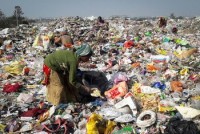
Environmental health risks are becoming increasingly microscopic-and harder to control. Microplastics capable of carrying disease-causing pathogens have now been detected in the air, raising concerns about long-term respiratory and immune system impacts.
Meanwhile, so-called “forever chemicals” (PFAS) continue to contaminate water systems worldwide. Encouragingly, new technologies capable of capturing and breaking down PFAS at unprecedented speeds are being tested. However, experts caution that technological fixes alone cannot substitute for strong regulation and corporate accountability, especially as controversies persist over chemical safety data, including ongoing debates around widely used herbicides.
Water pollution and scarcity remain deeply politicized in several regions, with disputes over access and contamination-such as those seen in parts of the Middle East-illustrating how environmental stress often mirrors geopolitical inequality.
Conservation & Innovation: Proof That Solutions Exist
Amid mounting challenges, several initiatives demonstrate that environmental recovery is possible when science, policy, and communities align. Wetland restoration projects are reviving ecosystems that act as natural flood controls and carbon sinks. Innovations such as biodegradable plastics made from bamboo are reducing dependency on fossil-fuel-based materials, particularly in packaging.
In marine conservation, artificial intelligence is being deployed to detect whales in shipping lanes, helping prevent fatal collisions. These examples underline an important reality: solutions already exist-but they require investment, enforcement, and political will to move beyond pilot projects.
Policy, Power, and Environmental Conflict
Environmental governance remains deeply contested. Legal battles over offshore wind projects, pipelines, and oil drilling reflect broader tensions between energy transition goals and entrenched fossil fuel interests. At the same time, major global agribusiness players withdrawing from conservation agreements in sensitive regions like the Amazon highlight the limits of voluntary corporate commitments.
These conflicts are further complicated by inequality. Studies continue to show that the world’s richest populations contribute disproportionately to pollution and emissions, while poorer communities bear the brunt of environmental degradation and climate disasters.
Global Impacts: Climate Change Is Reshaping Daily Life
Climate disruption is no longer a future risk-it is reshaping economies and livelihoods today. Unseasonal rains are damaging cocoa crops in West Africa, threatening global supply chains and local farmer incomes. Europe’s ski industry is struggling as warming winters reduce snowfall. In South Asia, water scarcity linked to agricultural exports, including rice, is raising alarms about long-term food and water security.
These impacts reveal a common thread: climate change is amplifying existing vulnerabilities, from agriculture and tourism to trade and public health.
The Bigger Picture
The emerging environmental reality is neither purely catastrophic nor comfortably hopeful. Science is revealing hard truths about the planet’s limits, while human systems-political, economic, and social-are struggling to adapt at the necessary pace.
For everyone, the message is clear: the window for meaningful action is narrowing, but it has not yet closed. Whether innovation and restoration can outpace damage and delay will depend not on awareness alone, but on decisive, equitable, and science-based choices made now.