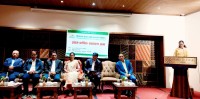
Kathmandu, January 4 - The Nepal Association of Tour and Travel Agents (NATTA) concluded its 58th Annual General Meeting (AGM) on Sunday at the Soaltee Kathmandu Hotel, bringing together tourism entrepreneurs, policymakers, academics, and industry stakeholders to chart a strategic path for revitalising Nepal’s tourism sector.
The assembly underscored a shared urgency to transform Nepal into a globally competitive and accessible tourism destination, with speakers consistently highlighting the need for streamlined policies, improved infrastructure, and stronger public-private collaboration. Tourism leaders stressed that without structural reforms, Nepal’s vast natural and cultural assets will remain underutilised.
Addressing the gathering, NATTA President Kumar Mani Thapaliya pointed out that administrative inefficiencies continue to constrain the sector’s growth. Emphasising ease of travel as a decisive factor for international tourists, he remarked that Nepal must strive to become not only a “better destination” but also an “easy destination.” He called for simplified visa and entry procedures, predictable tax policies, and a coordinated effort to enhance Nepal’s global tourism image.
Representing the provincial government, Suresh Shrestha, Minister for Culture and Tourism of Bagmati Province, reaffirmed the government’s commitment to supporting tourism entrepreneurs. He acknowledged that regulatory complexities, policy overlaps, and political instability have hindered economic progress and stated that the provincial government is working closely with the federal authorities to address these challenges and create a more business-friendly environment.
Adding an academic perspective, Dr. Achyut Wagle, Vice-Chancellor of Kathmandu University, highlighted that tourism currently contributes only 3-4 percent to Nepal’s GDP-far below its potential. Stressing quality over quantity, he advocated for research-driven policymaking, innovation, and the development of high-value tourism experiences that can generate sustainable economic returns.
Mukunda Prasad Niraula, Secretary at the Ministry of Culture, Tourism and Civil Aviation, praised NATTA’s long-standing role in shaping Nepal’s tourism ecosystem. He urged the association to prioritise quality, sustainability, and professionalism in future initiatives, while also calling on Nepal Airlines Corporation to enhance service standards and expand international connectivity. Emphasising collaboration, he noted that tourism development cannot be driven by the government alone and requires strong private-sector partnership.
Infrastructure emerged as a central theme throughout the AGM. Anjan Kumar Shrestha, Senior Vice President of the Federation of Nepalese Chambers of Commerce and Industry (FNCCI), stressed that the full operation of Pokhara and Bhairahawa International Airports is critical to unlocking tourism growth. He described these airports as strategic gateways to key destinations such as Lumbini, Annapurna, and Chitwan, capable of diversifying tourism flows beyond Kathmandu.
Industry leaders including Deepak Raj Joshi, CEO of the Nepal Tourism Board, NATTA Vice President Ram Prasad Sapkota, and Fur Gelje Sherpa, President of the Nepal Mountaineering Association, commended NATTA’s efforts in international branding and promotion. They emphasised the importance of air connectivity, strategic partnerships, and infrastructure development-ranging from roads to digital tourism platforms-while also highlighting the need to protect mountain ecosystems as a foundation for sustainable eco-tourism.
The AGM also featured the launch of the NATTA Directory, a presentation video of the Buddha International Travel Mart (BITM), and the presentation of NATTA awards recognising individuals and organisations for their notable contributions to Nepal’s travel and tourism sector.
Concluding the assembly, Ms. Jiswan Tuladhar Shrestha, Senior Vice President of NATTA and Convenor of the AGM, thanked participants for their engagement and reaffirmed NATTA’s commitment to policy advocacy, institutional reform, and collaborative action to strengthen Nepal’s tourism industry.