Raralihi, Jumla District, Nepal - In the remote and water-scarce highlands of Nepal’s Karnali Province, new climate-resilient farming techniques are giving families a real alternative to seasonal migration, strengthening local food systems and improving rural livelihoods.
For 23-year-old Indira Rawat, farming was once not enough. Each winter, her husband, Man Bahadur Rawat, left their village of Raralihi to seek temporary work in India, leaving Indira to manage their small farm, household and two young children. Farming alone could not cover household needs in this harsh climate, where erratic rainfall, declining snowfall and emerging pests make crop production increasingly unpredictable.
Today, that pattern is slowly changing.
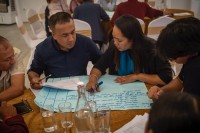
Through a community-level initiative by the Food and Agriculture Organization of the United Nations (FAO) in partnership with the Karnali Integrated Rural Development and Research Centre (KIRDARC), Indira and other local farmers have joined Farmer Field Schools (FFS) - practical training platforms that teach climate-resilient agricultural practices suited to the region’s fragile ecosystem.
“At first, family members were skeptical - they thought new methods like proper plant spacing or concentrated compost rings were a waste,” Indira explains. But as yields improved and soil health strengthened, the benefits became clear.
Practical solutions, real results
Farmers learned to prepare compost, use bio-fertilizers and bio-pesticides such as jholmal and neem-based solutions, manage apple orchards more effectively, and work together on group farming efforts. These techniques helped retain soil moisture, combat pests and enhance both vegetable and orchard production.
Despite physical barriers - vegetables and apples still must be carried on foot along steep trails to reach local markets - increased production has made a measurable difference in family incomes. Indira has been able to invest in her children’s education, cover daily needs, and save through a village savings group established with project support.
Crucially, the strengthened agricultural base has begun to reshape seasonal migration patterns. Man Bahadur now departs later in the year and returns earlier, after completing training in apple pruning and returning home to support vegetable farming and marketing.
Challenges remain
Water scarcity during droughts continues to limit irrigation - a persistent challenge in Nepal’s highlands - and fragmented land holdings constrain expansion to larger-scale agriculture. Seasonal weather variability and emerging pests also pose ongoing threats.
Yet, Indira remains committed to expanding her vegetable production and continuing with climate-adapted practices that could one day allow her husband to remain home indefinitely. “I want my children to have strong schools and imagine a future where he can work alongside us here,” she says.
Wider implications for climate and migration
The FAO-KIRDARC initiative reflects a broader effort to help rural communities adapt to climate change and make migration a choice rather than a necessity - an approach also highlighted in extended FAO projects in Nepal’s mountains that couple climate adaptation with safe migration information and local empowerment.
By strengthening farming resilience and enhancing rural incomes, these interventions are helping families stay rooted in their communities while building sustainable livelihoods - a message of hope for climate-vulnerable regions across Nepal and beyond.