Kathmandu - The International Conference 2026 on Agricultural Engineering and Climate-Smart Agriculture concluded today in Kathmandu, reinforcing the critical role of engineering, technology, and innovation in building climate-resilient and sustainable food systems.
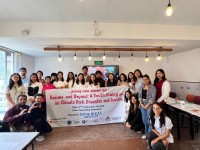
Organized by the Nepalese Society of Agricultural Engineers (NSAE) in collaboration with iDE Nepal, the two-day conference was held on February 5-6, 2026, at the Yellow Pagoda Hotel, Jamal. The event brought together agricultural engineers, researchers, development experts, policymakers, and practitioners from Nepal and abroad to address emerging challenges facing global agriculture under climate change.
The conference centered on a broad range of interconnected themes, reflecting the complexity of modern agri-food systems. Key thematic areas included climate-smart agriculture, agricultural production, and animal husbandry, highlighting adaptive farming practices to improve productivity while reducing climate risks. Discussions also focused on agricultural mechanization and automation, emphasizing efficient, labor-saving technologies suited to smallholder and commercial farming systems.
Another major focus was post-harvest, processing, and food engineering, with experts stressing the need to reduce food loss, improve value chains, and enhance food safety. Sessions on hydrology, water, and soil engineering examined sustainable water management and soil conservation strategies essential for long-term agricultural resilience.
The conference further explored rural and renewable energy solutions, underscoring the role of clean energy in transforming rural livelihoods. Emerging topics such as digital advisory services (DAS) and the latest technological innovations in agriculture drew significant attention, highlighting how data-driven tools, automation, and smart technologies can support farmers’ decision-making. In addition, smart rural infrastructure was discussed as a foundation for inclusive and climate-resilient rural development.
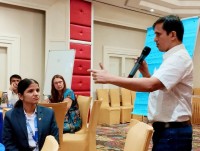
The event featured ten internationally recognized experts, including Prof. Dr. Indra Mani, Vice Chancellor of VNMKV, Mumbai; Dr. Syed Ismall, General Secretary of the Afro-Asian Association of Agricultural Engineers (AAAE); Dr. Menila Kharal, Nepal Country Director of iDE; and Dr. Laxmi Prasad Devkota, former member of Nepal’s National Planning Commission. Speakers emphasized the urgency of aligning engineering innovation with climate adaptation, policy support, and farmer-centric approaches.
With technical research presentations and interactive panel discussions, the conference served as an important platform for knowledge exchange and regional cooperation, particularly across Asia and Africa. Participants noted that the outcomes of the conference are expected to inform future research agendas, development interventions, and policy frameworks related to sustainable agriculture and climate resilience.
As the conference concludes today, stakeholders see it as a timely initiative that strengthens Nepal’s contribution to global conversations on agricultural engineering, climate-smart agriculture, and sustainable rural development-areas that are increasingly central to ensuring food security in a changing climate.