Kathmandu - As climate change increasingly disrupts Nepal’s water systems through erratic rainfall, intensified floods and prolonged droughts, national institutions are turning to advanced scientific tools to better anticipate future risks and opportunities. Strengthening hydrological modelling capacity has emerged as a critical priority, particularly for safeguarding the country’s hydropower-dependent energy sector.
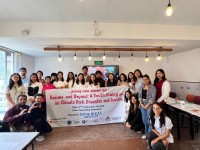
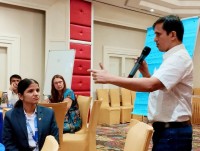
In this context, the International Water Management Institute (IWMI), in collaboration with the Water Resources and Energy Research Centre (WRERC), has launched a three-day training on the SWAT+ hydrological model for professionals from government agencies, academic institutions and partner organizations across Nepal. The training is being conducted under the CGIAR Policy Innovations program.
The initiative builds on the Community of Practice for water modelling established in November 2023, reflecting a continued effort to institutionalize modelling expertise rather than treating it as a one-off technical exercise. By bringing together practitioners from diverse institutions, the program aims to strengthen coordination, shared learning and consistency in how water-related data and projections are generated and applied.
Using the Upper Karnali Hydropower Project as a case study, participants are learning how future climate-driven changes in river flow can be translated into projections of hydropower generation. This approach highlights the growing need to link hydrological science with energy planning, especially as Nepal expands its hydropower portfolio amid increasing climate uncertainty.
Experts involved in the training emphasize that reliable projections of future hydrology are essential for informed policy decisions, infrastructure investment and long-term water and energy security. As climate impacts intensify, the ability to model different scenarios will help decision-makers balance development goals with risk reduction and environmental sustainability.
This latest training is part of a sustained series of capacity-building efforts aimed at strengthening Nepal’s system of water modellers. By investing in local expertise and practical application of advanced tools like SWAT+, Nepal is taking important steps toward evidence-based water and energy planning in a changing climate context ahead.