Kathmandu - Stakeholders from government, international agencies, the private sector, youth groups, and Indigenous communities have underscored the urgent need for coordinated action and sustained dialogue to transform Nepal’s agri-food system into one that is inclusive, climate-resilient, and investment-friendly.
The consensus emerged during the Nepal Food Forum 2025, held on Monday and jointly organized by the Food and Agriculture Organization of the United Nations (FAO) and the Ministry of Agriculture and Livestock Development. The forum served as a national platform to align policy priorities with innovation, sustainability, and long-term food security goals.
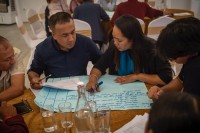
Participants emphasized that meaningful collaboration among policymakers, entrepreneurs, young innovators, Indigenous communities, and development partners is critical not only for effective policy formulation but also for successful implementation at the grassroots level.
Government Commitment to Agricultural Transformation
Addressing the forum, Minister for Agriculture and Livestock Development Dr. Madan Prasad Pariyar reaffirmed the government’s commitment to transforming Nepal’s agriculture sector through innovation, increased investment, and inclusive participation.
He stressed that youth, women, and Indigenous communities must play a central role in reshaping agri-food systems, noting that their engagement is indispensable for long-term sustainability. Highlighting the government’s vision under the Agricultural Investment Decade (2024–2034), the minister stated that youth-led innovation will be decisive in boosting productivity, competitiveness, and environmental sustainability.
Youth as Leaders of Change
FAO Representative for Nepal and Bhutan, Ken Shimizu, challenged traditional development narratives by emphasizing that young people are no longer passive beneficiaries of development programs but are emerging as leaders of agri-food system transformation.
He noted that youth-driven innovation, technology adoption, and entrepreneurship offer practical solutions to pressing challenges such as climate change, food insecurity, and rural unemployment, particularly in vulnerable rural areas.
Integrated Approach for Sustainable Development
The forum also highlighted the importance of cross-sectoral coordination. UN Resident Coordinator Hanna Singer Hamdy called for an integrated approach that connects agriculture, nutrition, climate action, and social protection, stressing that isolated interventions are insufficient to address complex food system challenges.
Echoing this view, Secretary of the Ministry of Forests and Environment Dr. Rajendra Prasad Mishra emphasized the role of sustainable agricultural practices in conserving biodiversity and strengthening climate resilience. He noted that agriculture and environmental stewardship must advance together to ensure long-term ecological and economic stability.
Innovation, Risk Reduction, and Market Access
Panel discussions and thematic sessions explored a wide range of issues, including science and technology, digital innovation, disaster risk reduction, and value chain development. Participants highlighted the need to expand financial access, market linkages, and policy support to scale up youth-led agribusinesses, agri-technology solutions, and community-based initiatives.
A Path Forward
The Nepal Food Forum 2025 concluded with optimism that strengthened cooperation among government institutions, the private sector, research bodies, and development partners will accelerate the transition toward a sustainable, inclusive, and resilient agri-food system in Nepal.
For a country increasingly vulnerable to climate impacts, the forum reinforced a clear message: the future of Nepal’s food system depends on inclusive leadership, youth-driven innovation, and collective action across sectors.