Kathmandu, December 12, 2025
Makar Jitumaya Suri Hydropower Limited has reaffirmed its commitment to Nepal’s clean energy transition by advancing two run-of-river hydropower projects on the Suri River in Dolakha district, while successfully convening its 17th Annual General Meeting (AGM) on Friday.
Established in 2065 B.S. and registered under the Company Act 2053 with the Department of Industries, the company was later transformed into a public limited entity in 2075 B.S. Over the years, it has positioned itself as a growing hydropower developer working in coordination with the Ministry of Energy, Water Resources and Irrigation, the Department of Electricity Development (DoED), and local communities.
Suri Khola Hydropower Project: 6.4 MW
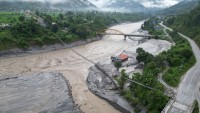
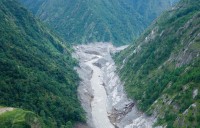
The Suri Khola Hydropower Project (SKHP), with an installed capacity of 6.4 MW, is a run-of-river project located in Gaurishankar Rural Municipality-05, Suri, in Dolakha district of Bagmati Province. The project’s headworks are situated downstream of the confluence of Hulak Khola and Suri Khola, while the powerhouse is planned at Gurumphi village, approximately 300 meters upstream from the confluence of Suri Khola and Khare Khola.
The settling basin is designed on the right bank of the river, and the headrace pipe alignment crosses the river before continuing along the left bank. Geographically, the project area spans between 27°44’10” N to 27°45’13.85” N latitude and 86°12’50” E to 86°15’10” E longitude.
The Department of Electricity Development granted the survey license in 2065 B.S., enabling detailed studies including feasibility and Environmental Impact Assessment (EIA). Following regulatory procedures, the company applied for a generation license in 2072 B.S., which was subsequently awarded on 2071-02-24 B.S., paving the way for project implementation.
Upper Suri Khola Hydropower Project: 7 MW
In addition, the company has proposed the Upper Suri Khola Hydropower Project (USKHPP) with a capacity of 7 MW, also designed as a run-of-river scheme. The project features intake weirs at Hulak Khola and Kolung Khola, with crest levels at 1827 m and 1824 m above mean sea level, respectively. The turbine axis is fixed at 1405 m, generating a gross head of approximately 422 meters.
Water will be conveyed through gravel traps, settling basins, and head ponds before entering a combined system of 2,916 meters of headrace pipe, 1,156 meters from Kolung, and an 810-meter penstock leading to the powerhouse. The generated electricity will be evacuated via an 11 km long 33 kV single-circuit transmission line connected to the proposed Singati substation.
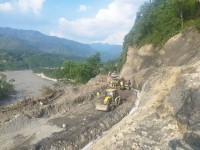
The project area lies between 1,407 m and 1,827 m above mean sea level, entirely within Gaurishankar Rural Municipality. The powerhouse site is accessible via a 12 km fair-weather motorable road from Singati Bazaar. The district headquarters, Charikot, is approximately 45 km from the project area and is connected by the Lamosangu-Charikot highway.
Local Development and National Contribution
Both projects are expected to contribute significantly to Nepal’s national grid while supporting local economic development through employment generation, infrastructure improvement, and community engagement. The company has emphasized cooperation with local stakeholders to ensure environmentally responsible and socially inclusive hydropower development.
Addressing shareholders during the 17th AGM, company representatives highlighted steady regulatory progress, technical preparedness, and long-term plans aligned with Nepal’s vision of energy self-reliance and sustainable development.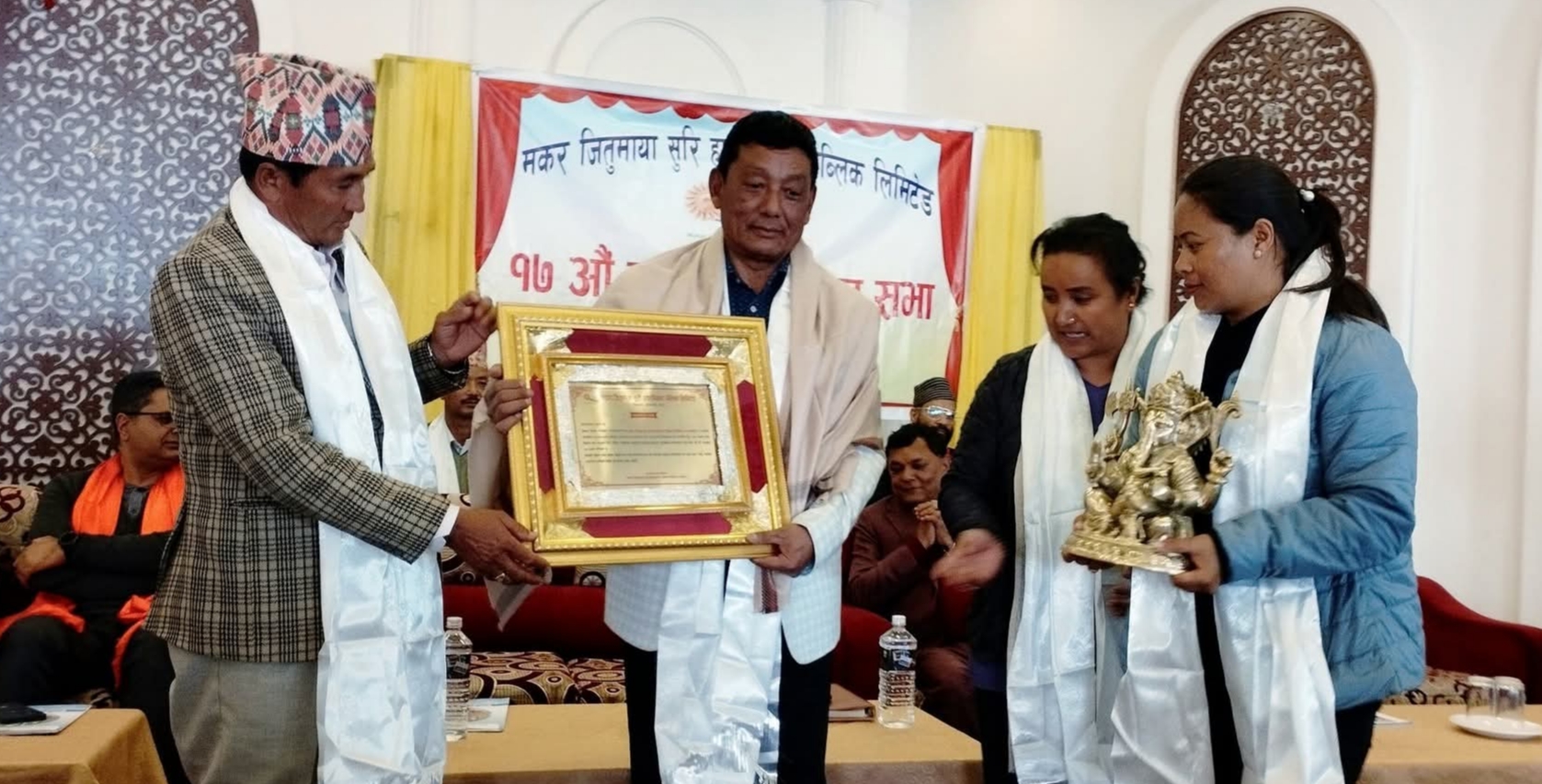
With hydropower remaining a cornerstone of Nepal’s renewable energy strategy, Makar Jitumaya Suri Hydropower Limited’s twin projects in Dolakha represent another step toward harnessing indigenous river resources for clean and reliable power generation.