Kathmandu, December 9, 2025
The Post Global Disability Symposium (GDS) 2025 was successfully held today in Kathmandu, reinforcing Nepal’s ongoing efforts to translate international human rights commitments into meaningful national action for persons with disabilities.
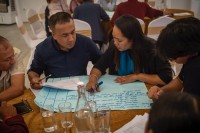
Organized jointly by the Government of Nepal, Ministry of Women, Children and Senior Citizens, and the National Federation of the Disabled - Nepal (NFDN), the symposium took place at The Everest Hotel, New Baneshwor. The event brought together government representatives, disability rights advocates, civil society organizations, and development partners for in-depth dialogue on disability-inclusive governance.
This year’s symposium was held under the theme “Internalizing Government Commitments Towards Fulfillments of International Human Rights Instruments in Nepal.” Discussions centered on how Nepal can effectively align its policies, laws, and implementation mechanisms with international conventions and frameworks, including commitments made at global disability platforms.
Collective Approach to Disability Inclusion
A wide range of disability-focused organizations co-organized the event, reflecting the diversity and intersectionality of the disability movement in Nepal. These included organizations representing persons with physical, visual, hearing, and multiple disabilities, as well as youth and women with disabilities. Their involvement ensured that voices from across the disability spectrum were represented in policy discussions.
The symposium was further strengthened through collaboration with international development partners such as VSO, CBM Global Disability Inclusion, WaterAid, Abilis Foundation, Handicap International, Karuna Foundation Nepal, FFO, and the Leave No One Behind Partnership (Nepal). Their participation underscored the importance of global-local partnerships in advancing disability-inclusive development.
From Commitment to Action
Speakers and participants emphasized that while Nepal has made notable progress in ratifying international human rights instruments and adopting inclusive policies, challenges remain in effective implementation. Gaps in accessibility, inclusive service delivery, budget allocation, and meaningful participation of persons with disabilities at all levels of decision-making were highlighted as persistent issues.
The Post GDS Symposium served as a critical follow-up platform to assess progress since previous global commitments and to identify concrete steps for action. Participants called for stronger coordination among government agencies, clearer accountability mechanisms, and sustained investment in disability-inclusive policies and programs.
Significance for Nepal’s Inclusive Development
The symposium reaffirmed that disability rights are not only a social justice concern but also a key pillar of sustainable development. Integrating disability inclusion into national planning, monitoring, and development initiatives was recognized as essential to achieving the principle of “leaving no one behind.”
By convening diverse stakeholders under one platform, the Post GDS Symposium 2025 marked an important step toward bridging policy commitments and ground realities, signaling Nepal’s intent to move from promises to practice in the realization of disability rights.