Kathmandu, November 17, 2026 - Nepal is observing the 22nd National Coffee Day today with programmes highlighting the country's growing coffee culture, the potential of domestic Arabica production, and the need to strengthen the coffee industry through increased investment, improved quality, and expanded market opportunities.
The National Tea and Coffee Development Board (NTCDB) has marked the occasion with a special programme in Kirtipur, Kathmandu, bringing together government representatives, coffee producers, entrepreneurs, processors, roasters, and coffee enthusiasts. Exhibitions and coffee stalls are also providing opportunities to showcase Nepali specialty coffee and connect different stakeholders across the value chain.
This year's celebration carries the message "Increase Production, Improve Quality, Expand Nepali Coffee in the Global Market", reflecting the need to transform Nepal's coffee sector into a more productive, competitive, and export-oriented industry.
Government Plans to Expand Coffee Cultivation
Speaking at the National Coffee Day programme, Dr. Rajendra Prasad Mishra, Secretary at the Ministry of Agriculture, Forest and Environment, said the government has prioritised the promotion and expansion of tea and coffee cultivation.
He highlighted plans to extend coffee farming beyond its traditional production areas, particularly Gulmi and Gandaki Province, into other regions with suitable climatic and geographical conditions, including western Nepal, Karnali, Sudurpaschim, and Khotang.
The government also plans to establish demonstration plots along the Mid-Hill Highway and Madan Bhandari Highway to assess cultivation potential, production performance, and coffee quality before encouraging farmers to make larger commercial investments.
Dr. Mishra emphasised that demonstration farming would help farmers understand the suitability of new locations, reduce investment risks, and build confidence in commercial coffee production.
The expansion initiative is expected to create new opportunities for farmers, rural entrepreneurs, and local communities while contributing to agricultural diversification and income generation.
Rising Coffee Culture, but Domestic Production Still Falls Short
Despite the growing popularity of coffee shops and specialty coffee in Nepal, domestic production has not increased sufficiently to meet the expanding market demand.
Surendra Subedi, Executive Director of the National Tea and Coffee Development Board, highlighted the widening gap between the country's growing coffee consumption and its domestic production capacity.
He stressed that Nepal needs greater investment in coffee farming, modern agricultural technologies, processing facilities, skilled human resources, quality assurance, and value-chain development.
He also pointed out that the country's coffee industry continues to rely heavily on a relatively limited number of established entrepreneurs, while participation by new investors in farming and processing remains comparatively low.
Although Nepali coffee is increasingly recognised in international markets for its highland and specialty characteristics, strengthening quality certification and establishing regular testing mechanisms are essential to improving its competitiveness.
Subedi emphasised that the growing number of coffee consumers and cafés should be matched by increased investment in the production and processing sectors rather than concentrating only on café businesses.
Production Growth and the Challenge of Imports
According to the National Tea and Coffee Development Board, Nepal produced approximately 790 metric tonnes of coffee in fiscal year 2082/83, cultivated across 6,166 hectares in 45 districts.
However, only 71 metric tonnes were exported, while the majority of domestic production was consumed within the country.
According to Department of Customs figures reported on the occasion, Nepal imported approximately 259 metric tonnes of coffee worth NPR 194.7 million during the same fiscal year. In comparison, the country exported 71 metric tonnes worth approximately NPR 144.96 million.
These figures illustrate the growing domestic demand for coffee and the considerable opportunity to expand local production to reduce import dependence while strengthening export earnings.
Nepali coffee is exported to markets including Japan, South Korea, Switzerland, Australia, Canada, and India.
Strengthening the Future of Nepali Coffee
Nepal's mountainous geography, suitable climatic conditions, and growing international recognition provide considerable potential for developing a distinctive specialty coffee industry.
However, unlocking this potential will require coordinated efforts from the government, private sector, cooperatives, farmers, research institutions, and development partners.
Expanding cultivation into suitable new locations, improving farm productivity, ensuring access to quality seedlings and technical support, developing processing infrastructure, and strengthening international quality standards will be essential.
The 22nd National Coffee Day therefore serves not only as an occasion to celebrate Nepali coffee but also as a reminder that the country's growing coffee culture must be supported by a stronger domestic production system.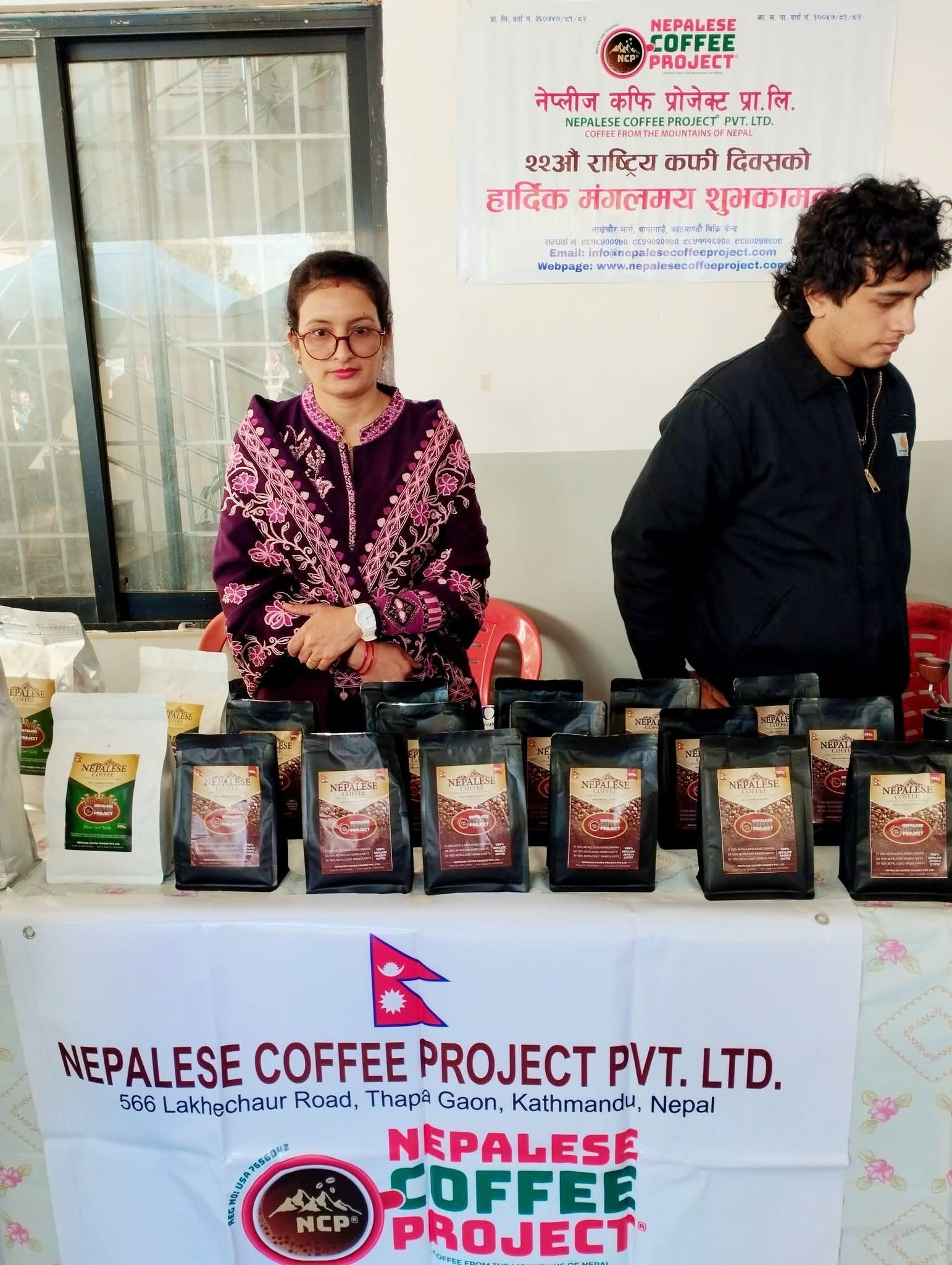
With appropriate investment, innovation, and long-term policy commitment, coffee could become an important source of rural livelihoods, agricultural diversification, employment, and foreign exchange earnings for Nepal.
#NepalCoffeeDay #NationalCoffeeDay #NepaliCoffee #SpecialtyCoffee #ArabicaCoffee #CoffeeProduction #AgricultureNepal #SustainableAgriculture #RuralDevelopment #FarmersEmpowerment #ValueChainDevelopment #CoffeeExports #EconomicDevelopment #EcosphereNews