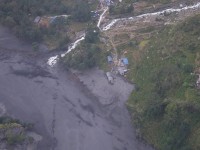
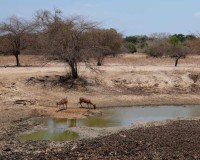
As global demand for electric vehicles, renewable energy technologies and battery storage continues to grow, a new global study has highlighted the potential biodiversity costs of nickel mining, warning that mining activities increasingly overlap with the habitats of threatened wildlife and plant species.
The study, co-authored by Dr. Yvette Baninla, NERPS Specially Appointed Associate Professor at Hiroshima University, alongside Luming Wang, Tim T. Werner, Lei Shi, Yi Yang, Qian Zhang and Peng Wang, mapped 517 major nickel mining areas worldwide to assess their relationship with the habitats of threatened species.
According to the study, nickel mining areas overlap with the habitats of 154 threatened species across approximately 17.45 million square kilometres. The findings also indicate that nearly one-third of the species examined have lost at least half of their global habitat range to mining-related activity, highlighting the scale of potential risks to biodiversity.
The highest risks were identified in the Asia-Pacific region and Africa, where mining expansion and the presence of ecologically important habitats raise concerns about the long-term survival of vulnerable species.
Nickel is an important raw material used in several battery technologies, including some batteries for electric vehicles. While the transition to cleaner energy is essential for reducing greenhouse gas emissions, the extraction of critical minerals can create environmental pressures through habitat loss, land-use change, forest degradation, pollution and disruption of ecosystems.
The findings highlight a key challenge in the global clean energy transition: reducing emissions must go hand in hand with protecting biodiversity. Without appropriate safeguards, the growing demand for minerals needed for low-carbon technologies could place additional pressure on already threatened species and fragile ecosystems.
The study underscores the need for stronger biodiversity assessments before mining projects are approved, responsible mine planning, effective environmental monitoring and the protection of critical wildlife habitats. Improving mineral traceability, strengthening supply-chain accountability and promoting recycling and more efficient use of battery materials could also help reduce pressure for new extraction.
As countries accelerate their transition towards electric mobility and renewable energy, the research reinforces the importance of ensuring that the materials powering a greener future are sourced responsibly.
A sustainable energy transition must protect both the climate and the natural world. Clean technology should not come at the expense of the ecosystems and species it ultimately depends on.
Publication: Access the study here: https://buff.ly/4294n6X
Source: Global research on nickel mining and threatened species, co-authored by researchers including Dr. Yvette Baninla of Hiroshima University.
#EcosphereNews #Biodiversity #NickelMining #WildlifeConservation #CriticalMinerals #ElectricVehicles #CleanEnergy #SustainableMining #EnvironmentalProtection #HabitatLoss #NatureConservation #ResponsibleSourcing #GreenTransition #Sustainability