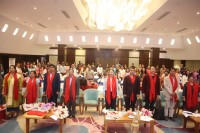
Kathmandu, October 12, 2026 - Divya Jyoti Hydropower Limited, a Nepalese energy development company focused on renewable electricity generation, concluded its 19th Annual General Meeting (AGM) in Kathmandu on October 9, 2026.
The company is primarily focused on developing the 50-megawatt (MW) Marsyangdi Besi Hydroelectric Project in Lamjung District, Gandaki Province. The project is designed as a run-of-river (RoR) hydropower facility on the Marsyangdi River, spanning Besisahar Municipality and Marsyangdi Rural Municipality.
Initially established as a private limited company on February 21, 2008, Divya Jyoti Hydropower was subsequently converted into a public limited company to support its hydropower development ambitions. Api Power Company Limited is its majority shareholder and principal promoter.
50 MW Marsyangdi Besi Hydroelectric Project
The Marsyangdi Besi Hydroelectric Project is designed to generate approximately 321.54 to 322.14 gigawatt-hours (GWh) of electricity annually. Its projected generation includes approximately 117.89 GWh during the dry season and 203.65 GWh during the wet season.
The project is planned to use four horizontal-axis Francis turbines. Once developed and connected to the national grid, it is expected to contribute to Nepal's domestic electricity supply and support the country's broader transition towards cleaner energy sources.
According to the project information provided by the company, key preparatory milestones, including land acquisition, detailed surveys and a Power Purchase Agreement (PPA) with the Nepal Electricity Authority (NEA), have been completed. Construction activities include the development of access roads, intake structures and the settling basin.
Electricity generated by the project is planned to be transmitted to the NEA's Udipur Substation through a transmission line of approximately 4-8 kilometres.
Supporting Nepal's Renewable Energy Development
Hydropower remains an important component of Nepal's energy sector, offering opportunities to expand domestic electricity generation, strengthen energy security and reduce reliance on imported fossil fuels. However, the sustainable development of hydropower also requires careful consideration of river ecosystems, local communities, climate-related risks and the long-term resilience of infrastructure.
The progress of the Marsyangdi Besi Hydroelectric Project will therefore be relevant to Nepal's wider efforts to expand renewable energy capacity while balancing infrastructure development with environmental and social responsibilities.
The conclusion of Divya Jyoti Hydropower Limited's 19th AGM marks a further milestone in the company's corporate activities as it pursues its principal hydropower development project.
#EcosphereNews #DivyaJyotiHydropower #MarsyangdiBesiHydropower #Hydropower #RenewableEnergy #CleanEnergy #SustainableDevelopment #EnergySecurity #Nepal #GreenEnergy