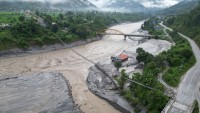
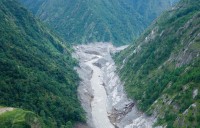
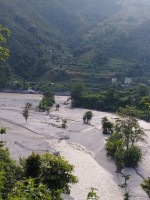
NEW YORK/KATHMANDU, September 25, 2026 - Prime Minister Balendra (Balen) Shah has used Nepal’s first high-level appearance at the 81st United Nations General Assembly (UNGA 81) to draw global attention to the escalating climate risks facing the Himalayas, the devastating Bhotekoshi floods and Nepal’s demand for stronger international support for recovery and climate-resilient reconstruction.
Shah addressed the UN General Debate on September 24, during the high-level week of the General Assembly, where Nepal’s climate vulnerability and the consequences of the August 26 Bhotekoshi-Trishuli disaster formed a central part of the country’s international message. Nepal’s Foreign Ministry had earlier confirmed that Shah would use the UN platform to highlight climate impacts and seek international cooperation.
From disaster to climate justice
Shah presented Nepal not simply as a country seeking emergency assistance, but as a Himalayan nation calling for practical international solutions to increasingly severe climate-related risks.
Nepal contributes only a very small share of global greenhouse-gas emissions, yet its mountain communities, infrastructure, agriculture, water systems and ecosystems are increasingly exposed to climate-related hazards. The Bhotekoshi disaster has intensified Nepal’s argument that countries with limited contributions to global emissions should not have to shoulder the financial burden of climate impacts alone.
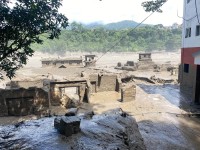
The prime minister highlighted the Bhotekoshi floods as a stark example of the vulnerability of Himalayan regions. The disaster caused extensive loss of life and damage to roads, bridges, hydropower facilities, homes and other infrastructure across affected districts.
$4.78 billion reconstruction requirement
A major component of Nepal’s case at the UN is the scale of the reconstruction challenge.
The government’s Rapid Damage and Needs Assessment has estimated US$4.78 billion in reconstruction requirements following the August 26 disaster. The assessment put physical damage at about US$1.8 billion and economic losses at approximately US$883 million.
Against this backdrop, Shah called for greater access to international climate finance, the effective use of the Fund for Responding to Loss and Damage, technology transfer and financial support for resilient infrastructure and reconstruction.
For Nepal, the issue extends beyond immediate relief. It involves rebuilding roads, bridges, hydropower facilities, settlements and public infrastructure in ways that can withstand a changing climate and reduce future disaster risks.
Himalayas at the centre of climate diplomacy
Shah’s UN appearance also brought wider attention to the particular vulnerability of mountain countries.
Nepal has repeatedly warned that rising temperatures, glacier and snow changes, unpredictable precipitation and increasing disaster risks are threatening Himalayan communities and development gains. The government has therefore sought stronger international cooperation in early-warning systems, scientific research, adaptation, technology and climate-resilient development.
The message also connects the Himalayas with downstream populations across South Asia, where rivers originating in the mountains support millions of people and sustain agriculture, ecosystems, energy systems and economies.
International solidarity
Shah also acknowledged the support Nepal received following the Bhotekoshi disaster, including assistance from neighbouring countries India and China and solidarity from the wider international community.
Nepal has sought to turn that immediate international solidarity into longer-term cooperation for reconstruction, disaster preparedness and climate resilience.
The country’s position is that assistance for climate-related disasters should be accessible, predictable and adequate to the scale of losses, particularly through international climate-finance mechanisms rather than creating additional debt burdens.
Governance and Nepal’s political transition
Beyond climate and disaster recovery, Shah’s UN appearance also provided an opportunity to explain Nepal’s recent political transition and the priorities of his new administration.
He highlighted the importance of transparency, accountability, anti-corruption measures and good governance as Nepal moves through a period of political change.
The government has sought to present these domestic priorities alongside Nepal’s international agenda, including climate action, sustainable development, disaster resilience and multilateral cooperation. Reporting ahead of the UNGA confirmed that Shah was expected to address Nepal’s political transition and the priorities of the new government alongside climate issues.
A Himalayan message to the world
Prime Minister Shah’s UNGA 81 address places the Bhotekoshi disaster within a much larger question: how should the international community respond when countries that contribute relatively little to global emissions face enormous human, environmental and economic losses from climate-related disasters?
For Nepal, the answer increasingly centres on climate justice, accessible loss-and-damage finance, technology, resilient infrastructure and stronger international cooperation.
The Bhotekoshi catastrophe has therefore become more than a national disaster in Nepal’s diplomatic narrative. It has emerged as a warning about the growing risks facing the Himalayas-and a call for the international community to translate climate commitments into practical support for vulnerable mountain nations.
Ecosphere News will continue to follow Nepal’s climate diplomacy, the Bhotekoshi recovery and the country’s efforts to secure climate finance and resilient reconstruction.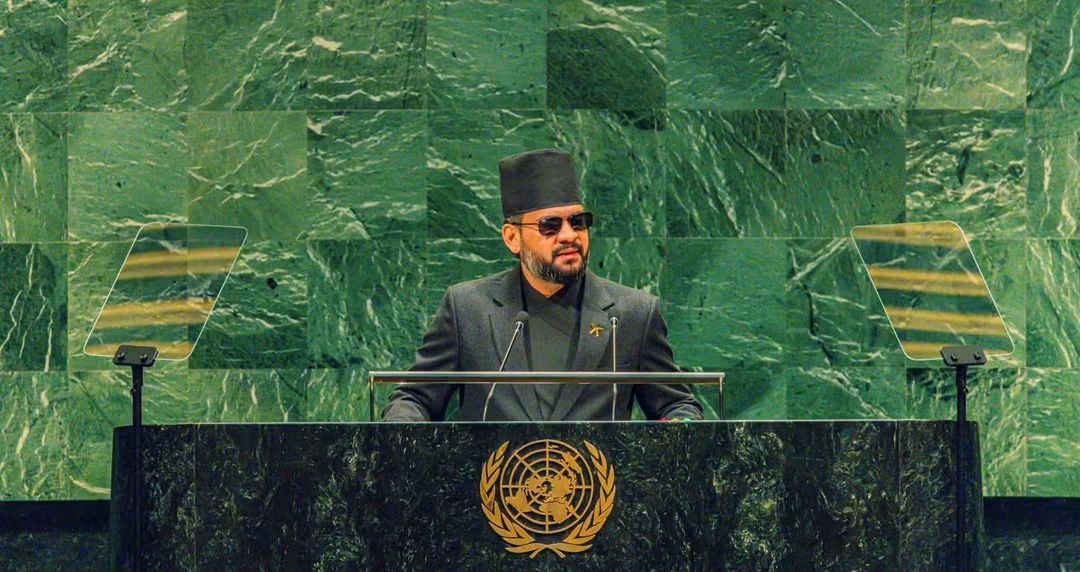
#EcosphereNews #Nepal #BalendraShah #BalenShah #UNGA81 #ClimateJustice #Himalayas #Bhotekoshi #ClimateChange #LossAndDamage #ClimateFinance #ClimateResilience #MountainCountries #NepalFloods #ClimateDiplomacy #SustainableDevelopment #ResilientInfrastructure #LossAndDamageFund #HimalayanCrisis #EnvironmentalJournalism