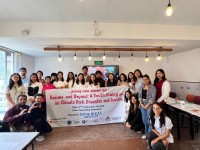
Kathmandu, September 22, 2026 - The International Livestock Research Institute (ILRI), a CGIAR research centre dedicated to livestock research, is convening a stakeholder workshop in Kathmandu to review progress on the Sustainable Animal and Aquatic Food (SAAF) Science Program in Nepal and discuss priorities for 2027 and beyond.
The workshop, titled “Sustainable Animal and Aquatic Food (SAAF): Review, Reflect and Plan,” is being held today, 22 September 2026, at Hotel Himalaya, Kupondole, Lalitpur.
According to Nepal Agricultural Research Council (NARC) and the invitation circulated by ILRI, the institute has been implementing the SAAF science program in Nepal with support from CGIAR since 2025. The program brings together research and stakeholder engagement aimed at strengthening sustainable animal and aquatic food systems, with implications for food and nutrition security, livelihoods, environmental sustainability and resilience.
The Kathmandu meeting follows a brainstorming workshop held on 13-14 May 2025, where key stakeholders worked to co-design and prioritize dairy cattle and buffalo research in Nepal. That process also produced a Theory of Change intended to guide implementation, monitoring, evaluation and learning. ILRI subsequently published a Theory of Change specifically for Nepal's dairy value chains under the CGIAR SAAF program in November 2025.
The SAAF Science Program is part of CGIAR's 2025-2030 research portfolio and focuses on transforming animal and aquatic food systems in ways that can improve livelihoods and well-being while responding to climate, health, food-security and environmental challenges. Its broader areas of work include productivity, climate and environment, One Health, markets and policy, gender and social inclusion, and digital and data solutions.
For Nepal, the continuing focus on dairy cattle and buffalo research is particularly relevant to rural livelihoods and the country's evolving food systems. The review and planning process provides an opportunity for researchers, government representatives and other stakeholders to assess what has been achieved during 2026, identify remaining gaps and agree on priorities for future research and implementation.
The workshop is expected to serve as a platform to review, reflect and plan-linking scientific evidence with national priorities and practical needs across Nepal's animal-food sector.
As climate change, food security, animal health and rural livelihoods become increasingly interconnected, sustainable transformation of livestock and aquatic food systems will remain an important part of building resilient food systems in Nepal.
#EcosphereNews #Nepal #SAAF #ILRI #CGIAR #SustainableFoodSystems #Livestock #DairyFarming #AnimalHealth #FoodSecurity #ClimateResilience #SustainableAgriculture #DairyDevelopment #ResearchForDevelopment #OneHealth #NepalAgriculture