Top Navigation
  • Home
  • About Us
    • Our Story
    • Our Team
    • Mission and Vision
  • Donate
    • Why Donate
    • Payment Methods
Main Navigation
  • News
    • Local
    • National
    • International
  • Development
  • Environment
    • Weather
    • Climate
    • Conservation
    • Biodiversity
    • Natural Disasters
    • Pollution & Waste
    • Energy
    • Ecology
  • Opinion
    • Expert Views
    • Editorials
    • Guest Articles
    • Youth Voices
  • Business
  • Technology
  • Profiles
  • Travels
  • Initiatives
    • Climate Education
    • Policies & Agreements
    • Resources
  • More
    • Events
    • Lifestyle
    • Multimedia
    • Research/Reports
    • Publications
  • Home
  • About Us
    • Our Story
    • Our Team
    • Mission and Vision
  • Donate
    • Why Donate
    • Payment Methods
Sustainable Development Goals Sustainable Development Goals
  • News
    • Local
    • National
    • International
  • Development
  • Environment
    • Weather
    • Climate
    • Conservation
    • Biodiversity
    • Natural Disasters
    • Pollution & Waste
    • Energy
    • Ecology
  • Opinion
    • Expert Views
    • Editorials
    • Guest Articles
    • Youth Voices
  • Business
  • Technology
  • Profiles
  • Travels
  • Initiatives
    • Climate Education
    • Policies & Agreements
    • Resources
  • More
    • Events
    • Lifestyle
    • Multimedia
    • Research/Reports
    • Publications
Search Here
Climate
  • Home
  • Climate
  • Nepal’s Himalayan Flood Disaster Raises a Global Question: Who Pays for Climate Loss and Damage?
Nepal’s Himalayan Flood Disaster Raises a Global Question: Who Pays for Climate Loss and Damage?
Ganesh Khatiwada
Ganesh Khatiwada 2026-09-13 10:47:00

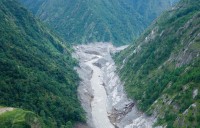
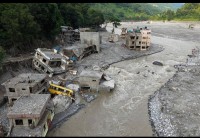
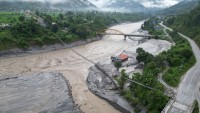
Kathmandu, Nepal - The catastrophic floods and landslides that struck northern Nepal on August 26 have become more than a national disaster. They are emerging as a powerful case study in the global debate over climate justice, loss and damage, and the economic consequences of a warming planet.
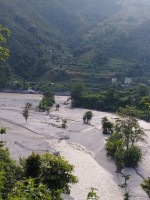
The disaster devastated communities across Rasuwa, Nuwakot and Dhading, damaging roads, bridges, power infrastructure, water systems, homes and livelihoods. The United Nations says about 84,270 people have been affected, with 1,385 deaths confirmed and 5,130 still missing as of September 13. The UN has described Nepal’s experience as an “extraordinary, stark illustration” of the losses and damages increasingly faced by climate-vulnerable countries.
Nepal has contributed very little to global greenhouse-gas emissions, yet its Himalayan communities are increasingly exposed to glacier-related hazards, extreme rainfall, floods, landslides and other climate risks. Nepal has therefore approached the Loss and Damage Fund for support, placing climate justice at the centre of its recovery and reconstruction agenda.
For Ecosphere News, this raises a fundamental global question: if countries that have contributed least to the climate crisis are suffering some of its most devastating consequences, who should bear the cost of rebuilding?
This question becomes even more urgent as the world enters what the UN Environment Programme calls an era of climate overshoot. UNEP’s September 2026 Limiting Overshoot report says exceeding 1.5°C is now likely and argues that the remaining objective must be to keep the overshoot as low and brief as possible, reach a peak, and then bring global temperatures back down.
This concept of “overshoot economics” deserves much greater public attention. Every additional fraction of warming means greater risks, greater damage and potentially higher adaptation and reconstruction costs. In other words, the economic price of delayed climate action is increasingly being paid through destroyed infrastructure, lost livelihoods, displacement and mounting public expenditure.
Nepal’s energy transition presents another important dimension. The country aims to expand electricity generation dramatically, with a national target of 28,500 MW by 2035. Hydropower can contribute significantly to regional decarbonization and Nepal’s economic development, but the sustainability of this expansion must also be measured through climate resilience, river-basin integrity, biodiversity protection, community rights and the safety of infrastructure exposed to rapidly changing Himalayan conditions.
The lesson is not that Nepal should abandon clean energy or development. Rather, green development must become resilient development.
The Rasuwa-Bhotekoshi catastrophe also demonstrates why climate action cannot stop at reducing carbon emissions. The world must simultaneously invest in early-warning systems, climate-resilient infrastructure, glacier and river monitoring, disaster preparedness, resilient communities and accessible finance for vulnerable countries.
For Ecosphere News, the central message is clear:
Climate justice cannot remain a slogan. It must become an economic principle.
As the world moves into an era of climate overshoot, the international community must confront not only how quickly emissions can be reduced, but also how the growing costs of climate-related loss and damage will be fairly shared.
Nepal’s Himalayan tragedy should therefore not be viewed simply as another disaster story. It is a warning from the mountains to the world-and a test of whether global climate solidarity can finally move from promises to meaningful action.
#EcosphereNews #ClimateJustice #LossAndDamage #ClimateChange #Nepal #Rasuwa #Bhotekoshi #Himalayas #ClimateOvershoot #OvershootEconomics #ClimateFinance #GlacialRisk #ClimateAdaptation #ResilientDevelopment #SustainableDevelopment #CleanEnergy #Hydropower #ClimateAction #EnvironmentalJournalism #NepalHimalayas


Published Date 2026-09-13 10:47:00
Comments
More Climate
The Warning Signs Were There, But Nepal Was Not Ready to Detect Them
The Warning Signs Were There, But Nepal Was Not Ready to Detect Them 2026-09-06 06:20:00
Weather Science Becomes Nepal’s First Line of Defence Against Climate-Driven Disasters
Weather Science Becomes Nepal’s First Line of Defence Against Climate-Driven Disasters 2026-09-03 04:50:00
🌍 Ecosphere News | Global Environmental Update
🌍 Ecosphere News | Global Environmental Update 2026-08-30 12:11:00
How Scientists Monitor and Forecast El Niño: A Global Climate Early-Warning System
How Scientists Monitor and Forecast El Niño: A Global Climate Early-Warning System 2026-08-27 10:16:00
Jomsom Climate Conference Seeks Unified Local Adaptation Framework Across Nepal
Jomsom Climate Conference Seeks Unified Local Adaptation Framework Across Nepal 2026-08-20 08:25:00
Mustang Invites All 753 Local Governments to Historic Climate Conference in Jomsom
Mustang Invites All 753 Local Governments to Historic Climate Conference in Jomsom 2026-08-14 07:43:00
Most Loved
  • Week
  • Month
Argentina’s ‘Vanishing Sea’ Was a Rare Extreme Low Tide, Not a Global Catastrophe
Australia’s Fossil-Fuel Exports, Global Warming and Nepal’s Himalayan Disaster: Who Bears the Cost?
Nepal Flood Disaster: Search for Survivors Continues as Thousands Remain Missing
Africa’s Land Crisis: A Growing Threat to Food, Water and Livelihood
Strong El Niño Raises Flood Risk Across Greater Horn of Africa as Region Moves Toward Early Action
Argentina’s ‘Vanishing Sea’ Was a Rare Extreme Low Tide, Not a Global Catastrophe
Rasuwa Flood: What Really Happened, the Human Cost, Destruction and the Road Ahead
Mustang Climate Conference to Amplify Himalayan Voices on the Global Stage
Australia’s Fossil-Fuel Exports, Global Warming and Nepal’s Himalayan Disaster: Who Bears the Cost?
Can Scientists Predict When Glaciers Will Collapse? Nepal’s Himalayan Disaster Raises Urgent Questions About Early Warning Systems
Contact Us

News Desk

Ecosphere News
Chakupat, Lalitpur, Nepal
Phone : +977-01-5400646
Email: [email protected] www.ecospherenews.com

Sales & Marketing

Email: [email protected]
Cell Phone: 9820631466 / 9767470774
Media Details
Publisher Ecosphere News and Travels Pvt. Ltd.
DOIB Registration No. 4699-2081/2082
Editor Ganesh Khatiwada
Follow us on Twiitter

Nature’s Healing Touch: Summer River Swim Brings Peace and Joy https://t.co/J2GfWcNdj0

— Ecosphere News (@EcosphereNews) March 20, 2026
Like us on Facebook
© 2026 Ecosphere News Environmental & Developmental Issues. All Rights Reserved. Site by: SoftNEP

SoftNEP News Alert

अख्तियार स्वतन्त्र निकाय भएकाले वाइडबडि छानबिनमा अहिलेसम्‍म कुनै किसिमको राजनीतिक दबाब आएको छैन।स्वतन्त्र ढंगले काम गरिरहेका छौ।
सदस्यता लिनुहोस्