Kathmandu, Nepal - September 4, 2026: The growing threat of glacier-related floods in Nepal’s high mountains will come under scientific and policy scrutiny during a high-level international webinar scheduled for Monday, September 7, 2026.
Organized by Youth Innovation Lab, the webinar, titled “Tsunamis in Nepal’s High Mountains and Valleys: The Science, Climate Connections, Early Warning, and Resilience,” will examine how sudden high-mountain flood events can transform into destructive, fast-moving waves as they travel downstream through narrow Himalayan valleys.
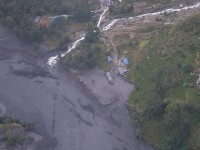
The discussion comes in the aftermath of the August 26, 2026 Bhotekoshi flood in Rasuwa, which highlighted the potentially devastating consequences of sudden high-altitude flood hazards for settlements, infrastructure and communities downstream.
Unlike a conventional tsunami, glacier-related floods are not ocean-generated events. However, the organizers use the term “tsunamis” to describe the rapid, high-energy flood waves that can surge through Himalayan valleys following events such as glacial lake outburst floods (GLOFs), landslide-dammed lake failures or sudden releases of water and debris.
The webinar will bring together climate scientists, climate-attribution researchers, early-warning practitioners and policymakers from Nepal, Asia, Europe and China to examine three central questions.
What happened in the upper catchment?
Participants will assess the scientific evidence surrounding the August 26 Bhotekoshi event, including what may have occurred in the upper catchment and how the resulting hazard developed and propagated downstream.
Is climate change altering Himalayan flood risk?
The session will also explore how rising temperatures and changing conditions in the high Himalayas may be influencing glacier and glacial-lake dynamics, and whether a warming climate is changing the nature and scale of risks faced by downstream communities.
Rather than assuming that every individual disaster is directly caused by climate change, climate-attribution research seeks to determine whether and to what extent human-induced warming has altered the likelihood or intensity of particular extreme events.
What should Nepal do next?
A major focus will be on translating scientific evidence into practical action-including early-warning systems, community preparedness, disaster-risk reduction, resilient infrastructure and financing mechanisms at both local and national levels.
The discussion is particularly timely as Nepal continues to advocate internationally on the disproportionate impacts of climate-induced disasters on vulnerable mountain countries. With Nepal’s climate and disaster-risk concerns being carried to the United Nations General Assembly, the organizers say that strengthening the public evidence base around mountain hazards is increasingly important.
The webinar will be held online through Microsoft Teams from 3:00 PM to 5:30 PM Nepal Time (GMT+5:45) on Monday, September 7, 2026.
The event is being convened by Youth Innovation Lab in partnership with Kathmandu University, World Weather Attribution, Climate Centre, and the ITC Centre for Disaster Resilience at the University of Twente.
The organizers are inviting researchers, policymakers, disaster-risk professionals, young people, community representatives and other interested stakeholders to participate in the discussion.
Registration: Register for the webinar
For Nepal, where rapidly changing Himalayan environments intersect with densely settled valleys and critical infrastructure, strengthening the scientific understanding of high-mountain flood hazards-and ensuring that warnings reach vulnerable communities in time-remains an urgent priority.
Ecosphere News will continue to follow developments in Himalayan climate science, disaster risk reduction, early-warning systems and climate-resilient development.
#Nepal #GLOF #ClimateChange #DisasterRiskReduction #EarlyWarningsForAll #Rasuwa #Bhotekoshi #Himalaya #ClimateAttribution #ClimateResilience #MountainCommunities #EarlyWarning #DisasterPreparedness #ClimateJustice #HimalayanRisk #EcosphereNews
Clarify the tsunami comparison
Tighten the webinar announcement
Make the registration call clearer