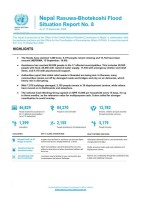
Dhading, Nepal - August 27, 2026: Nepal is confronting one of the most devastating flash-flood disasters in recent memory after a sudden, debris-laden surge swept through the Lhende-Bhote Koshi corridor near the Nepal-China border on Wednesday morning, August 26.
The disaster struck with extraordinary speed, devastating Timure, Rasuwagadhi and Syaphrubesi before the floodwaters and debris moved downstream through the Bhote Koshi and Trishuli river systems. The destruction has extended into Nuwakot, Dhading and other downstream areas, while the full human and economic toll is still being assessed.
What actually caused the Rasuwa flood?
One of the most important facts at this stage is that the precise trigger is still under scientific investigation.
Initial reports linked the disaster to a magnitude 4.4 seismic event recorded in the Nepal-China border region at around 8:37 a.m. and suggested that it may have destabilised an ice-and-rock mass upstream. However, it would be premature to state that the earthquake itself was the established cause. Scientists and authorities are still analysing satellite imagery and other evidence.
Preliminary satellite analysis indicates that a large ice-and-rock collapse/avalanche occurred in the high mountains on the Tibetan side, sending enormous quantities of ice, rock and debris into the river system. This appears to have produced a sudden surge through the Lhende River and into the Bhote Koshi.
Another possibility under investigation is that an avalanche or landslide temporarily blocked the river, creating a natural dam that subsequently failed and released a destructive pulse of water and debris. Some experts have also raised the possibility of a glacial-lake outburst flood (GLOF). At present, however, the disaster should not be definitively labelled a GLOF until scientific investigations establish the mechanism.
Importantly, Nepal's Department of Hydrology and Meteorology reported that there had been no exceptionally heavy local rainfall in Rasuwa immediately before the event, strengthening the evidence that the devastating surge originated upstream rather than from ordinary rainfall-driven flooding in the district.
A climate warning from the Himalaya
Although climate change cannot yet be identified as the single direct trigger of Wednesday's event, the broader scientific context is deeply concerning.
Warming temperatures are accelerating glacier and snow loss across the Himalaya, while destabilisation of ice, rock and high-altitude slopes can increase the potential for sudden cascading hazards. Experts have repeatedly warned that unstable glacial lakes and rapidly changing mountain environments require much stronger monitoring and early-warning systems.
The Rasuwa disaster therefore represents not only a flood emergency, but also a warning about the increasingly complex interaction between earthquakes, landslides, glaciers, rivers and a warming Himalayan environment.
A disaster that unfolded within minutes
The flood arrived with little time for communities in the valley to respond. A huge mixture of water, ice, mud, rocks and debris swept through the border settlements, destroying buildings, vehicles and critical infrastructure.
Timure and the Rasuwagadhi border area were among the hardest-hit locations. Homes, hotels, shops, vehicles, commercial goods and security installations were swept away or severely damaged. Syaphrubesi also suffered extensive destruction.
The flood subsequently travelled downstream through the Bhote Koshi and Trishuli systems, threatening communities and infrastructure far beyond Rasuwa. Authorities issued warnings for downstream settlements as the river levels and debris flows posed continuing danger.
Human losses: the numbers are still changing
The human toll remains fluid because many affected locations are inaccessible and communications have been disrupted.
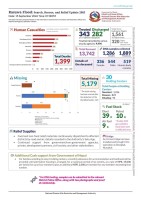
By the latest reports available on August 27, at least 157 people had died in Nepal, while China reported three deaths, bringing the known cross-border death toll to around 160. Hundreds of people remain unaccounted for, and authorities continue to search for survivors and missing persons.
The disaster has also affected tourists and pilgrims travelling through the region. Nepal Tourism Board figures reported hundreds of travellers out of contact, including a large number of foreign nationals. Earlier official reporting put the number at 403 tourists, including 341 foreigners, although these figures are expected to change as communication is restored and people are located.
The security services have suffered particularly serious losses. About 85 security personnel were initially reported missing, including personnel from the Nepal Army, Nepal Police and Armed Police Force.
These figures should be treated as preliminary, not final. Search-and-rescue operations are continuing, and the final casualty count could change substantially.
Infrastructure damage is enormous
The flood has destroyed or severely damaged some of Nepal's most important infrastructure in the northern corridor.
China-Nepal trade connection devastated
The Rasuwagadhi border area and customs facilities sustained major damage, disrupting an important route for Nepal-China trade. Vehicles and cargo awaiting customs clearance were swept away, while the road connection to the border was severely damaged.
The destruction of bridges and road sections has effectively isolated parts of the region and made conventional ground-based rescue extremely difficult.
Roads and bridges washed away
Preliminary reports indicate that around 19 bridges were destroyed or swept away, while approximately 40 kilometres of roads were severely damaged along the affected corridor.
The loss of these bridges is more than an infrastructure problem-it directly affects the ability to evacuate communities, transport medical supplies and reconnect isolated settlements.
Hydropower and electricity infrastructure hit
The disaster also struck Nepal's strategically important hydropower corridor.
The Chilime Hydropower Centre, Rasuwagadhi Hydropower Project and Trishuli-3A-related infrastructure were among the facilities affected. The Trishuli 3B Hub 220-kV substation was reported severely damaged, while several transmission lines were disrupted. Preliminary assessments indicate that 13-15 hydropower projects may have been affected.
The disruption demonstrates the vulnerability of concentrating critical energy infrastructure in narrow Himalayan valleys.
Preliminary infrastructure losses: around Rs 200 billion
Physical Infrastructure Minister Sunil Lamsal said preliminary information indicated infrastructure damage of approximately Rs 200 billion.
That figure is an early estimate rather than a final disaster-loss assessment. It does not necessarily represent the total economic cost, which will also include lost trade, tourism, electricity generation, agricultural production, businesses, homes, livelihoods and long-term reconstruction.
The eventual economic impact could therefore be considerably larger.
What Nepal must do now
The response to Rasuwa cannot stop at rescuing survivors and rebuilding what was destroyed. The disaster has exposed systemic weaknesses in Himalayan disaster preparedness.
1. Find every missing person first
Search-and-rescue operations must remain the immediate national priority.
With roads and bridges destroyed, helicopter-based rescue, drones, satellite imagery and specialised search teams should be used wherever terrain makes ground access impossible.
International assistance should be welcomed wherever it can accelerate the location and evacuation of missing people.
2. Investigate the upstream source scientifically
Nepal and China should establish an urgent joint scientific investigation involving glaciologists, geologists, hydrologists, remote-sensing specialists and disaster authorities.
High-resolution satellite imagery should be used to determine:
Where the ice-rock collapse originated;
Whether a glacial lake contributed to the surge;
Whether a temporary natural dam formed;
How much water and debris entered the Lhende River;
Whether unstable material remains upstream; and
Whether another flood or debris surge remains possible.
The distinction matters because Nepal cannot design an effective early-warning system without understanding the physical mechanism that produced the disaster.
3. Build a real-time Nepal-China Himalayan early-warning system
This may be the single most important long-term lesson.
Nepal needs a transboundary early-warning network with China covering high-risk river and glacial systems.
Such a system should combine:
satellite monitoring + river gauges + seismic sensors + glacier monitoring + automated alerts + downstream sirens + mobile warnings.
A warning generated in the high mountains must reach vulnerable Nepali communities within minutes-not after the flood has arrived.
4. Map new flood and debris-flow hazard zones
The August 26 event should trigger a comprehensive reassessment of hazard maps throughout the Bhote Koshi–Trishuli corridor.
The government should identify:
New maximum flood levels;
Debris-flow pathways;
High-risk bridges;
Hydropower vulnerabilities;
Evacuation routes;
Safe shelters; and
Settlements requiring relocation or stronger protection.
Reconstruction should not simply replace yesterday's infrastructure in yesterday's locations and designs.
5. Rebuild for the future, not the past
Roads, bridges, customs facilities, hydropower infrastructure and public buildings must be reconstructed according to updated hazard assessments.
Critical facilities should be designed to withstand extreme floods, debris flows, landslides and cascading hazards, rather than relying solely on historical flood records.
6. Protect hydropower workers
Hydropower projects in narrow valleys require stronger emergency systems.
Future projects should include:
Multiple emergency escape routes;
Elevated refuge areas;
Independent emergency communication;
Automated river-level alarms;
Emergency shutdown systems; and
Clearly practised evacuation procedures.
The objective must be simple: no worker should be trapped underground because a sudden flood cuts off the only escape route.
7. Strengthen community preparedness
Technology alone cannot save lives if communities do not know what to do when an alarm sounds.
High-risk Himalayan settlements need regular evacuation drills, clearly marked safe zones, community rescue equipment, emergency shelters and multilingual warning systems for both residents and visitors.
Tourism operators must also maintain accurate records of visitors in remote areas so that missing-person searches can begin immediately.
The bigger lesson
The Rasuwa catastrophe is more than a single flash flood.
It is a stark demonstration of how a high-altitude geological or cryospheric event can cross an international border, transform into a destructive river surge and devastate communities tens of kilometres downstream within a very short time.
It also demonstrates why the Himalaya must no longer be managed as isolated valleys or administrative boundaries.
The mountains, glaciers and rivers form one interconnected system.
A landslide in Tibet can become a humanitarian emergency in Nepal. A damaged bridge in Rasuwa can disrupt national trade. A destroyed hydropower substation can affect the wider electricity system. And a changing glacier can create risks that conventional rainfall-based flood forecasting cannot detect.
For Nepal, the way forward is therefore clear: save lives now, establish the scientific truth, restore connectivity safely, rebuild stronger, and create a permanent transboundary Himalayan early-warning system.
The final cause of the August 26 disaster must be established by science-not assumption. But the warning it has delivered is already unmistakable: Nepal's Himalayan disaster-risk system must prepare for hazards that can emerge from beyond the reach of conventional weather forecasting and arrive with almost no warning.
Ecosphere News will continue to distinguish confirmed information from preliminary assessments as authorities and scientists update the casualty, damage and cause investigations.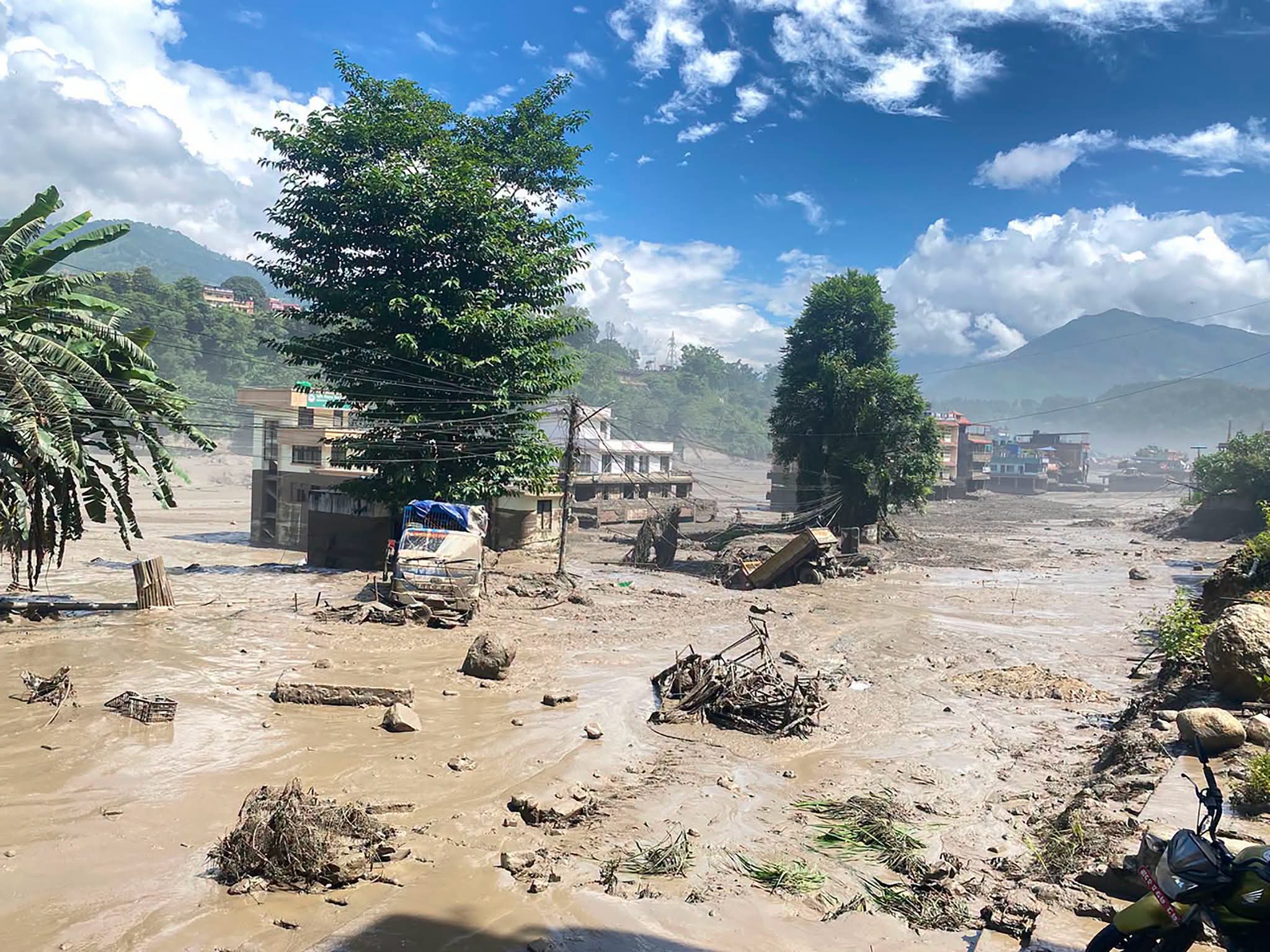
#RasuwaFlood #Rasuwa #BhoteKoshi #LhendeRiver #NepalFlood #HimalayanDisaster #FlashFlood #GlacialHazards #GLOF #ClimateChange #Himalayas #DisasterRiskReduction #EarlyWarning #NepalChina #ClimateResilience #Hydropower #EcosphereNews