Kathmandu/Dhading - Ashika Tamang, an elected representative from Dhading Constituency No. 1, has strongly urged the government and concerned local levels to become accountable for resolving the long-standing problems related to waste management, pollution, and the health and rights of local residents in Sisdole-Banchare Danda.
According to Tamang, the residents of Sisdole-Banchare Danda have been bearing the burden of Kathmandu Valley’s waste management for nearly two decades, along with foul smells, pollution, health risks, and government neglect. Banchare Danda is a major landfill site used for the management of solid waste from Kathmandu Valley, and disputes between affected communities and government authorities over compensation, infrastructure, and scientific waste management have continued for years.
Tamang recalled her commitment, made when she was elected, to speak out against illegal activities, exploitation of natural resources, corruption, and injustices against people in her constituency. She said that the Sisdole–Banchare Danda issue is not merely a political matter for her.
She clarified that the demands raised at the recent meeting were neither impossible nor unreasonable. According to her, all terms of agreements reached in the past must be fully implemented; concerned local governments must effectively fulfil their responsibilities for waste management; and the relevant ministries must provide the necessary coordination and facilitation.
She has also demanded that every local level establish a Waste Segregation Centre within its own area, segregate waste at the source, and send only waste that genuinely needs to be dumped to Banchare Danda. She further emphasized that the Leachate Treatment System at Banchare Danda should be brought into operation immediately to scientifically treat and effectively manage contaminated liquid generated from waste.
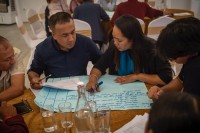
Tamang has also expressed dissatisfaction with the participation of concerned mayors in the meeting. According to her, only 9 of the 20 concerned mayors were present at the meeting called to discuss solutions to the problem.
“The waste belongs to Kathmandu Valley, but the foul smell belongs to the people of Sisdole-Banchare Danda? The city gets the convenience, while the people of my constituency get the diseases and suffering?” she questioned.
She said that the Sisdole-Banchare Danda issue cannot now be resolved merely through discussions on paper while sitting inside air-conditioned rooms. She has proposed that the next meeting should be held in Sisdole itself.
“Let us discuss the issue right where the problem exists. Let us sit on top of the very piles of waste and hold the meeting. Let us breathe that very foul smell while having the discussion,” she said.
According to her, decision-makers and responsible authorities need to directly experience the living conditions of residents who have been suffering the impacts of waste for years.
Tamang said that the health, dignity, and right to live of the people of Sisdole–Banchare Danda are not bargaining points, but basic human rights.
She has indicated that she will not step back from the commitments she made to the people and will continue to raise her voice wherever necessary. In concluding her statement, she addressed the residents of Sisdole–Banchare Danda as “your very own angry Honourable Sister.”
The Sisdole-Banchare Danda waste-management issue is no longer simply a question of where Kathmandu Valley’s waste should be dumped. It has become a serious issue involving the health of local communities, environmental justice, accountable governance, and the long-term sustainability of waste management in Kathmandu Valley.
#EcosphereNews #Sisdole #BanchareDanda #WasteManagement #SolidWasteManagement #EnvironmentalJustice #Dhading #KathmanduValley #WasteSegregation #LeachateTreatment #Pollution #PublicHealth #ClimateAndEnvironment #Nepal #EcosphereNewsNepal