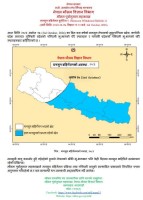
Kathmandu - In a landmark initiative aimed at bringing Nepal’s local governments together around the growing climate crisis, Gharpajhong Rural Municipality in Mustang is preparing to host a major climate conference on Bhadra 30-31, 2083 BS. The gathering seeks to unite representatives from all 753 local governments and develop a common framework for locally led climate adaptation, culminating in the proposed “Gharapjhong Declaration 2083.”
The conference comes as communities across Nepal face increasingly visible impacts of a changing climate. From the high Himalayas to the Tarai plains, changing rainfall patterns, extreme weather, water insecurity, floods, landslides and ecosystem degradation are placing growing pressure on local governments and communities.
For Himalayan municipalities such as those in Mustang, the consequences are particularly serious. Rapid glacier retreat, the expansion and instability of glacial lakes, and the increasing threat of Glacial Lake Outburst Floods (GLOFs) are creating new risks for settlements, infrastructure, agriculture and tourism.
Water security is emerging as another critical concern. Traditional drinking-water and irrigation sources are becoming increasingly unreliable in some mountain communities, while erratic rainfall and expanding dry zones are putting additional pressure on already limited resources. Such changes directly affect farming, livestock husbandry and high-altitude tourism-the economic foundations of many Himalayan communities.
Climate change is also affecting Nepal’s unique mountain biodiversity. Changes in temperature, precipitation and habitat conditions threaten sensitive flora and fauna, while extreme weather events can accelerate ecosystem degradation.
Beyond environmental impacts, the climate crisis is increasingly becoming a human mobility issue. Water shortages, recurrent floods, landslides and unpredictable weather are forcing some families to reconsider where and how they live. If these trends intensify, climate-induced internal migration could place additional pressure on urban centres and communities receiving displaced populations.
However, translating a national conversation on climate adaptation into meaningful local action will not be easy. One of the biggest challenges is finance. Local governments require substantial resources to strengthen water systems, disaster preparedness, resilient infrastructure, early-warning mechanisms and ecosystem restoration. Mobilizing the necessary funding across three tiers of government-without excessive dependence on delayed central transfers-remains a major challenge.
Coordination is another hurdle. Nepal’s 753 local governments have vastly different geography, climate risks, technical capacities and development priorities. A mountain municipality cannot necessarily apply the same adaptation model as a municipality in the Tarai or a rapidly urbanizing city.
The proposed Jomsom gathering therefore seeks to move beyond declarations and discussions toward practical implementation. The Gharapjhong Declaration 2083, if effectively translated into local policies and programmes, could provide a platform for municipalities to establish measurable and locally relevant adaptation commitments.
A key proposal is to strengthen locally led climate finance, institutionalizing direct and predictable climate financing through public financial systems rather than relying primarily on fragmented, project-based interventions.
The conference is also expected to encourage a permanent inter-municipal climate network through which local governments can share disaster information, early-warning practices, climate data, technological solutions and successful green-development strategies.
Inclusiveness will be equally important. Local climate champions, youth, indigenous communities and marginalized groups need meaningful roles in designing and implementing adaptation measures, particularly because climate impacts are often felt most severely by communities with the fewest resources to respond.
The Jomsom conference could therefore become more than a two-day gathering. It presents an opportunity to establish a stronger local-government movement for climate resilience-one that connects Nepal’s mountains, hills and plains through shared knowledge, finance and action.
For Nepal, the central question is no longer whether climate change will affect local communities. It is whether local governments can organize, finance and implement adaptation quickly enough to protect people, livelihoods and ecosystems.
#EcosphereNews #ClimateChange #ClimateAdaptation #Jomsom #Mustang #Nepal #GharapjhongDeclaration #ClimateResilience #Himalayas #GLOF #WaterSecurity #ClimateMigration #LocalGovernment #SustainableDevelopment #EnvironmentalNews