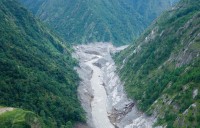
Kathmandu - Nepal’s Chure range, the country’s youngest and one of its most environmentally fragile mountain systems, is facing growing pressure from the extraction of riverbed materials, forest degradation and increasing demands on its natural resources.
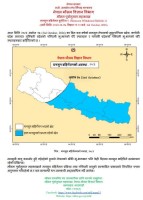
Stretching from Ilam in the east to Kanchanpur in the west, the Chure landscape covers about 12.78 percent of Nepal’s total area across 37 districts. Its forests, watersheds and groundwater systems are critically important to communities in the Chure, Bhavar and Tarai-Madhesh regions. The Government of Nepal has therefore treated Chure conservation as a national priority through the President Chure-Tarai Madhesh Conservation Development Committee.
The concerns highlighted in the accompanying article are particularly significant: rivers and streams originating in the Chure are reportedly becoming increasingly vulnerable to drying and degradation, while extraction of sand, gravel and boulders around river systems and the foothills has raised questions about the long-term environmental consequences of unregulated or excessive resource use.
The government’s own Chure conservation framework recognises that protecting the region cannot be limited to forests alone. Effective conservation requires integrated management of watersheds, rivers, wetlands, groundwater, agriculture, livestock and forests, with cooperation between upstream and downstream communities.
Current government programmes already include measures such as landslide and gully control, wetland conservation, groundwater recharge, conservation ponds, afforestation, riverbank stabilisation and agroforestry. The Chure Board also provides procedures related to environmental assessment and the establishment of crusher industries, highlighting the need for environmental considerations when riverine resources are extracted.
Environmental experts and conservation advocates have increasingly argued that the answer should not be simply to restrict local communities from using natural resources. Instead, conservation should go hand in hand with sustainable livelihoods. Empowering local communities to participate in forest and watershed management can help protect ecosystems while creating legitimate income-generating opportunities.
The Chure is more than a chain of low hills. It is a crucial ecological bridge between the Himalayas and the Tarai-Madhesh and an important component of Nepal’s water and biodiversity systems. Continued degradation could have consequences far beyond the hills themselves—including impacts on groundwater recharge, agriculture, river systems, biodiversity and communities downstream.
Protecting the Chure therefore means protecting water, forests, biodiversity and the livelihoods that depend on them. Nepal’s conservation efforts must move beyond short-term extraction and towards science-based, transparent and community-centred management of the entire Chure-Tarai-Madhesh landscape.
#SaveTheChure #ChureConservation #Nepal #Environment #Biodiversity #WaterSecurity #ClimateAction #SustainableDevelopment #EcosphereNews