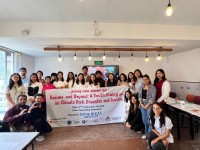
Kathmandu: The Government of Nepal has officially launched the Terai Arc Landscape (TAL) Strategy and Action Plan 2026-2035, unveiling a new 10-year roadmap aimed at conserving biodiversity, restoring degraded ecosystems, strengthening human-wildlife coexistence, and building climate-resilient communities across Nepal’s Terai and Chure regions.
Covering approximately 24,710 square kilometres, the strategy represents one of Nepal’s most significant landscape-level conservation initiatives. It builds on more than two decades of conservation efforts undertaken in the Terai Arc Landscape, a globally important region that connects protected areas and wildlife habitats across southern Nepal.
The newly launched plan seeks to coordinate efforts among government agencies, Indigenous Peoples and Local Communities, civil society organisations, the private sector, and conservation partners under a shared vision of creating a thriving landscape for both nature and people.
According to the Government of Nepal, the strategy focuses on several key priorities, including:
Biodiversity conservation and protection of critical wildlife habitats;
Ecosystem restoration in degraded forest and riverine areas;
Human-wildlife conflict mitigation through community-based approaches;
Climate resilience and sustainable natural resource management;
Inclusive participation of local and Indigenous communities in conservation planning and implementation.
The Ministry of Agriculture, Forests and Environment prepared the strategy in partnership with WWF Nepal, which has been involved in TAL conservation programmes for many years. The initiative is expected to guide conservation investments, policy coordination, and community-based actions through 2035.
The Terai Arc Landscape is internationally recognised for its rich biodiversity, including habitat for tigers, rhinoceroses, elephants, gharials, and numerous threatened bird and plant species. Conservationists believe the new strategy will help strengthen ecological connectivity between protected areas while supporting local livelihoods and sustainable development in the Terai and Chure regions.
With increasing pressures from climate change, habitat fragmentation, infrastructure expansion, and human-wildlife interactions, the launch of the TAL Strategy and Action Plan 2026–2035 is being viewed as a timely step toward balancing environmental conservation with the well-being of communities that depend on these ecosystems.
The Government has stated that effective implementation of the strategy will require long-term collaboration, adequate financing, scientific monitoring, and active participation from local communities and conservation stakeholders across the landscape.
Source: Government of Nepal, Ministry of Agriculture, Forests and Environment; WWF Nepal
EcosphereNews #TeraiArcLandscape #TAL #Nepal #Biodiversity #Conservation #EcosystemRestoration #ClimateResilience #HumanWildlifeCoexistence #Chure #Terai #WWFNepal #SustainableDevelopment #NatureAndPeople #EnvironmentalProtection