Kathmandu, July 3 - Climate change is no longer affecting only mountains, glaciers, and weather patterns; it is increasingly posing serious risks to the health, education, livelihoods, and fundamental rights of children, women, and marginalized communities in Nepal, experts have warned.
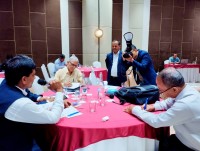
Speaking at an interaction programme on the impacts of climate change on children, climate and public health experts stressed that limiting climate change discussions to melting glaciers and irregular rainfall overlooks its far-reaching consequences on human health and social well-being.
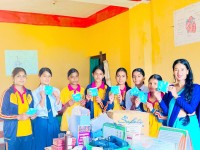
Climate expert Khushbu Paudel said climate change is undermining the fundamental right to healthcare for pregnant women, postpartum mothers, women, and children. Citing various studies, she noted that climate-related disruptions have contributed to missed routine immunizations, shortages of family planning services leading to unintended pregnancies, and reduced access to essential maternal and child healthcare. She also highlighted that water scarcity has prevented many adolescent girls from attending school during menstruation.
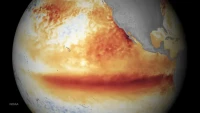
Climate expert Manjeet Dhakal said scientific reviews have confirmed that human-induced climate change has significantly altered rainfall patterns, intensity, and frequency. According to him, approximately one-quarter of Nepal's glacier area has already shrunk as global temperatures continue to rise. He noted that Earth's average temperature has already increased by around 1.2°C, with projections indicating it could reach 1.5°C by 2040, a level that could result in the loss of nearly one-third of mountain snow cover. He emphasized that protecting children from escalating climate risks requires urgent and sustained action.
Health experts also warned that worsening air pollution is compounding climate-related health challenges. Uma Regmi, Nursing Officer at the Department of Health Services, said air pollution is contributing not only to respiratory illnesses but also to cardiovascular diseases, lung cancer, stroke, pregnancy complications, and impaired physical development among children. She stressed that pregnant women, children, older persons, and individuals with chronic illnesses are particularly vulnerable, urging authorities to recognize air pollution as a major public health emergency rather than solely an environmental concern.
Regmi further explained that exposure to polluted air increases the risks of premature births, low birth weight, heart-related complications, and inadequate oxygen supply essential for children's physical and brain development. She called for coordinated action by federal, provincial, local governments, and communities to reduce air pollution and safeguard public health.
Representing the National Human Rights Commission, Dipendra Bahadur Singh said climate change disproportionately affects people who are least able to protect their own rights. He identified children, women, persons with disabilities, Indigenous Peoples, and marginalized communities such as the Raute and Chepang as among the groups facing the greatest climate vulnerability.
Researcher Dr. Meghnath Dhimal from the Nepal Health Research Council warned that heatwaves are becoming increasingly frequent and severe due to climate change. He explained that a heatwave is defined as a period of at least five consecutive days when daily maximum temperatures remain 5°C or more above the long-term average. In Nepal, heatwaves generally occur between April and June, although they can extend into July.
According to Dr. Dhimal, extreme heat significantly increases the risks of infectious diseases, maternal and child health complications, occupational illnesses, cardiovascular diseases, and respiratory disorders. He cited research showing that every 1°C rise in daily maximum temperature increases the risk of preterm birth by 4.2 percent and stillbirth by 3.3 percent. He also noted that during 2023–2024, approximately 6.3 billion people-around 78 percent of the world's population-experienced at least 31 days of historically abnormal extreme heat, demonstrating the growing global health burden posed by rising temperatures.
Speaking on behalf of the Ministry of Agriculture, Forest and Environment, Dr. Prakash Singh Thapa stressed that immediate investment in climate adaptation is essential to protect future generations. He warned that continued temperature rise could expose children, women, and marginalized communities to even greater risks than those already being experienced.
Dr. Thapa also emphasized the importance of strengthening climate education in schools, recommending that teachers receive adequate training on climate change and its health implications while climate adaptation measures are integrated into school programmes.
The interaction concluded with a shared message that climate change must be addressed not only as an environmental issue but also as a critical public health, child rights, and social justice challenge requiring coordinated action across all levels of government and society.
#ClimateChange #ChildHealth #PublicHealth #AirPollution #Heatwave #ClimateJustice #Children #MaternalHealth #Nepal #ClimateResilience #EnvironmentalHealth #MarginalizedCommunities #EcosphereNews