Kathmandu, Nepal - A climate conference held in the ecologically sensitive Khumbu region has concluded with the issuance of a nine-point Gokyo Declaration, calling for Nepal to take a leading role among Himalayan and mountain nations in advancing climate justice.
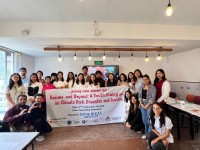
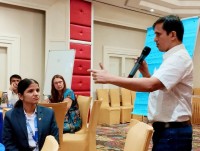
Organized on the occasion of Earth Day, the conference took place in Gokyo of Solukhumbu district, bringing together policymakers, climate experts, researchers, and civil society representatives. The event was jointly organized by Khumbu Pasang Lhamu Rural Municipality and Saath Saathai.
Focus on Climate Diplomacy and Himalayan Priorities
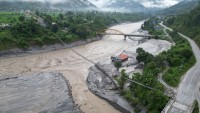
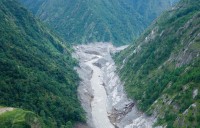
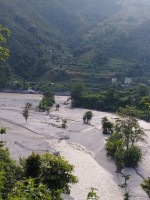
The declaration emphasizes the urgent need to strengthen Nepal’s climate diplomacy and ensure that the unique challenges of Himalayan ecosystems are prioritized in global climate discussions. Participants underscored that mountain regions like Khumbu are experiencing disproportionate impacts of climate change, including glacial retreat and increasing risks of glacial lake outburst floods (GLOFs).
A team of experts and stakeholders traveled from Kathmandu to Gokyo via Lukla, Namche, Khumjung, and Machhermo, combining field observation with community engagement. The delegation conducted household surveys and held dialogues with local women in Khumjung to better understand grassroots-level climate impacts.
Call for Collective Action Beyond Government
Former Deputy Speaker and Member of Parliament Indira Rana Magar read the declaration and highlighted the importance of citizen engagement in climate advocacy. She noted that climate change challenges cannot be addressed by government efforts alone and stressed the need for collaboration between state institutions and local communities.
Glaciologist Arun Bhakta Shrestha emphasized the urgency of addressing GLOF risks in the region, stating that scientific insights must guide policy and preparedness strategies.
Inclusive and Rights-Based Climate Approach
The declaration commits to promoting a just, inclusive, and rights-based approach to climate action. It calls for meaningful participation of women, indigenous communities, youth, and marginalized groups in climate decision-making processes at all levels.
Participants including youth leader Tasi Lajum, renewable energy researcher Kushal Gurung, rights activist Sama Shrestha, advocate Saroj Ghimire, and journalist Babita Basnet expressed their support for the declaration.
Sustainable Energy and Policy Integration
Addressing Nepal’s ongoing energy challenges, the declaration recommends adopting gender-sensitive and environmentally sustainable energy solutions. Organizers stated that the findings and recommendations will be formally submitted to local, provincial, and federal governments, as well as to the Federal Parliament for policy consideration.
According to Bal Krishna Basnet, founding member of Saath Saathai, the initiative aimed to bridge local experiences with national policy frameworks. He noted that experts have identified increasing risks from glacial lakes in the Gokyo region, reinforcing the need for immediate and coordinated action.
Multi-Stakeholder Collaboration
The conference was supported through collaboration with organizations such as Nepal Mountaineering Association, BYD, Ncell, Nepal Airlines, and Trekking Agencies' Association of Nepal.
The Gokyo Declaration emerges as a significant civil-society-driven effort to elevate Nepal’s voice in global climate discourse, particularly on behalf of vulnerable mountain ecosystems.
#EcosphereNews #ClimateJustice #GokyoDeclaration #Khumbu #NepalClimate #HimalayanCrisis #GlacialLakes #GLOF #ClimateDiplomacy #SustainableEnergy #InclusiveClimateAction #EarthDay2026 #MountainRegions #EnvironmentalGovernance