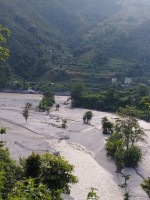
Tanahun, Nepal - A quiet village in Bhanu Municipality-9, Chitikhola, is steadily transforming into a model of rural tourism by blending cultural preservation, community participation, and agricultural innovation.
The settlement, known for its traditional houses and clean surroundings, reflects a deep-rooted connection to heritage. Locals have maintained ancestral homes, courtyards, and pathways in an organized and aesthetically pleasing manner. Surrounded by kitchen gardens, fruits, and lush greenery, the village offers a serene environment that appeals to both domestic and international visitors.
According to local accounts, the name “Chitikhola” is believed to have originated from the presence of intellectually enlightened individuals in ancient times, adding historical significance to the area.
Community Homestay Driving Local Tourism
With the objective of preserving culture while generating income, locals launched the Green Hill Village Community Homestay in 2019 (2076 BS). The initiative includes 21 households and represents a collective effort to promote sustainable tourism.
The homestay has received support from the Gandaki Provincial Government, which initially allocated NPR 1 million, followed by additional assistance in later phases. The village is home to diverse communities, including Magar, Dura, Tamang, and Brahmin groups, offering visitors a rich cultural experience.
Tourists are offered a package priced at NPR 1,250, which includes traditional meals such as local chicken curry for dinner and millet-based delicacies for breakfast, catering to both vegetarian and non-vegetarian preferences.
Agro-Tourism Expanding Through Farm Stay Initiatives
Complementing the homestay model, the Green Himalaya Farm Stay, operated by the Pandey family, has added a new dimension to tourism in the village. Spread across 70 ropanis of land, the farm integrates accommodation with agricultural activities.
Visitors are served fresh vegetables and seasonal fruits grown on-site, enhancing the farm-to-table experience. The facility currently provides regular employment to six individuals and additional seasonal jobs, contributing to the local economy.
The farm stay’s traditional architecture, tree houses surrounded by litchi trees, and mud-plastered homes offer an immersive rural lifestyle experience. With the capacity to host around 30 guests daily, it has become a growing attraction despite being relatively more expensive than homestays.
Integrated Farming as a Learning Hub
At a time when agricultural interest is declining in many parts of Nepal, local farmer Basuraj Kadariya has demonstrated the potential of integrated farming. His 27-ropani farm combines livestock, poultry, fruits, and vegetable cultivation, attracting visitors interested in sustainable agriculture.
The farm features over 50 varieties of fruits, including papaya, guava, pear, kiwi, and litchi, along with experimental crops like Bodhichitta. It has increasingly become a learning center for students, farmers, and tourists seeking hands-on agricultural knowledge.
Utilizing Barren Land for Tourism Development
Local initiatives have also transformed unused land into tourism assets. The “Nakshatra Batika,” a park developed over approximately five ropanis, features tea plantations and 27 plant species representing lunar constellations. Managed by the Bageshwari Community Forest Users Group, the site reflects the region’s potential for tea cultivation, similar to eastern Nepal’s Ilam.
The area also preserves cultural and natural heritage, including an ancient Shiva temple and traditional kafal trees.
Expanding Tourism Infrastructure and Potential
To enhance visitor experience, trekking trails have been developed through nearby forests, offering a safari-like experience. The route leads to Chandani Danda and historically significant Kot areas linked to Nepal’s Baise-Chaubise era. The presence of large rock formations also indicates potential for rock climbing tourism.
Religious tourism can also be integrated, as the route connects to the well-known Thanimaai Temple, located about an hour’s drive from the village. Additionally, there are plans to promote the nearby Chandrekhola waterfall as another attraction.
Located approximately 21 kilometers from Dumre along the Prithvi Highway and accessible via the Mid-Hill Highway, Chitikhola is gradually attracting group tourists and tourism stakeholders. Recent promotional visits by tourism entrepreneurs from Pokhara signal growing interest in the area.
A Model for Sustainable Rural Tourism
Experts emphasize that Chitikhola demonstrates how nature, culture, and agriculture can be effectively combined to develop sustainable rural tourism. With continued investment, community engagement, and strategic promotion, the village holds strong potential to emerge as a leading destination in Gandaki Province.
#EcosphereNews #RuralTourism #AgroTourism #SustainableDevelopment #VisitNepal #CommunityTourism #GreenTourism #CulturalHeritage #Tanahun #BhanuMunicipality #IntegratedFarming #LocalEconomy #EcoFriendly #TourismNepal