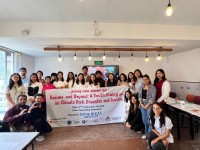
Kathmandu - A half-day technical workshop focusing on water security challenges in Nepal’s Hilly and Terai regions concluded successfully today, generating evidence-based discussions and practical recommendations to address growing water stress across the country.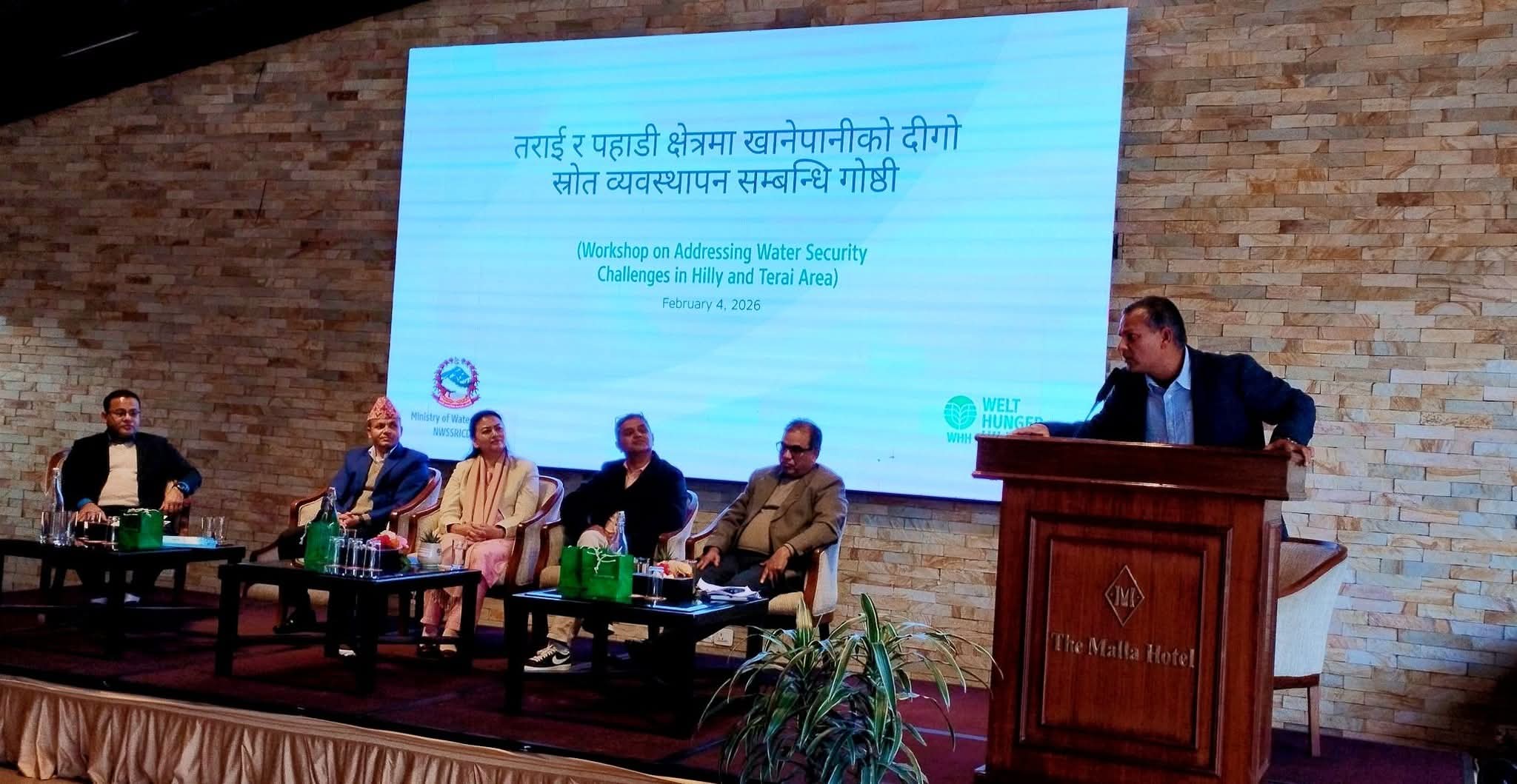
The workshop, organized by Welthungerhilfe (WHH) Nepal in coordination with the National Water Supply & Sanitation Research, Innovation and Capacity Development Center (NWSSRICDC), brought together policymakers, researchers, development partners, practitioners, and media representatives to examine water source sustainability and climate-induced risks in Bagmati and Madhesh Provinces.
Despite significant progress in expanding basic water supply coverage in Nepal, participants noted that only about 29 percent of the population currently has access to safely managed drinking water, highlighting serious gaps in water quality, reliability, and long-term service sustainability. The discussions emphasized alarming trends such as drying spring sources in the hills, over-extraction and contamination of groundwater in the Terai, and increasing pressure from climate change, deforestation, and unregulated abstraction.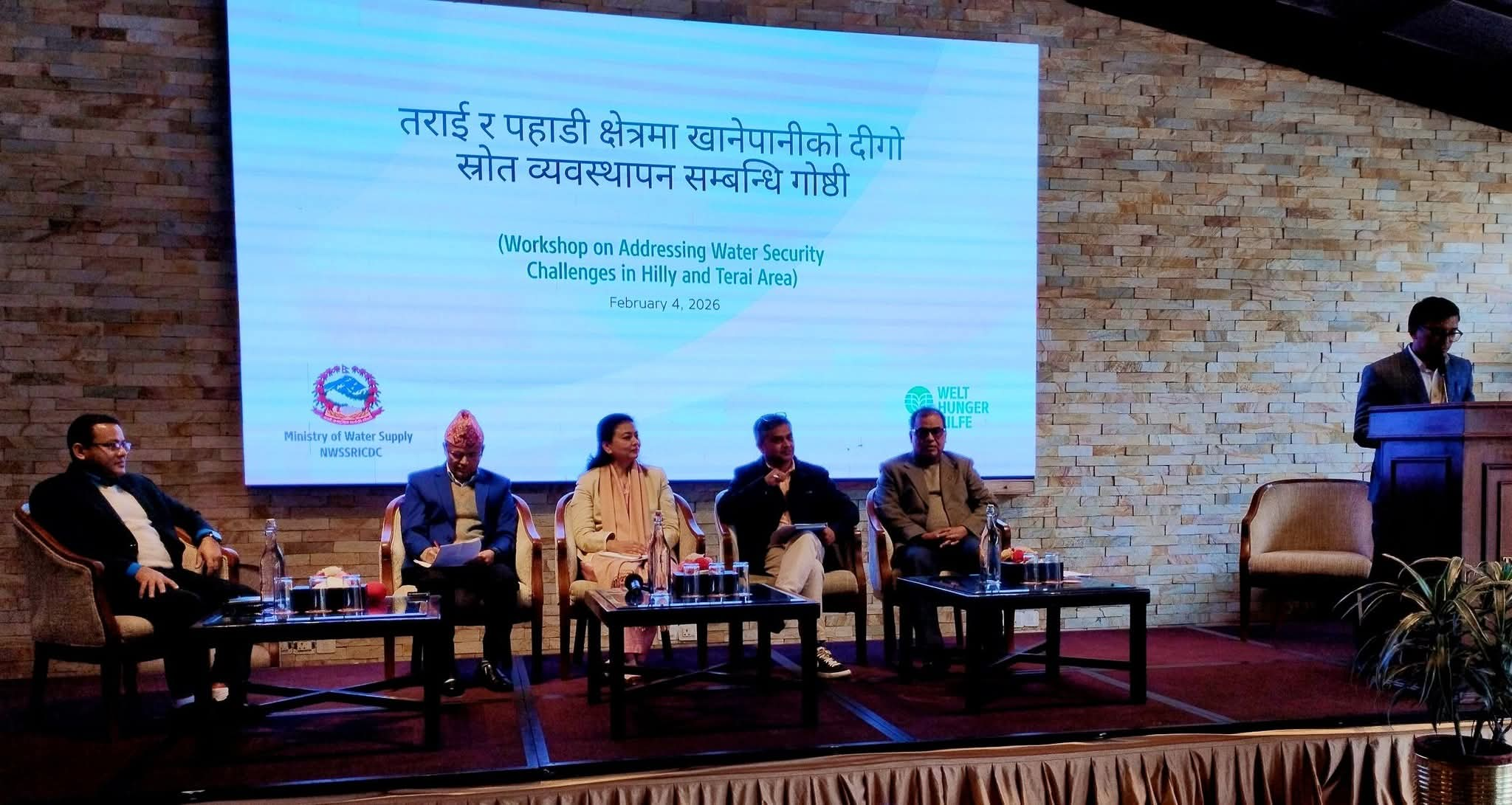
Experts also drew attention to the low functionality of water supply schemes, with only around 60 percent operating fully nationwide. Weak governance of Water and Sanitation Users Committees (WSUCs), inadequate tariff collection, limited technical capacity for operation and maintenance, and insufficient financing were identified as key systemic challenges. Climate-induced hazards-including floods, droughts, and erratic rainfall-were reported to be further damaging infrastructure and disrupting service delivery.
Water quality emerged as another critical concern during the workshop. A significant proportion of drinking water sources were found to be contaminated with microbial pollutants, including E. coli, increasing the risk of water-borne diseases. Poor source protection, unsafe household storage, and limited water treatment practices were cited as contributing factors, disproportionately affecting women and marginalized communities.
The workshop shared findings from spring source studies in Makawanpur (Bagmati Province) and groundwater assessments in Siraha (Madhesh Province), providing localized evidence to inform planning and policy decisions. Participants underscored the urgent need for integrated water security approaches, combining source protection, climate-resilient infrastructure, strengthened local governance, and research-driven planning.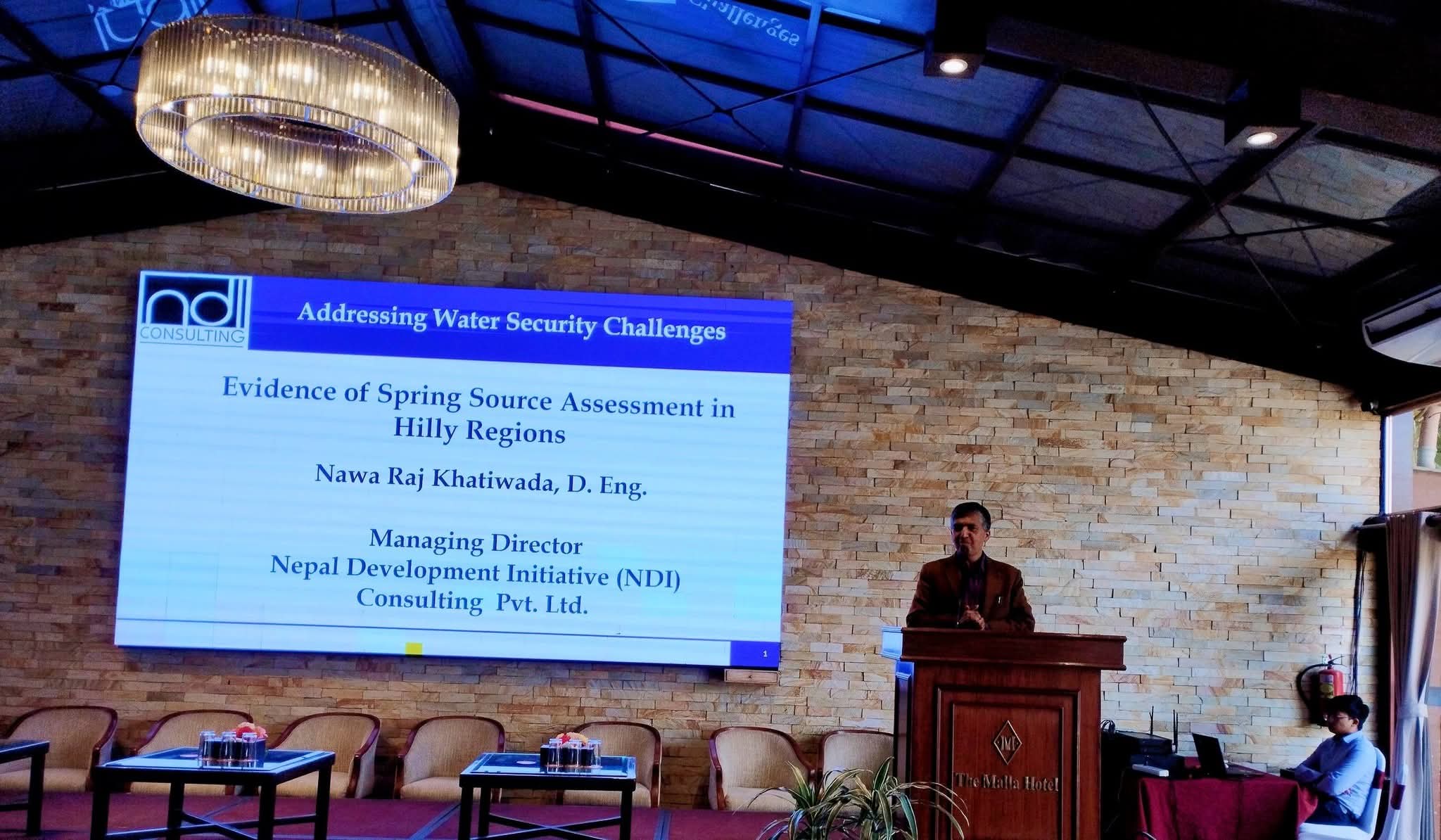
Key objectives of the program included strengthening coordination among implementing agencies and government bodies at local, provincial, and national levels, as well as identifying actionable recommendations for policy advocacy, program improvement, and future investment in water security and WASH systems in Nepal.
Approximately 50 participants representing government institutions, I/NGOs, donor agencies, the private sector, academia, MuAN, NARMIN, and the media took part in the event. The program concluded with a keynote address by government representatives, reinforcing the importance of collaborative, evidence-based action to ensure long-term water security in the face of climate and development pressures.