Top Navigation
  • Home
  • About Us
    • Our Story
    • Our Team
    • Mission and Vision
  • Donate
    • Why Donate
    • Payment Methods
Main Navigation
  • News
  • National
  • Environment
    • Climate
    • Conservation
    • Biodiversity
    • Natural Disasters
    • Pollution
    • Energy
    • Ecology
  • Opinion
  • Business
  • Technology
  • Profiles
  • Travels
  • World
  • More
    • Events
    • Lifestyle
    • Multimedia
    • Research
    • Publications
  • Home
  • About Us
    • Our Story
    • Our Team
    • Mission and Vision
  • Donate
    • Why Donate
    • Payment Methods
UNV UNV
  • News
  • National
  • Environment
    • Climate
    • Conservation
    • Biodiversity
    • Natural Disasters
    • Pollution
    • Energy
    • Ecology
  • Opinion
  • Business
  • Technology
  • Profiles
  • Travels
  • World
  • More
    • Events
    • Lifestyle
    • Multimedia
    • Research
    • Publications
Search Here
News
  • Home
  • News
  • Melting Glaciers Threaten Global Water and Food Security, Warns FAO Chief
Melting Glaciers Threaten Global Water and Food Security, Warns FAO Chief
By Ecosphere News Desk
By Ecosphere News Desk 2026-02-04 20:19:00

Kathmandu - Glaciers, often described as the world’s “hidden water banks,” are rapidly shrinking, placing the water, food and livelihood security of billions of people at serious risk, according to the Director-General of the Food and Agriculture Organization of the United Nations (FAO), QU Dongyu.
Glaciers and seasonal snowmelt from mountain ranges feed some of the world’s most critical river systems, including the Indus, Ganges, Nile and Colorado. These rivers provide drinking water to nearly two billion people, irrigate vast agricultural lands and support hydropower generation across continents. However, accelerating glacier retreat driven by climate change is disrupting these life-supporting systems.
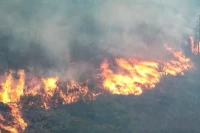
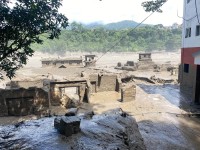
In the short term, faster melting is increasing the risk of disasters such as flash floods, glacial lake outburst floods, landslides and avalanches. In the long run, the disappearance of glaciers will permanently reduce water availability, undermining agriculture in both mountain communities and downstream lowland regions that serve as global food baskets.
Mountains cover more than one-quarter of the Earth’s land surface and are home to around 1.2 billion people. Scientific evidence shows that mountain regions are warming faster than the global average, making them especially vulnerable to climate variability and declining seasonal water supplies. With limited alternative water sources, many mountain communities face declining agricultural production, rising poverty and the growing risk of climate-induced displacement.
Recent data show that five of the last six years have recorded the fastest glacier retreat on record. The impacts are already visible from the Andes to the Himalayas. In Peru, shrinking glaciers have reduced crop yields, while in Pakistan, declining snowmelt threatens traditional planting cycles. Experts warn that many glacier systems are approaching or have already passed “peak water” - the point at which meltwater flow reaches its maximum before beginning an irreversible decline over the coming decades.
Beyond physical impacts, glacier loss is also eroding cultural and spiritual heritage. For Indigenous Peoples and mountain communities across Asia, Africa, Latin America and the Pacific, glaciers hold deep cultural and religious significance. Their disappearance threatens traditions, identities and centuries-old relationships with mountain landscapes.
Recognizing the urgency of the crisis, the United Nations has declared 2025 the International Year of Glaciers’ Preservation, with FAO, UNESCO and the World Meteorological Organization playing leading roles. The initiative aims to draw global attention to the need for coordinated action to protect glacier-fed water systems.
FAO has emphasized that addressing glacier loss requires a bold shift in policy, investment and governance. Key priorities include reducing greenhouse gas emissions, improving water management, strengthening early-warning systems and promoting climate-resilient and sustainable agrifood systems. Agriculture, as one of the largest water users, is also seen as a major part of the solution when managed sustainably.
Traditional practices such as terrace farming, agroecology, agroforestry and crop diversification - long used by mountain communities - are being highlighted as effective adaptation strategies. FAO stresses that adaptation efforts must be inclusive, integrating Indigenous knowledge and addressing root challenges such as poverty and gender inequality.
Innovative solutions are already emerging. In Kyrgyzstan, FAO-supported projects have helped construct artificial glaciers, storing more than 1.5 million cubic meters of ice to irrigate farmland. In Ladakh, India, automated ice reservoirs are capturing unused winter water for spring agriculture. In the Peruvian Andes, communities are restoring water quality affected by glacier retreat through natural filtration systems using native plants.
Despite these promising examples, FAO warns that current global responses remain fragmented and insufficient. Greater investment in water and agricultural infrastructure, stronger cross-border cooperation on glacier-fed river basins, improved glacier monitoring and better alignment of national climate policies are urgently needed.
“Glaciers matter because water matters,” FAO Director-General QU Dongyu has stressed. Ignoring their rapid retreat, he warned, is a direct gamble with global food security, water availability and long-term stability.


Published Date 2026-02-04 20:19:00
Comments
Online Test Prep Online Test Prep
More News
Workshop Highlights Urgent Water Security Challenges in Nepal’s Hills and Terai Regions
Workshop Highlights Urgent Water Security Challenges in Nepal’s Hills and Terai Regions 2026-02-04 13:19:00
National Workshop on WASH Systems Strengthening through Agenda for Change Nepal Concludes Successfully
National Workshop on WASH Systems Strengthening through Agenda for Change Nepal Concludes Successfully 2026-02-02 12:49:00
Nepal Enters Final 32-Day Countdown to General Election
Nepal Enters Final 32-Day Countdown to General Election 2026-02-01 05:16:58
UN Invites Countries to Host World Environment Day 2027 or 2028
UN Invites Countries to Host World Environment Day 2027 or 2028 2026-01-31 12:50:00
Prime Minister Karki Leads Nation in Tribute on Martyrs’ Day in Kathmandu
Prime Minister Karki Leads Nation in Tribute on Martyrs’ Day in Kathmandu 2026-01-30 12:20:00
Forest and Environment Policy Dialogue Concluded with Focus on Upcoming General Elections
Forest and Environment Policy Dialogue Concluded with Focus on Upcoming General Elections 2026-01-29 20:12:00
Most Loved
  • Week
  • Month
30th NELTA International Conference 2026 to Bring Global ELT Experts to Kathmandu
Young Leadership in Action: Ms. Bijaya Poudel’s Impactful Presidency at Naldum Nagarkot Junior Jaycees
‘Himalaya to Ocean’ Book Journey Brings Life Beyond Textbooks to Kathmandu School
Wholegrains, Fruits and Nuts: How a Fibre-Rich Diet is Powering Both Body and Brain
National Workshop on WASH Systems Strengthening through Agenda for Change Nepal Concludes Successfully
30th NELTA International Conference 2026 to Bring Global ELT Experts to Kathmandu
International Business Conference Highlights Investment and Trade Opportunities in Greece
Sumnima Hydropower Company Ltd Successfully Concludes 10th Annual General Meeting
Young Leadership in Action: Ms. Bijaya Poudel’s Impactful Presidency at Naldum Nagarkot Junior Jaycees
Varnamala Preschool Marks Saraswoti Puja and Letter Beginning Day, Reinforcing Its Commitment to Early Childhood Development
Contact Us

News Desk

Ecosphere News
Chakupat, Lalitpur, Nepal
Phone : +977-01-5400646
Email: [email protected] www.ecospherenews.com

Sales & Marketing

Email: [email protected]
Cell Phone: 9820631466 / 9767470774
Media Details
Publisher Ecosphere News and Travels Pvt. Ltd.
DOIB Registration No. 4699-2081/2082
Editor Ganesh Khatiwada
Follow us on Twiitter https://twitter.com/EcosphereNews?ref_src=twsrc%5Etfw
Like us on Facebook
Ecosphere News Environmental & Developmental Issues
© 2026 Ecosphere News Environmental & Developmental Issues. All Rights Reserved. Site by: SoftNEP

SoftNEP News Alert

अख्तियार स्वतन्त्र निकाय भएकाले वाइडबडि छानबिनमा अहिलेसम्‍म कुनै किसिमको राजनीतिक दबाब आएको छैन।स्वतन्त्र ढंगले काम गरिरहेका छौ।
सदस्यता लिनुहोस्